It is one of the first questions every couple asks, and one of the hardest to answer in a sentence. Indian weddings range from a single day to a four-day celebration with several hundred guests, two families getting ready in different places and events in more than one venue. The only honest answer is a quote built for your wedding. What we can do is explain what shapes that quote, so you can plan a budget and compare studios fairly.
Why does Indian wedding photography cost more than a typical wedding?
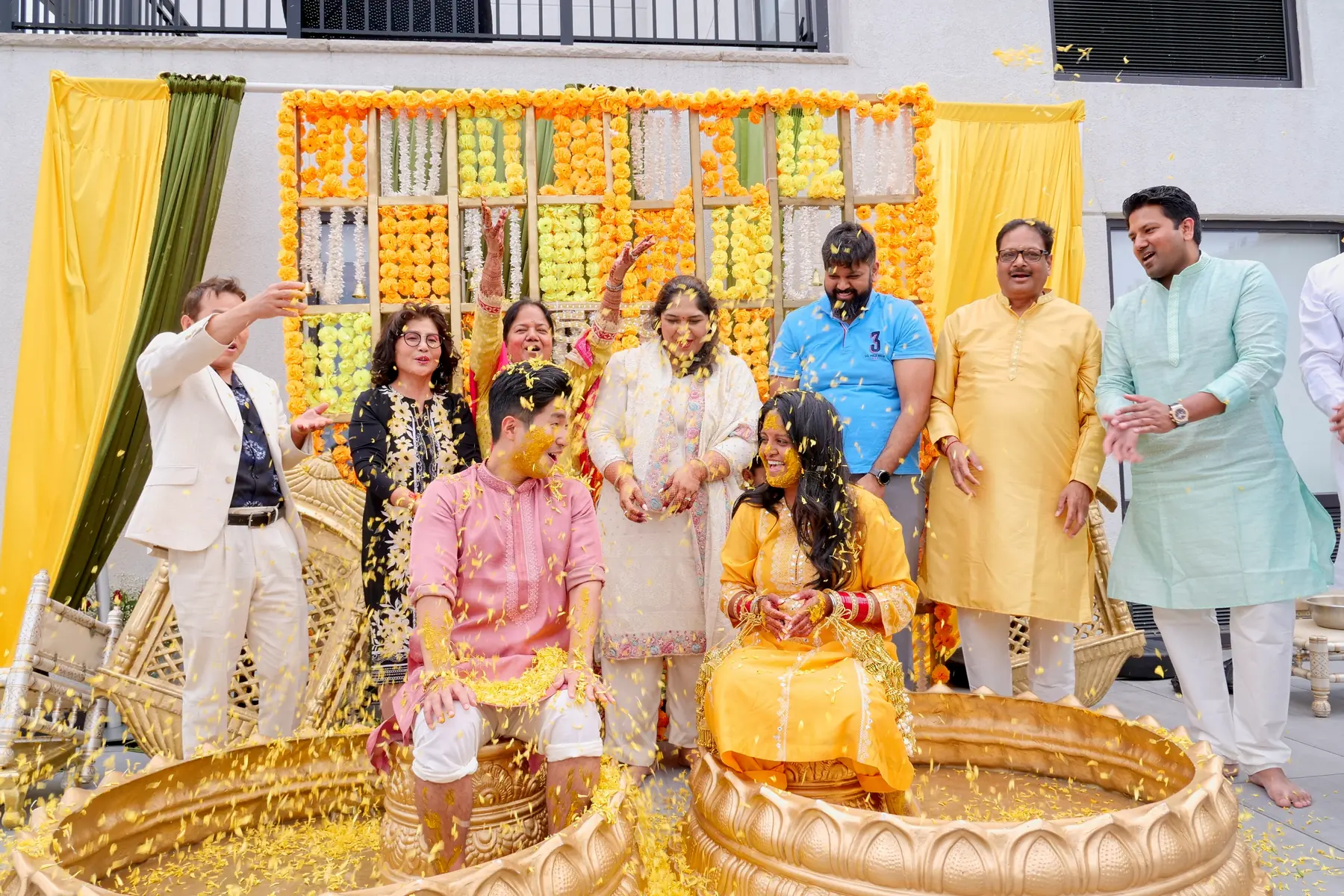
A typical Western wedding is one day with one ceremony and one reception. Many Indian weddings include a Haldi or Pithi, a Mehndi, a Sangeet or Garba, the wedding ceremony and a reception, often across three days, and sometimes a puja at home before it all begins. Each event needs its own coverage, and the wedding day itself can run ten to twelve hours from getting ready to the last dance. Guest counts are often larger too, which means more people to photograph and more ground to cover.
What changes the price?
- Number of events: each additional event adds hours, and often a separate day with its own travel and setup.
- Hours per event: a two-hour Mehndi at home takes less coverage than a five-hour Sangeet in a ballroom.
- Team size: larger weddings need more photographers and cinematographers to cover both families, the ceremony and the whole room.
- Video: a highlight film, a full-length film, a same-day or next-day edit, or aerial coverage where the venue allows it.
- Albums and prints: a designed heirloom album, parent albums, wall art and prints.
- Pre-wedding shoot: an engagement or pre-wedding session, in the studio or on location.
- Travel: destination weddings and out-of-state events add travel and accommodation.
- Delivery speed: sneak peeks, a same-day edit or rush delivery of the full gallery.
How many events should we cover?
Start with the events your families will want to remember most. For most couples that is the wedding ceremony and the reception, followed by the Sangeet or Garba. Smaller, more personal events such as the Haldi, Mehndi or a home puja can be covered for a shorter time, or by a smaller team, without losing their warmth. Make a list of every event with its date, venue, start time and expected guest count; it is the most useful thing you can send a photographer.
How many photographers and cinematographers do we need?
It depends on your guest count, your venues and how the day moves. If the bride and groom get ready in different places, you need someone with each of them. At a large ceremony, one photographer stays close to the couple and the rituals while another covers both families, the guests and the room. Video needs its own people, because a cinematographer and a photographer cannot stand in the same place at the same moment. A good studio will recommend a team for your wedding and explain why.
Should we book photography and video together?
Booking both from one studio usually means a single plan, one timeline and a team that already works together, so the photographers and cinematographers stay out of each other’s frames. It can also make packages more efficient. Whatever you choose, compare the hours, team size and deliverables in each quote. See our wedding photography and wedding films pages for what each includes.
What should a quote include?
A clear quote lists, at minimum:
- Which events are included, and how many hours each.
- How many photographers and cinematographers will be on site at each event.
- Who exactly will photograph and film your wedding.
- What you receive: the edited gallery, film lengths, any same-day edit and album sizes.
- The delivery timeline for photographs, films and albums.
- Travel costs, overtime rates and any additional charges.
A lower quote with fewer people or fewer hours is not the same service. Put quotes side by side and compare them line by line.
Are there costs beyond the package?
Ask about these before you sign, so your budget reflects the whole wedding:
- Overtime if events run late.
- Travel and accommodation for out-of-state or destination events.
- Events added after booking, such as a welcome dinner or a second reception.
- Meals for the team on long days, which many contracts ask the couple to provide.
- Album upgrades, extra parent albums and prints ordered later.
- Rush delivery or extra edits.
Where should we spend, and where can we save?
If the budget is tight, protect the wedding day and the events that matter most to your families. Shorten coverage of smaller events rather than removing a second photographer from the ceremony, because the ceremony cannot be repeated. Albums and prints can often be ordered later, once you have seen your photographs. A pre-wedding session is a good investment if you are nervous in front of the camera, because it makes the wedding day easier.
How far ahead should we book?
Popular fall and spring weekends fill first, and many Indian weddings are planned around auspicious dates that other couples share. Reach out as soon as you have a date and a venue, even if the rest of the plan is still open. A short call early on also helps you budget, because you will know what coverage your wedding really needs.
How do we choose, beyond price?
Look at complete galleries and full films, not only highlights. Read reviews from couples whose weddings look like yours; Fine Art Production holds a 4.9 out of 5 rating across 230 WeddingWire reviews, and you can read them on our reviews page. Meet the people who will be there on the day, and ask how they handle the moments that last only seconds. Our list of questions to ask before you book can help.
How do we get a quote for our wedding?
Fine Art Production builds each proposal around your events, guest count and venues. Send us your dates with your events and venues, and Chirali and Amish will reply personally. If you are considering a film on the day, read what a same-day edit is, and see our albums and wall art.