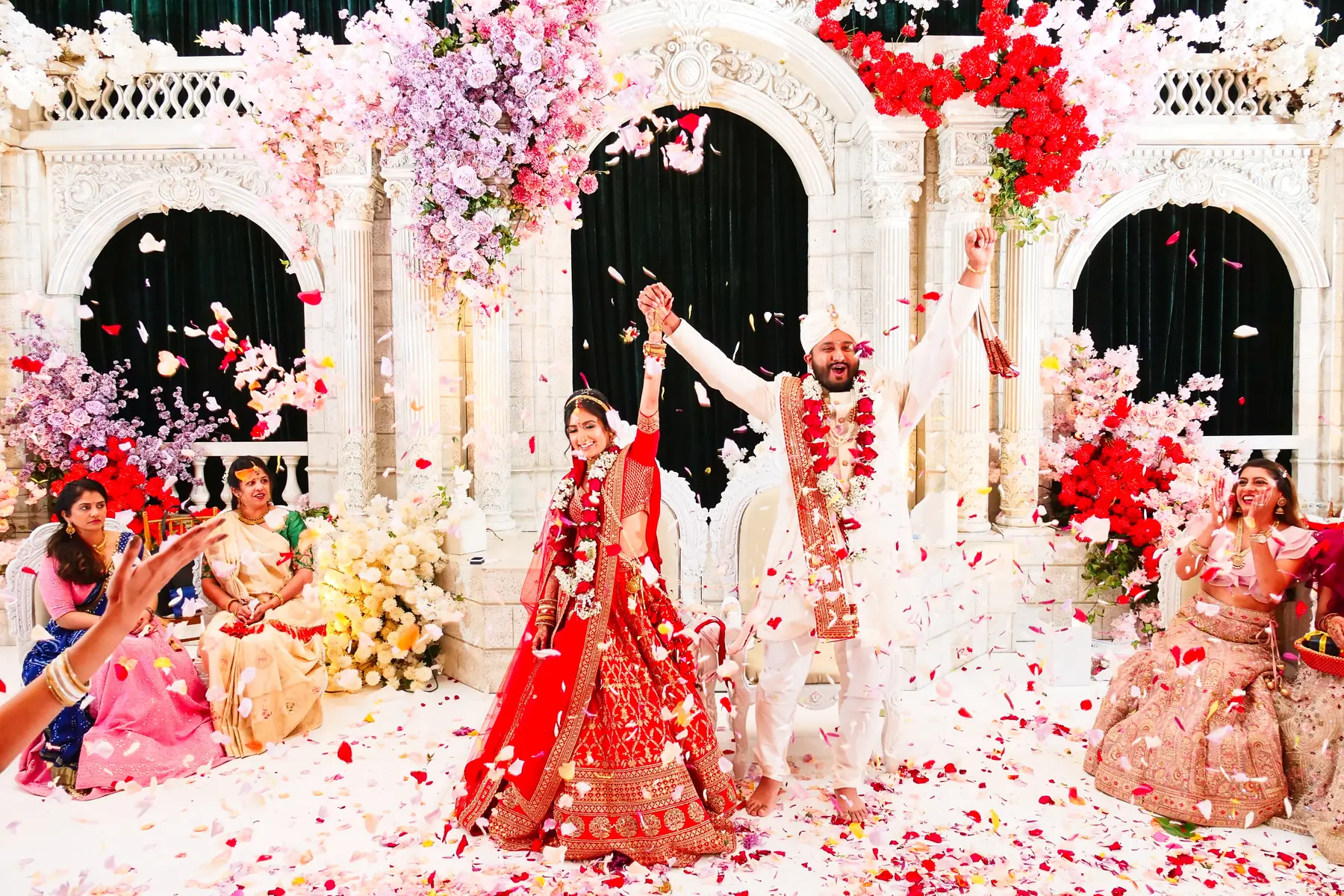
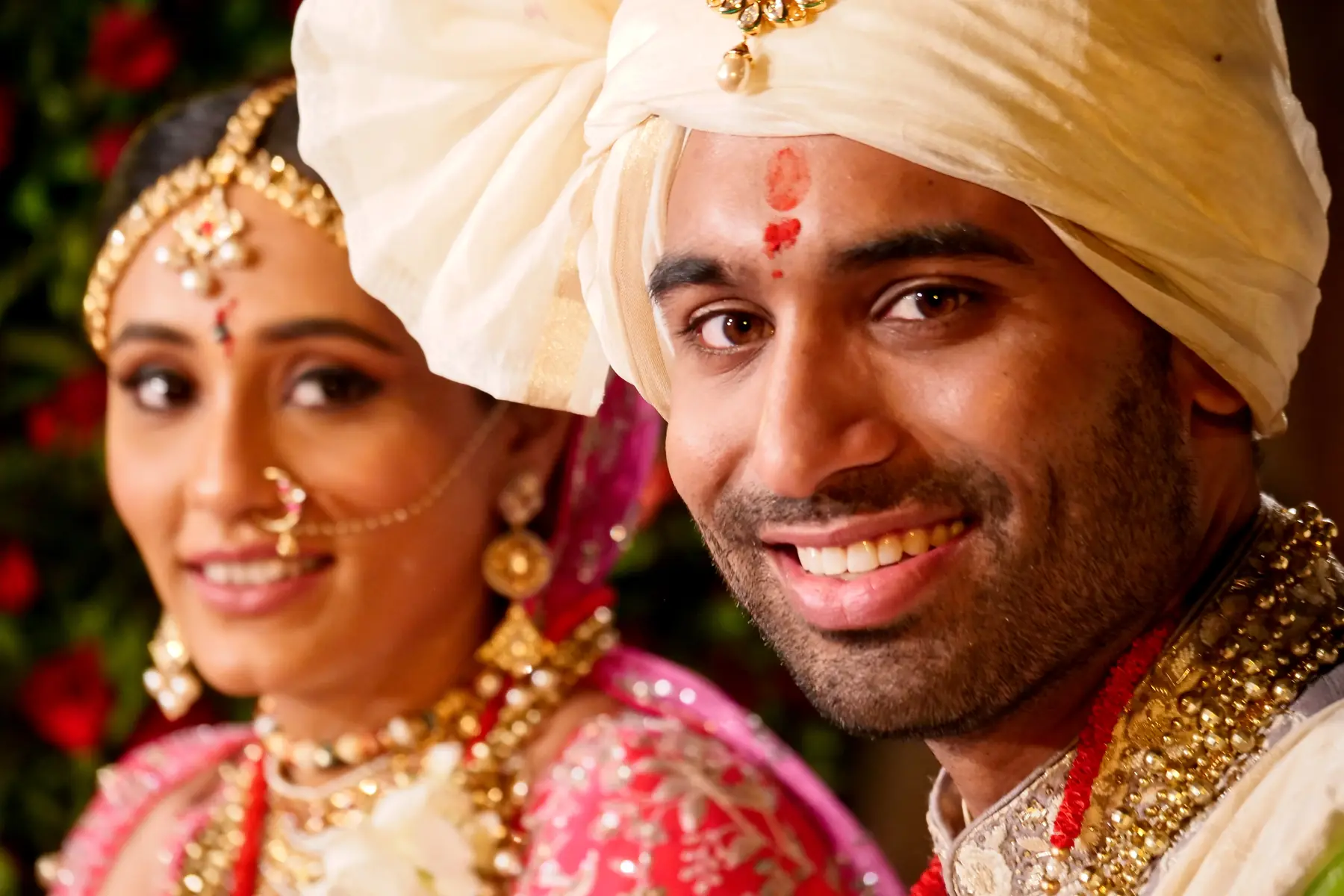
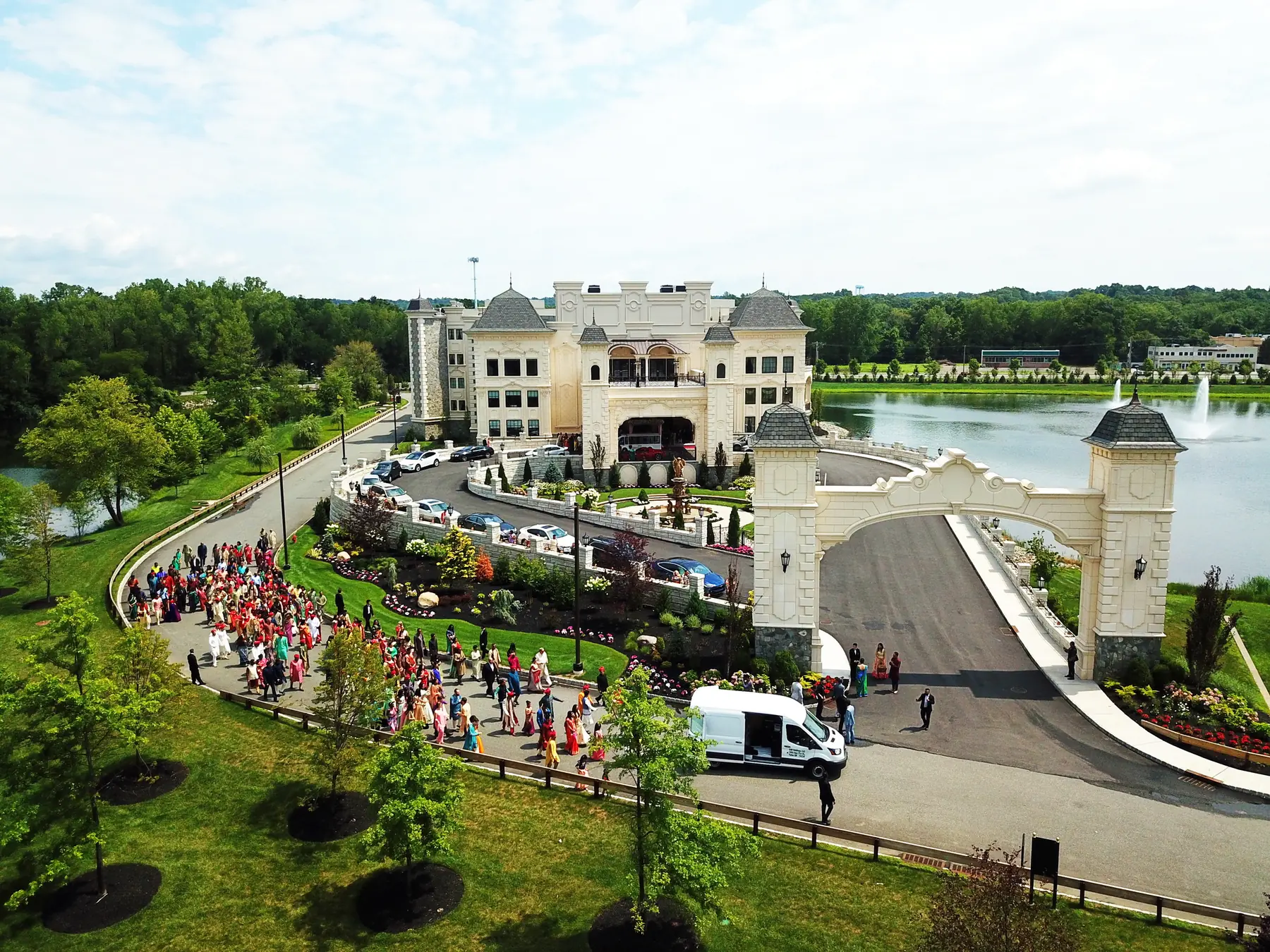
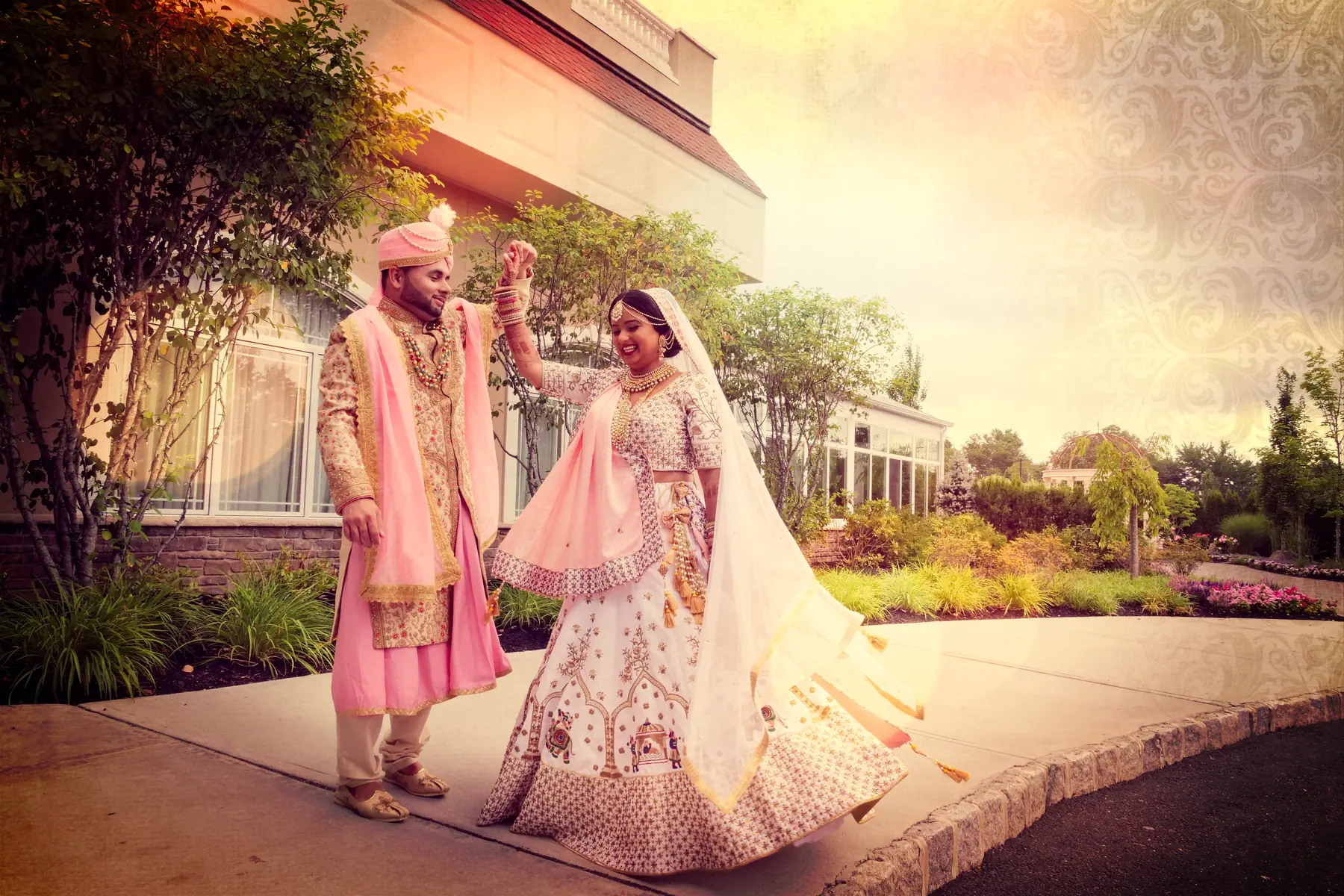
A beautiful wedding album usually comes from a calm timeline. When the day runs late, photographs are the first thing to be squeezed: the couple portraits shrink to five minutes, the family groups are rushed and the golden light is gone before anyone steps outside. After more than 4,000 weddings, we have learned that the schedule shapes the photographs as much as the camera does. Here is how we help couples plan a timeline that leaves room for the pictures that matter.
What moments should an Indian wedding timeline be built around?
Every Indian wedding has a few fixed points. Write them down first and build everything else around them:
- The muhurat: the auspicious time set by your priest. The pheras, the laavan or the thali-tying happen then, whatever else is running late.
- The baraat window: many hotels and venues give a set window for the procession, especially when there is a horse, a car or live dhol outside.
- Sunset: the best light for portraits, especially outdoors. Look up the exact time for your date and venue.
- The reception entrance: the DJ, the caterer and the venue all work to this, and dinner service depends on it.
- Venue hard stops: the time the room must be cleared, which decides when the last dance happens.
Once those are on paper, the gaps between them tell you how much time you really have.
How many hours does each Indian wedding event need?
Every family is different, but these ranges are a useful starting point for photography and film coverage:
- Haldi or pithi: two to three hours, ideally in daylight.
- Mehndi: three to four hours, since the bride sits while the henna is applied and the dancing comes later.
- Sangeet or garba: four to five hours in the evening, with performances, speeches and the dance floor.
- Wedding day: often ten to twelve hours from getting ready to the reception’s grand exit.
- Smaller rituals: a griha shanti, a mameru, a chooda ceremony or a jaggo often needs one to two hours, and is easy to forget when booking.
If two events share a day, such as a morning haldi and an evening sangeet, plan the gap so the family can rest and change. You can read more about covering the pre-wedding events on our Sangeet, Mehndi and Haldi photography page.
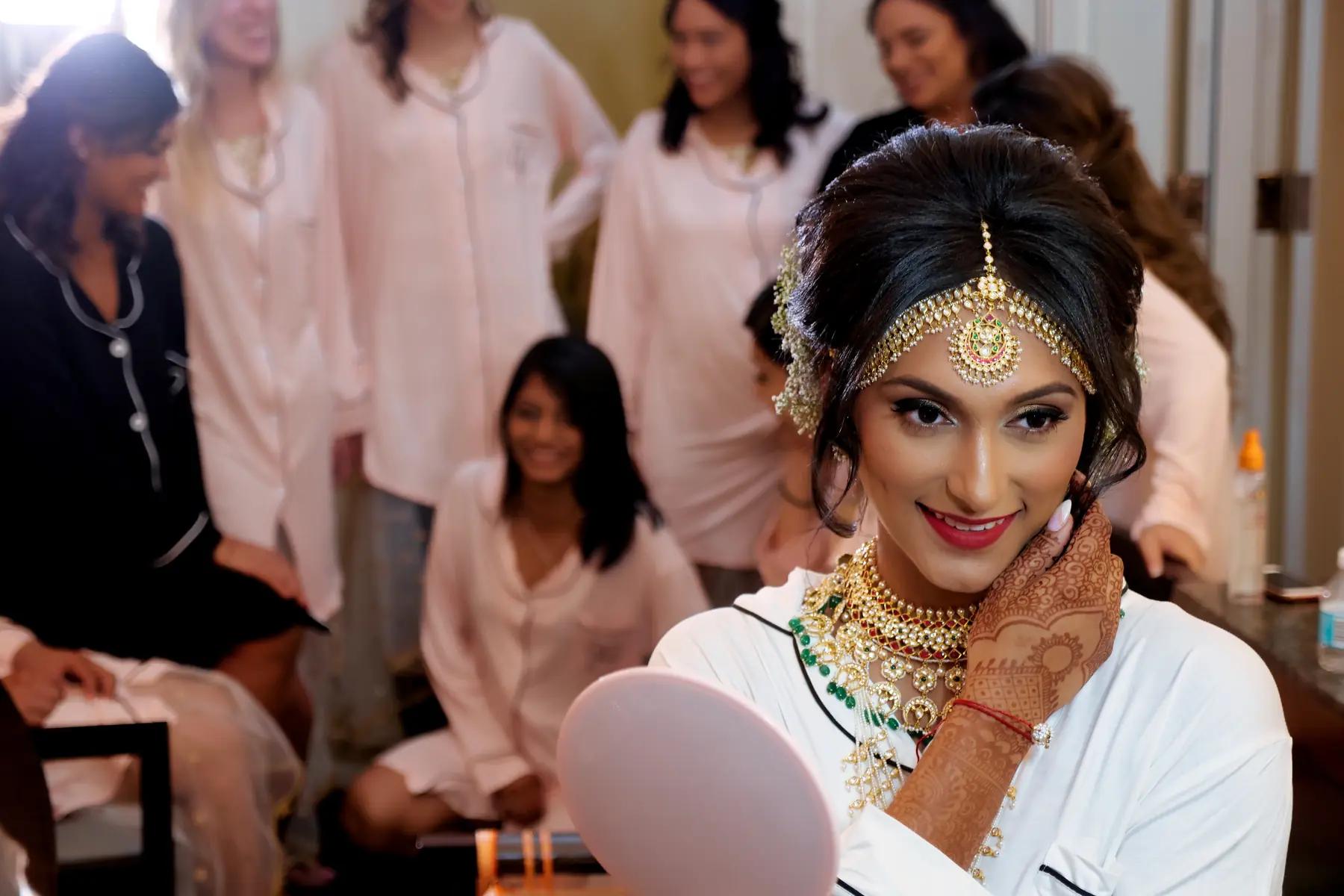
What does a sample Indian wedding day timeline look like?
Here is a sample for a morning ceremony with an 11:00 am muhurat and an evening reception. Shift every time to suit your own priest, venue and season:
- 7:00 am, getting ready (90 minutes): details, jewelry, the outfit and the last touches with family. Hair and makeup should be nearly finished before the jewelry and the outfit go on.
- 8:30 am, first look and couple portraits (45 to 60 minutes): while everyone is fresh and the morning light is soft.
- 9:30 am, wedding party and immediate family (30 minutes): quick groups while everyone is already dressed.
- 10:00 am, baraat (45 to 60 minutes): the procession, the dancing and the milni at the entrance.
- 11:00 am, ceremony (60 to 120 minutes): depending on your traditions and how many rituals your priest includes.
- 1:00 pm, family portraits (30 to 45 minutes): straight after the ceremony, while everyone is still dressed and together.
- 2:00 pm, lunch, vidaai and rest: time for the couple to eat, rest and change.
- 6:30 pm, reception (four to five hours): golden-hour portraits, grand entrance, speeches, first dance, cake and the dance floor.
What if the ceremony is in the evening?
Many US weddings hold the ceremony in the late afternoon and go straight into the reception at the same venue. That makes a first look more valuable, because once the pheras finish it is often dark. In that case, plan portraits before the baraat, keep the family groups to a tight list after the ceremony, and step out for ten minutes of night portraits during dinner.
When is the best time for couple portraits?
The hour before sunset gives the softest, warmest light. In New Jersey that can be as early as about 4:30 pm in December or as late as about 8:30 pm in June, so the same timeline will not work in both seasons. In Florida the swing is smaller but the midday sun is harsher, which pushes outdoor portraits toward the morning or late afternoon. If sunset falls during dinner, plan to step out for 15 minutes between courses. If you are deciding whether to see each other before the ceremony, read should you do a first look at an Indian wedding.

How long do family portraits take, and how do we keep them moving?
Family groups take the longest when nobody knows who is next. Plan 30 to 45 minutes and write a list with names, in order. A simple structure works well:
- Both full families together, so most relatives can leave early.
- The bride’s extended family, then the groom’s.
- Aunts, uncles and cousins, side by side.
- Siblings and their families.
- Parents with the couple.
- Grandparents, last and seated.
Give the list to a cousin who knows everyone and can gather each group before it is called. We learn names and relationships before the day, so the groups move quickly and the elders are not kept standing.
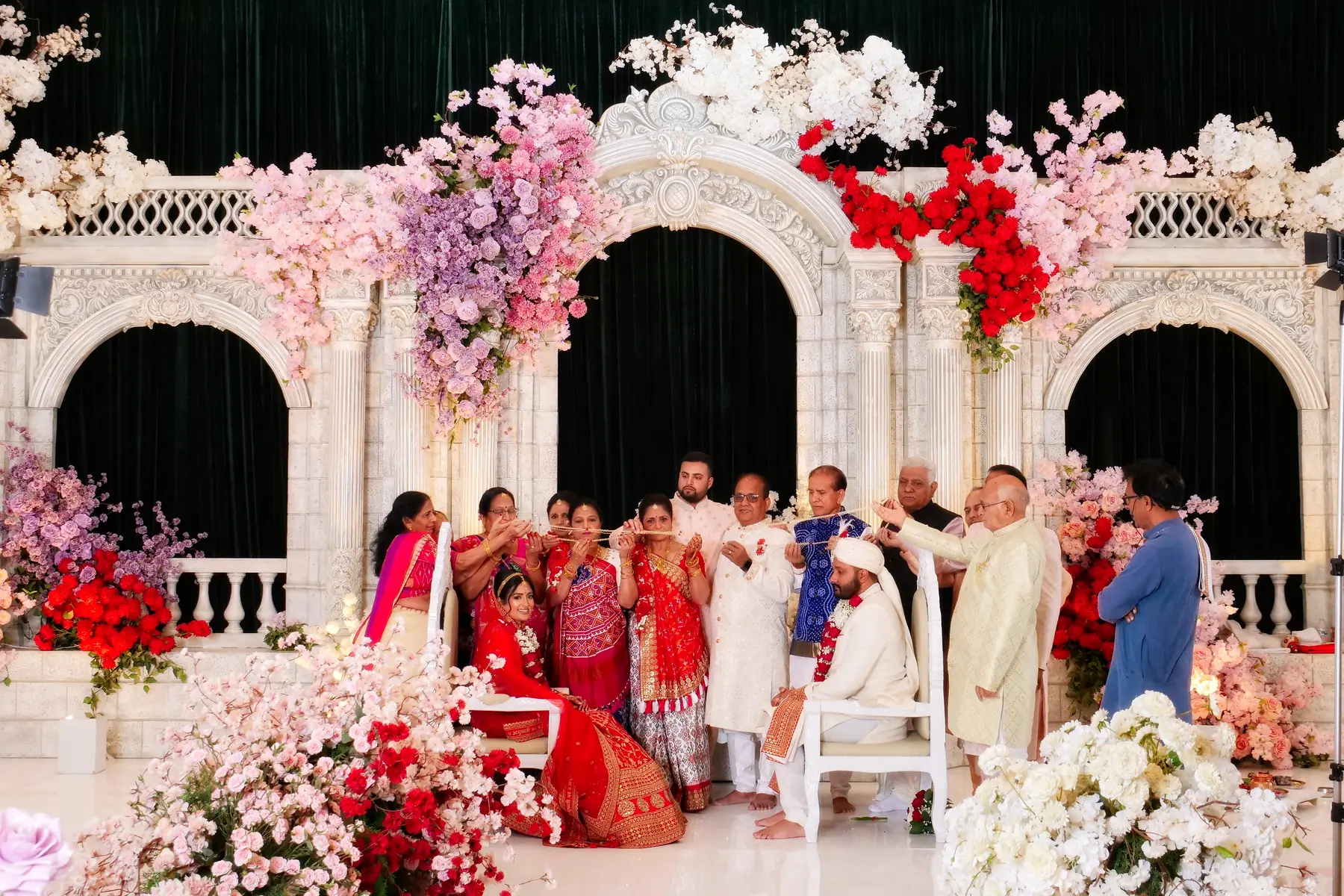
How much buffer should we leave between events?
Add 15 to 30 minutes between events for travel, outfit changes and the delay that always arrives. If two events are at different venues, add the drive time plus parking and the walk through the hotel. A bride in a heavy lehenga does not cross a lobby quickly, and a groom’s family rarely leaves on the first call. Most rushed weddings are not short of hours; they are short of buffers.
How do photography and film share one timeline?
If you have both photographers and cinematographers, plan them together. When one team plans both, nobody blocks anyone’s frame, the same moments are covered from complementary angles and the portrait session leaves time for film as well as stills. If you want a same-day edit shown at the reception, the editor needs footage early in the day, which affects when the portraits and the baraat are filmed. Read about our wedding films, our Indian wedding shot list and the baraat photography guide.
Who should hold the timeline on the day?
One person, usually a planner, coordinator or calm relative, should hold the master timeline and have the authority to move things along. Share the same document with your photographer, priest, DJ, decorator, makeup artist and venue at least two weeks before the wedding, so everyone is working from the same times.
Ready to plan yours?
Send us your dates, venues and muhurat, and we will help shape the photography timeline before the day. Check your date.