More and more couples we photograph choose a first look: a private moment to see each other in wedding clothes before the day begins. It is a newer idea at Indian weddings, borrowed from American ceremonies, and families feel differently about it. Some love it; some would rather keep the first sight for the mandap. Here is how to decide, and how to plan it well if you go ahead.
What is a first look at an Indian wedding?
The couple meet somewhere quiet before the baraat or ceremony, usually with only the photographer and cinematographer nearby. One stands with their back turned, the other walks up, and they see each other for the first time in their wedding clothes. Then they have a few minutes alone before the day becomes busy, followed by couple portraits while hair, makeup and outfits are at their best.
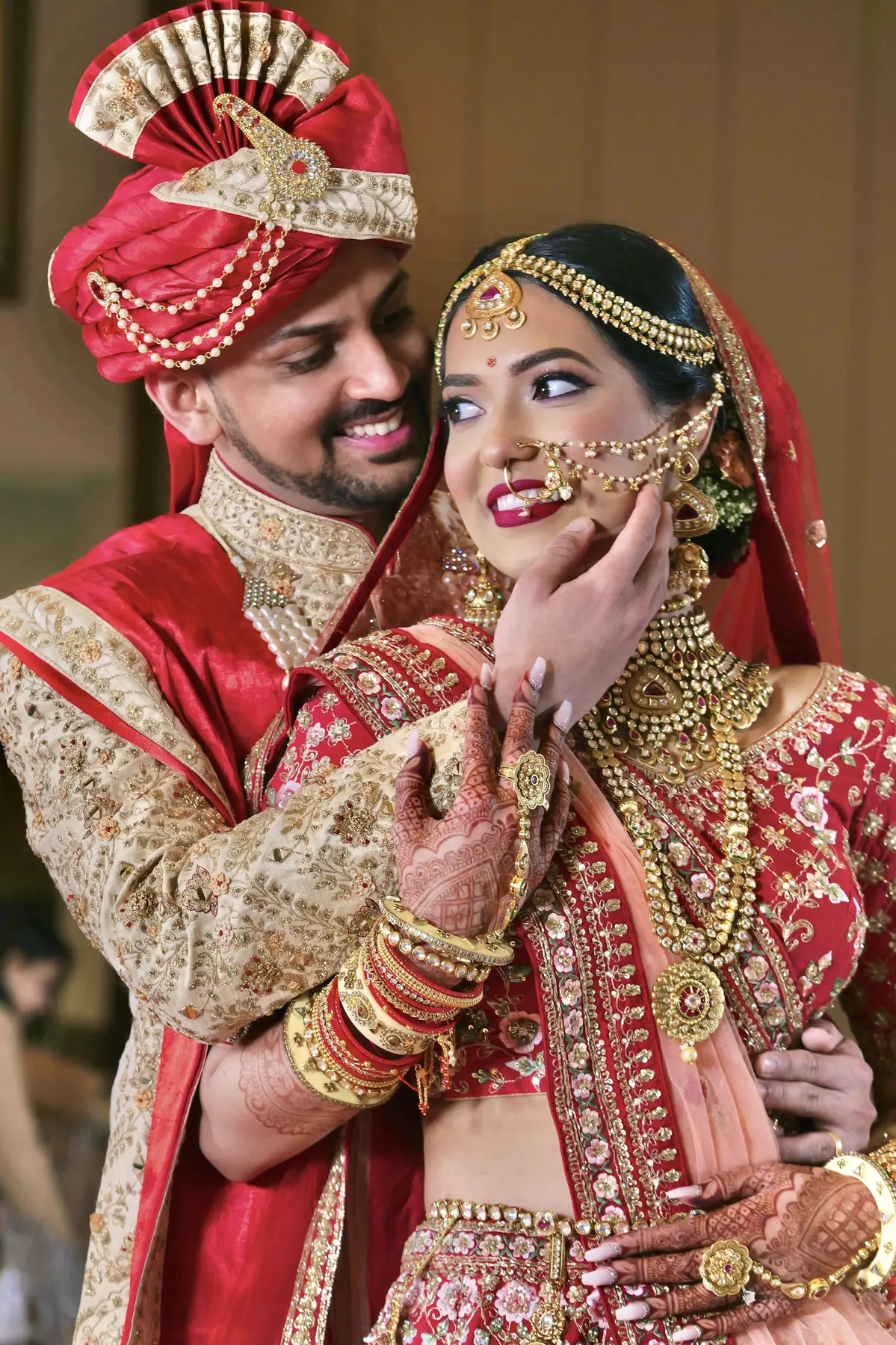
Why do couples choose a first look?
- Unhurried portraits: 45 to 60 minutes of couple photographs before the day begins, while makeup is fresh and the outfit is perfect.
- Better light: you choose the light, instead of accepting whatever is left after a long ceremony.
- Calmer nerves: many couples tell us that seeing each other first made the rest of the day feel easier.
- More time later: after the ceremony, you can go straight to family photographs and then to lunch or cocktail hour with your guests.
- A private moment: an Indian wedding day rarely gives the couple time alone. This may be the only quiet ten minutes you have.
Why do some families prefer not to?
- Tradition: some families want the first sight to happen at the mandap, during the varmala or when the antarpat is lowered.
- The baraat’s energy: the groom arriving and waiting for the bride is part of the drama of the day.
- Superstition: some families prefer the couple not to see each other before the ceremony.
- Logistics: if the bride and groom are getting ready at different hotels, a first look adds travel to a full morning.
Is a first look against Indian tradition?
There is no single rule. Customs differ between regions, communities and families, and many priests are comfortable with a first look while some families are not. The simplest approach is to ask both sets of parents early, before the timeline is set, so nobody feels surprised on the day. A Gujarati wedding where the bride enters behind an antarpat already has a first sight built into the ceremony, and some couples prefer to protect it.
What are the alternatives to a first look?
If your family prefers to wait, you can still have a private moment without seeing each other:
- A first touch: holding hands around a corner or through a doorway, without looking.
- Letters or gifts: exchanged through a sibling and read in separate rooms while the camera watches.
- A first look with a parent: the bride’s father or the groom’s mother seeing them dressed for the first time, which often becomes one of the most emotional photographs of the day.
- Golden-hour portraits: move couple portraits to the hour before sunset during the reception.
How do we plan a first look?
- Choose the place: private, quiet and close to where you are getting ready, with open shade or soft window light. A garden, a terrace or a quiet hallway works better than a busy lobby.
- Choose the time: right after getting ready, and at least two hours before the baraat, so the portraits are not rushed.
- Keep it small: ask family and the wedding party to wait elsewhere, with phones away.
- Plan what comes next: couple portraits, then the wedding party, then immediate family if time allows.
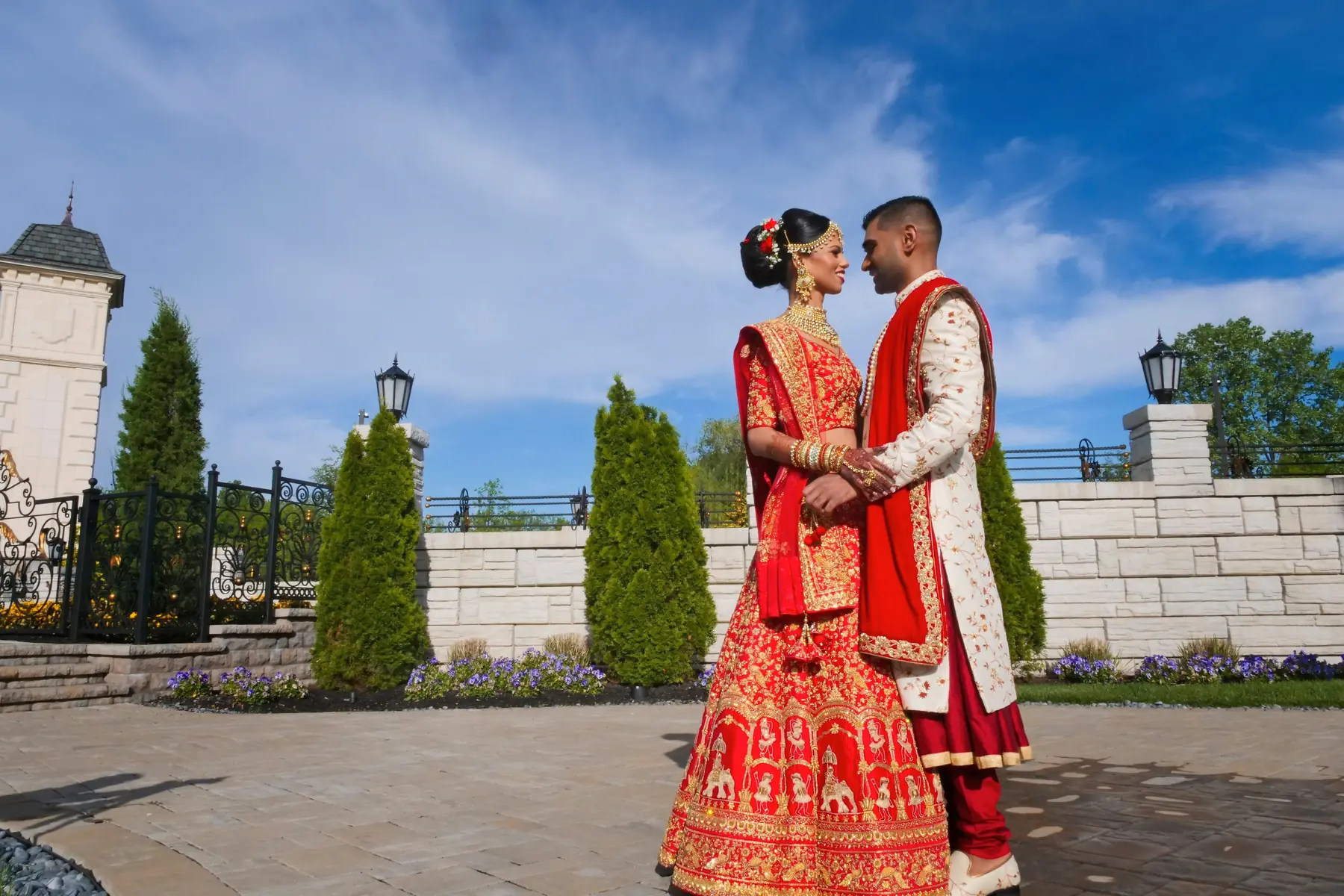
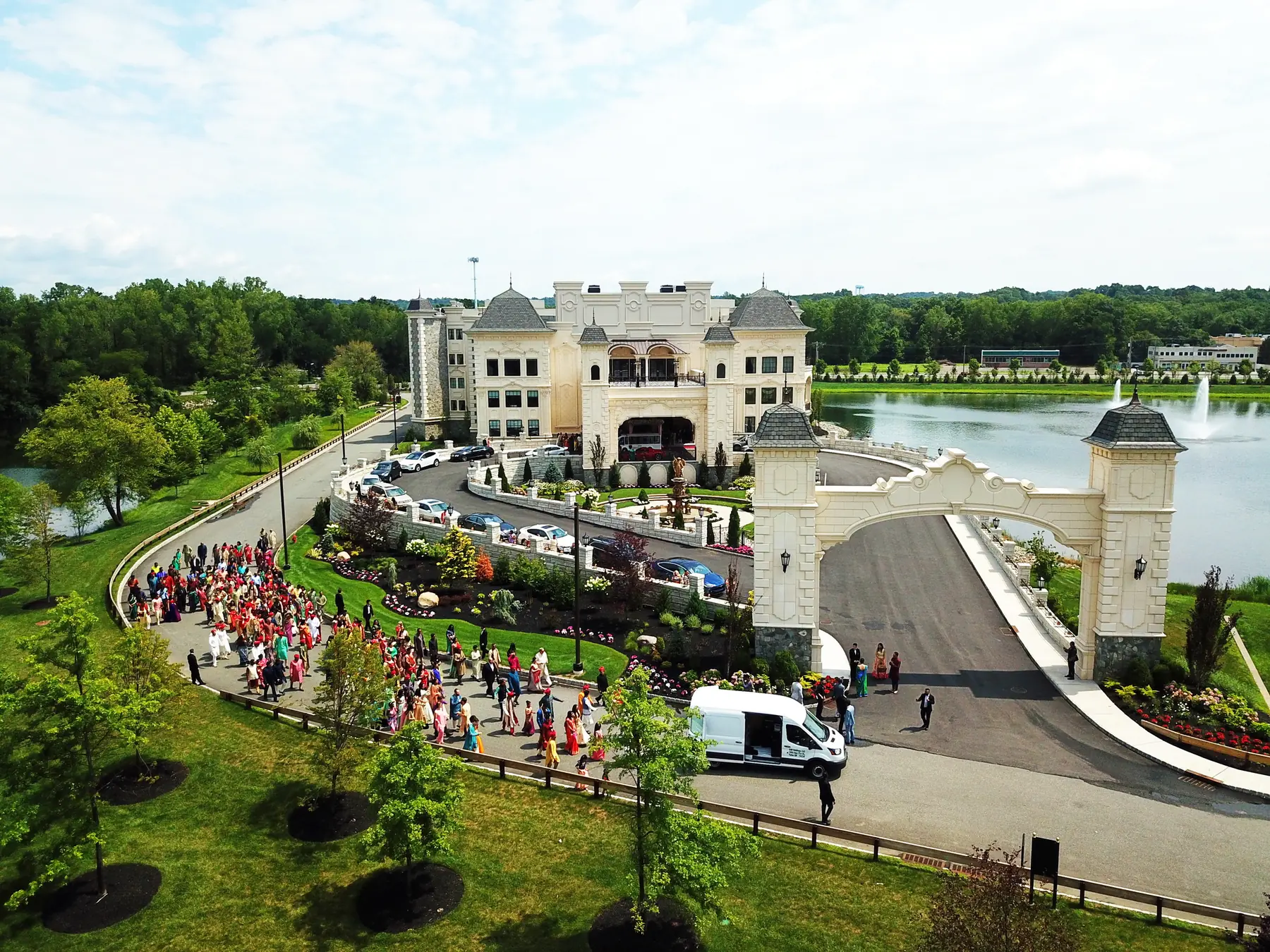
At estate venues such as Park Chateau, the gardens and terraces give you a private setting a short walk from the bridal suite.
How do we keep a first look private at a hotel?
Hotels are full of guests on a wedding morning, and relatives tend to appear exactly when they are not expected. Ask the venue for a quiet room, an unused ballroom foyer or a corner of the garden that can be held for 30 minutes. Agree on a route from the bridal suite that avoids the lobby. Ask one sibling on each side to keep the family busy upstairs until the portraits are under way. A sign on the door helps more than you would think.
How does a first look change the timeline?
With a first look, a morning wedding often runs: getting ready, first look and couple portraits, wedding party photos, then the baraat and ceremony, followed only by family groups. Without a first look, it runs: getting ready, baraat, ceremony, family groups and then couple portraits, which often means portraits happen when everyone is tired and hungry. See our photography timeline guide for full sample schedules.
Can we include the wedding party or family in a first look?
Yes. Some couples follow their private moment with a second reveal for the bridesmaids, the groomsmen or both families together. Keep the couple’s moment first and alone, then bring everyone in. The reactions of siblings and friends often make some of the liveliest photographs of the morning.
Does a first look make sense with an evening ceremony?
Often, yes. When the ceremony starts in the late afternoon, it is usually dark by the time the pheras end, especially from October to March in the Northeast. A first look is then the only chance for portraits in daylight.
What does a first look look like in the photographs?
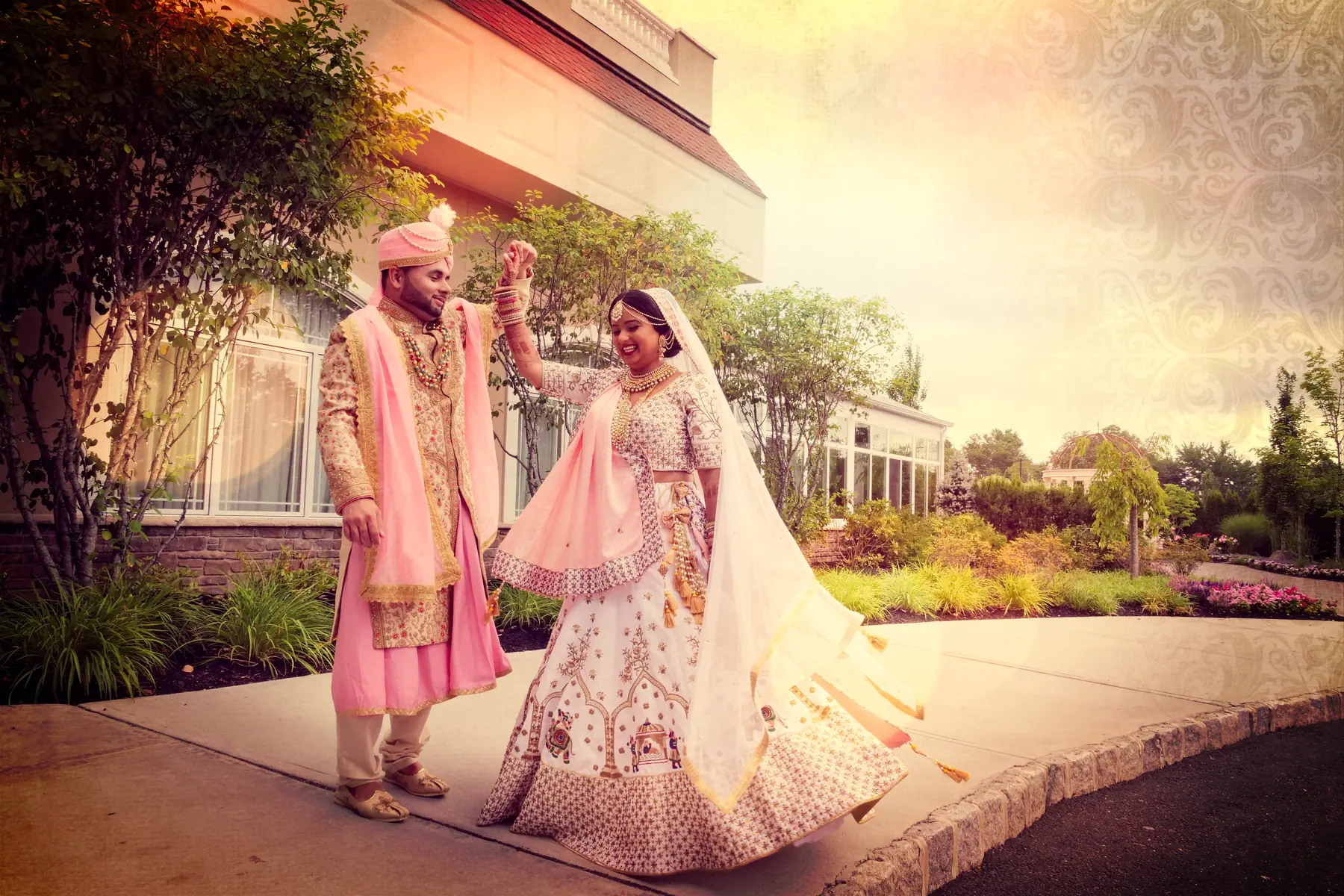
The best first-look photographs are rarely the turn itself. They come in the minute after: the laugh, the adjustment of a dupatta, the hand on a face. Give yourselves time, do not perform for the camera, and let the photographer stay at a distance.

Our view
There is no right answer. We have photographed beautiful weddings both ways. What matters is that the timeline is planned around your choice, so the portraits are never squeezed and the baraat still has its moment. Read our baraat photography guide and Indian wedding shot list, or talk to us about your day.