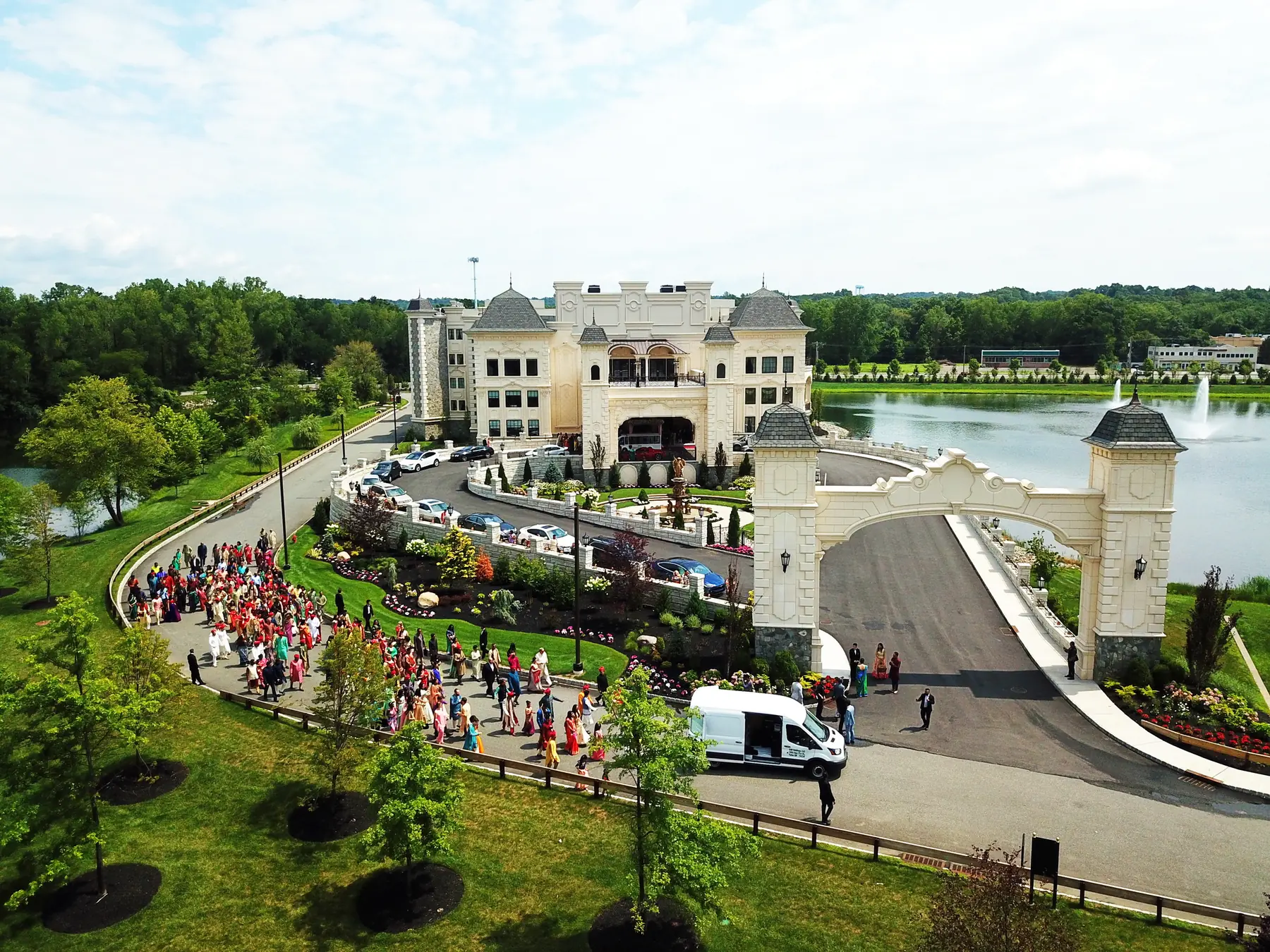
The baraat is the groom’s arrival at the wedding: his family and friends dancing him to the venue behind a dhol or a DJ, with the bride’s family waiting at the entrance to welcome them. It is one of the happiest parts of an Indian wedding and one of the easiest to under-plan. It moves fast, it happens outdoors in whatever weather the day brings, and it depends on several people who may never have met (a horse handler, dhol players, a DJ and a venue manager) arriving at the same place at the same time.
Over more than 4,000 weddings we have photographed baraats on estate driveways, at hotel entrances and across resort lawns. The ones that photograph best are rarely the biggest. They are the ones where someone spent twenty minutes planning the route, the timing and the handoff to the ceremony. Here is that plan.
What happens at a baraat?
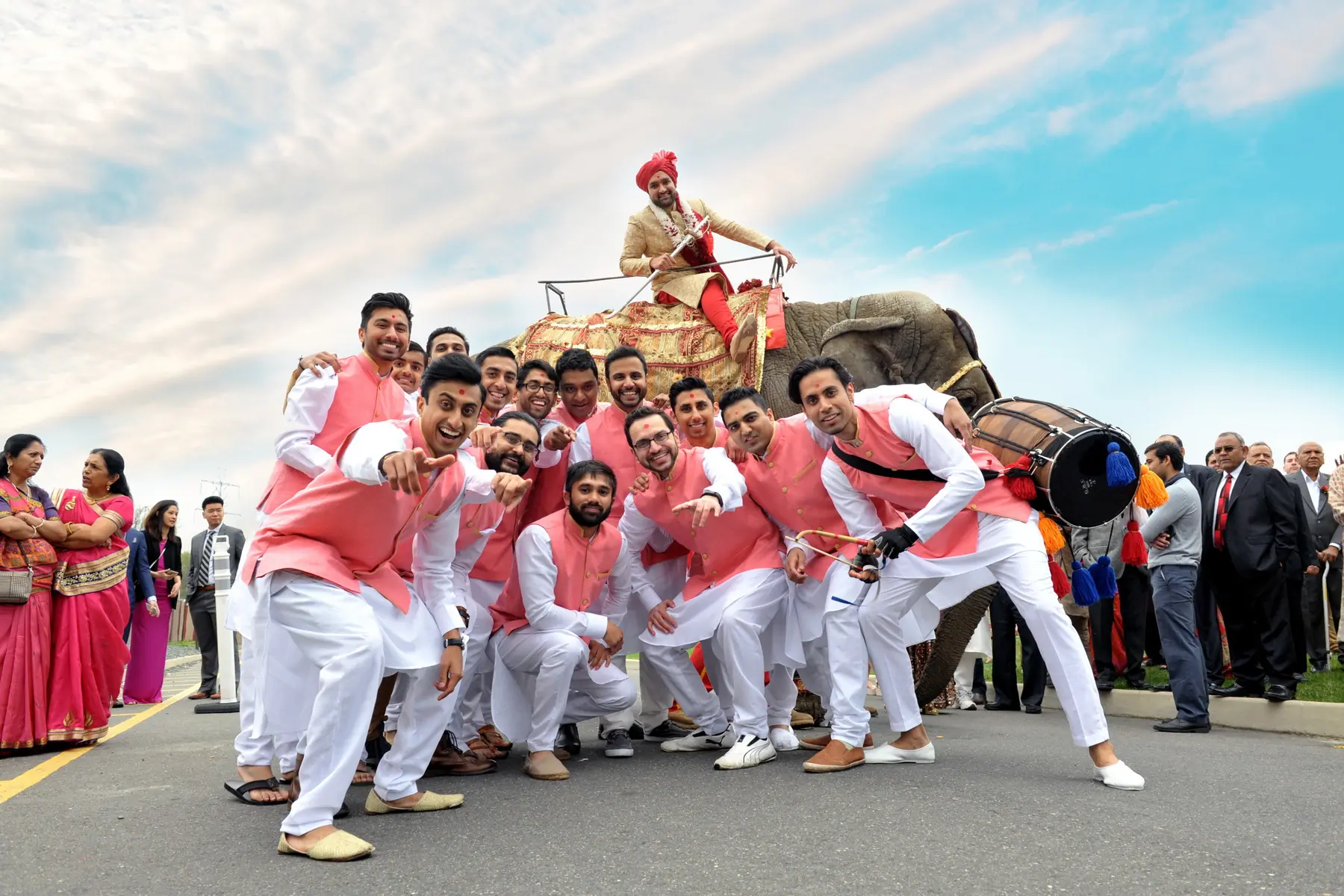
The groom’s side gathers a short distance from the venue. The groom arrives on a horse, in a car or, at a few venues, on an elephant, usually wearing a safa and often a sehra. Family and friends dance in front of him for the length of a short route. When the procession reaches the entrance, the bride’s family greets them with the milni, an aarti and garlands, and the groom is welcomed inside.
Traditions shape the details. In Hindu weddings the baraat usually leads straight into the ceremony. Gujarati families often call the procession the jaan, and the bride’s mother welcomes the groom at the door with the playful ponkhanu. In Sikh weddings the arrival and milni take place before the Anand Karaj, which is often held in the morning. See our Gujarati and Sikh wedding photography pages for how we plan each.
How long does a baraat last?
Most baraats run 30 to 60 minutes from the first beat of the dhol to the end of the milni. The distance is usually short; the dancing is what takes the time. Put the baraat in your timeline as a fixed window with a buffer after it. If your priest has given you a muhurat, an auspicious time for the ceremony, work backward from it so a joyful extra twenty minutes of dancing does not push the ceremony late. Our photography timeline guide shows where the baraat sits in a full wedding day.
Do we need permission from the venue?
Always ask. Many hotels and banquet halls allow the baraat only in a set area, such as one part of the driveway or a side lot, and only within a set time. Some have rules about music volume, live animals or vehicles on the grounds. Before you book a horse or a dhol, ask your venue:
- Where can the procession start and finish?
- Is there room for a horse or a car to arrive and turn?
- Are there limits on sound, animals, vehicles or confetti?
- How long do we have, and who from the venue will be there?
If the route would use a public road or sidewalk, ask the venue whether the town requires permission and who arranges it. Then share the answers with your photographers and film team so we can plan where to stand.
Horse, car or elephant: which ride is best for photos?
- Horse: the classic choice. The groom sits above the crowd, which keeps his face visible in every frame. Ask the provider how the horse handles crowds and loud music, and keep its route short.
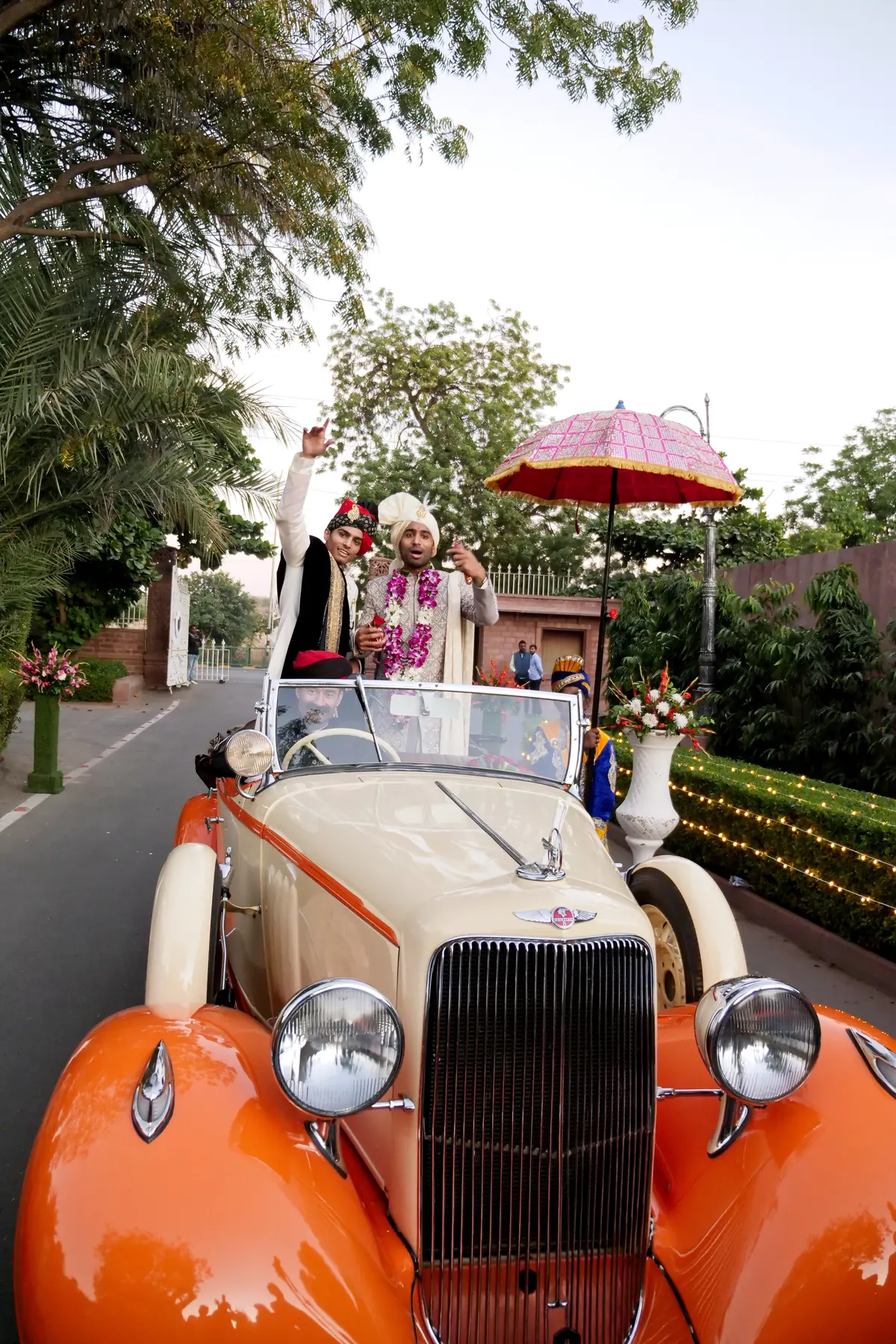
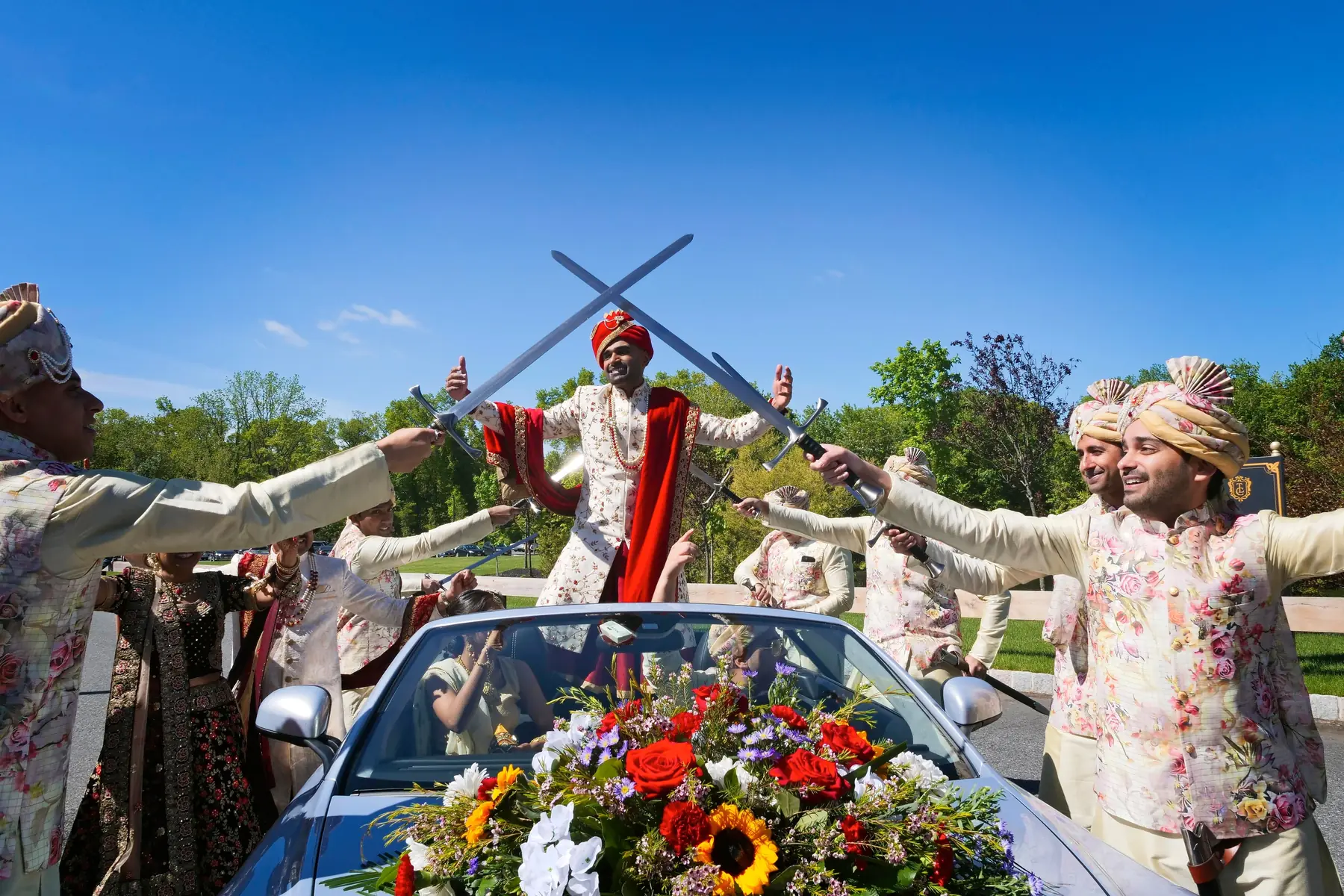
- Vintage car or convertible: practical in heat, cold or rain, and for longer distances. An open top keeps the groom visible; in a closed car, plan for him to step out for the last stretch so he can dance in.
- Elephant: dramatic and possible only at some resort venues. It needs the venue’s approval and an experienced handler, so book well ahead.
- On foot: some grooms walk and dance with their friends the whole way. It gives the most candid photographs of all.
How do we keep the baraat on time?
- Ask the groom’s side to gather 15 to 30 minutes before the start time at a clearly named spot.
- Give one cousin or friend, not the groom’s parents, the job of moving people along.
- Agree with the dhol players and the DJ on a start time, a rough length and a clear signal to finish.
- Keep the route short. A short route with more dancing looks better than a long walk.
- Have water ready in summer, and a covered or shortened route in case of rain.
Why does a compact procession look better?
In photographs, a baraat spread over a long distance looks thin, with gaps between dancers and the groom far from the energy. Ask close family and friends to stay within a few steps of the groom, and keep the dhol near the front. The strongest frames hold the groom, his parents and the dancers in one picture, with the venue behind them. If the groom’s mother or sisters have rituals along the way, tell us in advance so we are in front of them, not behind.
What is the milni, and how do we plan it?
When the baraat arrives, the bride’s family steps forward to greet the groom’s family. In Punjabi and Sikh families, relatives of the same relationship meet in pairs: the two fathers, then uncles, brothers and cousins, each pair exchanging garlands and an embrace, sometimes with a playful lift. Many Hindu families add an aarti and tilak for the groom at the door.
The milni can run long and is easy to lose track of. Write a short list of the pairs, in order, and give it to whoever is calling the names and to your photographers. If the list is long, choose the pairs that matter most for photographs and keep the rest moving.
Where should the photographers stand?
With two photographers, one usually walks backward ahead of the procession for the groom’s face and the dancers, while the other waits at the entrance with the bride’s family to photograph the welcome. A cinematographer moves through the crowd for sound and motion. Views from above, from a balcony, an upper floor or a drone where the venue and local rules allow it, show the whole procession arriving. Some brides watch the baraat from a window upstairs; if yours would like to, tell us, and we will photograph that too.
What about heat, rain and cold?
In summer, start the baraat early, keep it in the shade where you can and have water at the gathering point. In winter or rain, plan a covered route or a shorter procession, and keep umbrellas in the wedding colors nearby. A convertible with the top up and a final walk under cover can still look joyful.
 Vanshika & DanvirSikh wedding film · Watch on YouTube
How does the baraat fit the rest of the day?
The baraat sets the tone for the ceremony that follows, and the energy it builds carries into the welcome and the first rituals at the mandap. Read our Indian wedding shot list and Hindu wedding photography page, or tell us your date and venue and we will help you plan the route.