Many of our couples are planning a Hindu ceremony for guests who have never seen one, or want to understand the rituals they grew up watching from the front row. This guide walks through the main steps in the order they usually happen. Traditions differ between regions, communities and families, and two Hindu weddings in the same week can look quite different, so the order your priest gives you is always the one that counts.
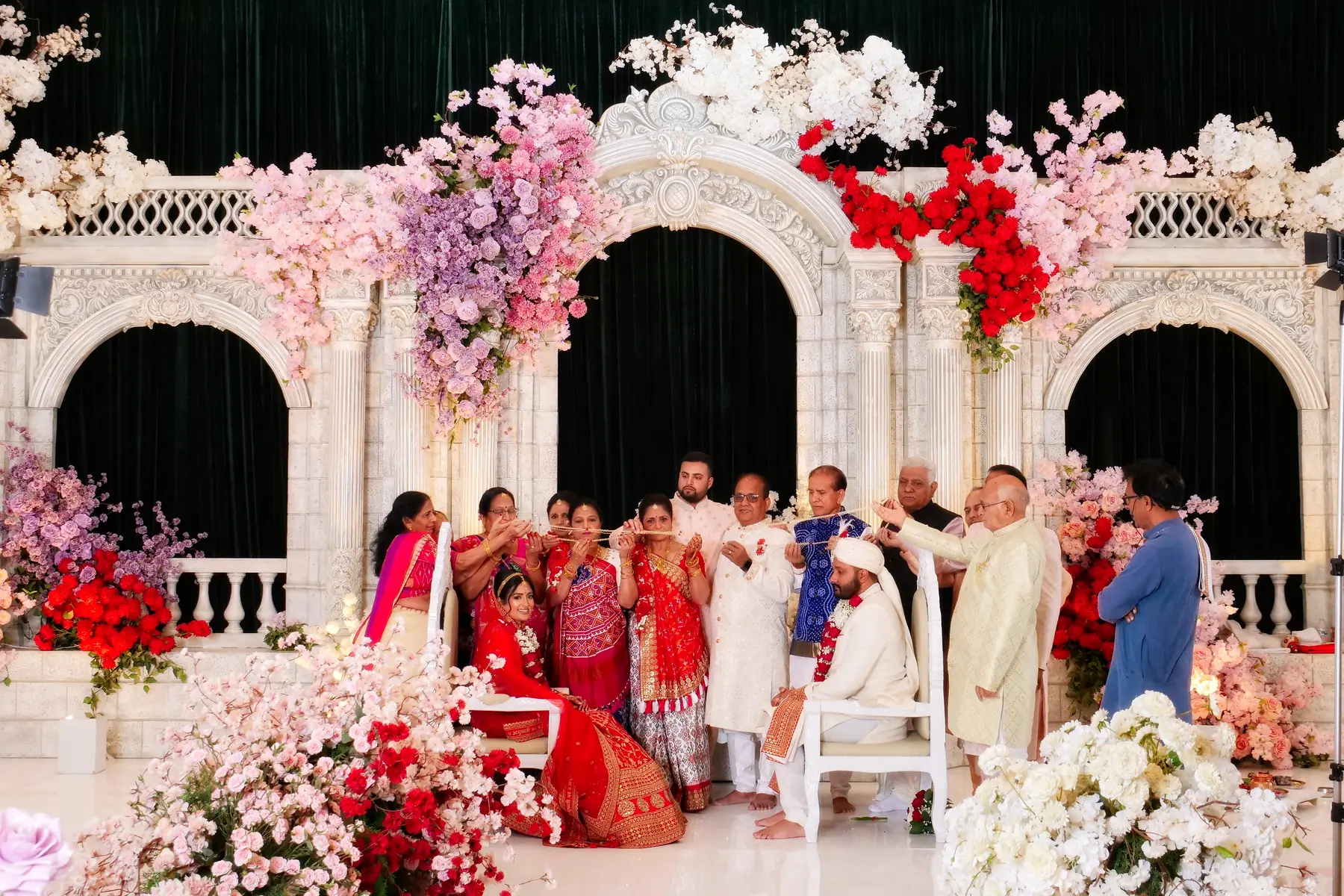
How long is a Hindu wedding ceremony?
Many ceremonies in the US are planned at 60 to 90 minutes. A full traditional ceremony can run two to three hours, and some families choose a shorter version with the key rituals and a short explanation for guests. Talk to your priest early about the length, because it shapes the rest of the day: cocktail hour, family portraits and the reception all follow it.
Baraat and milni
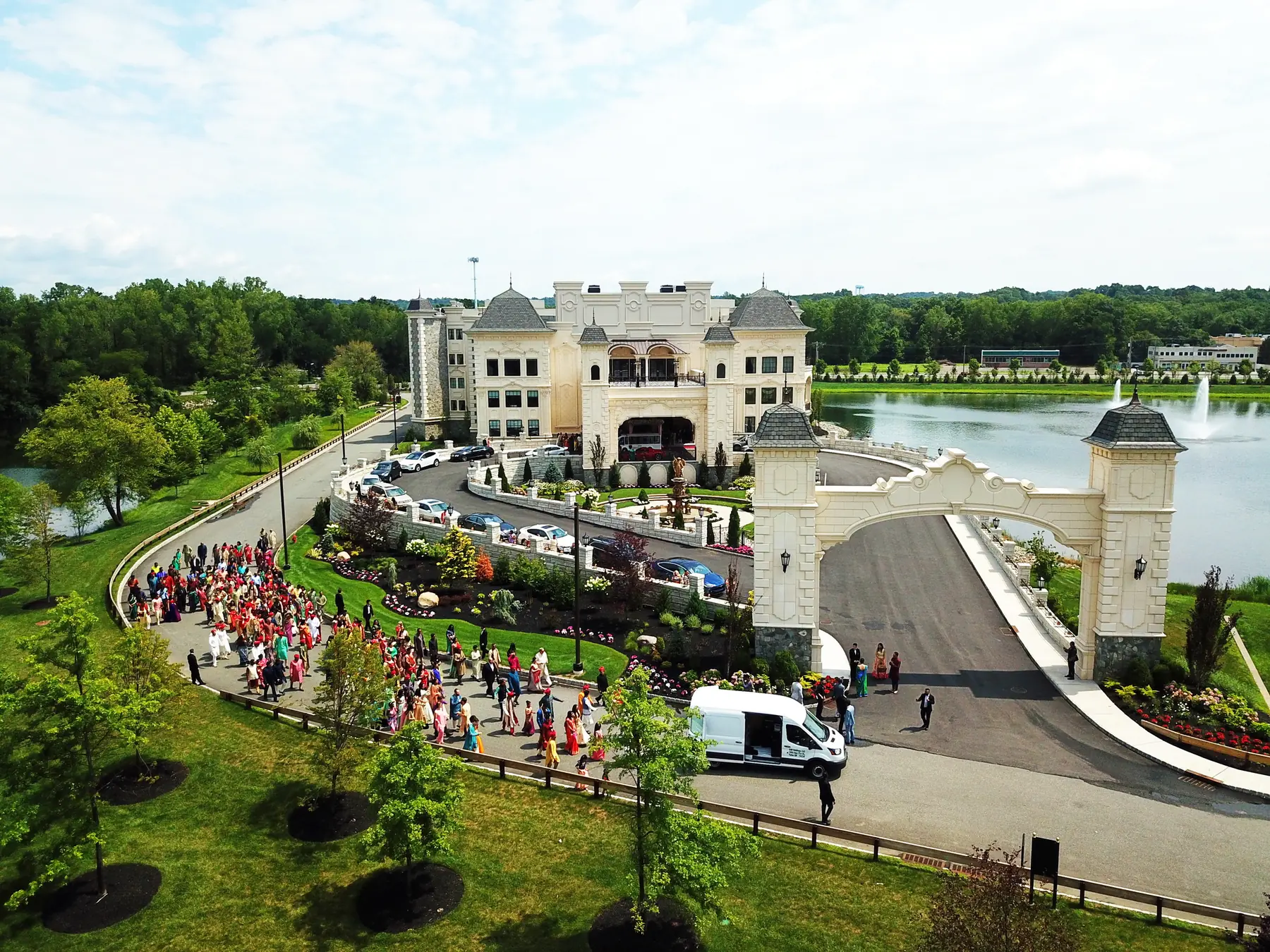
The groom arrives in a procession with his family and friends, on a horse, in a car or on foot, with dhol and dancing. The bride’s family welcomes them at the entrance with an aarti, and relatives greet each other in the milni. Our baraat guide covers how to plan it.
Ganesh puja
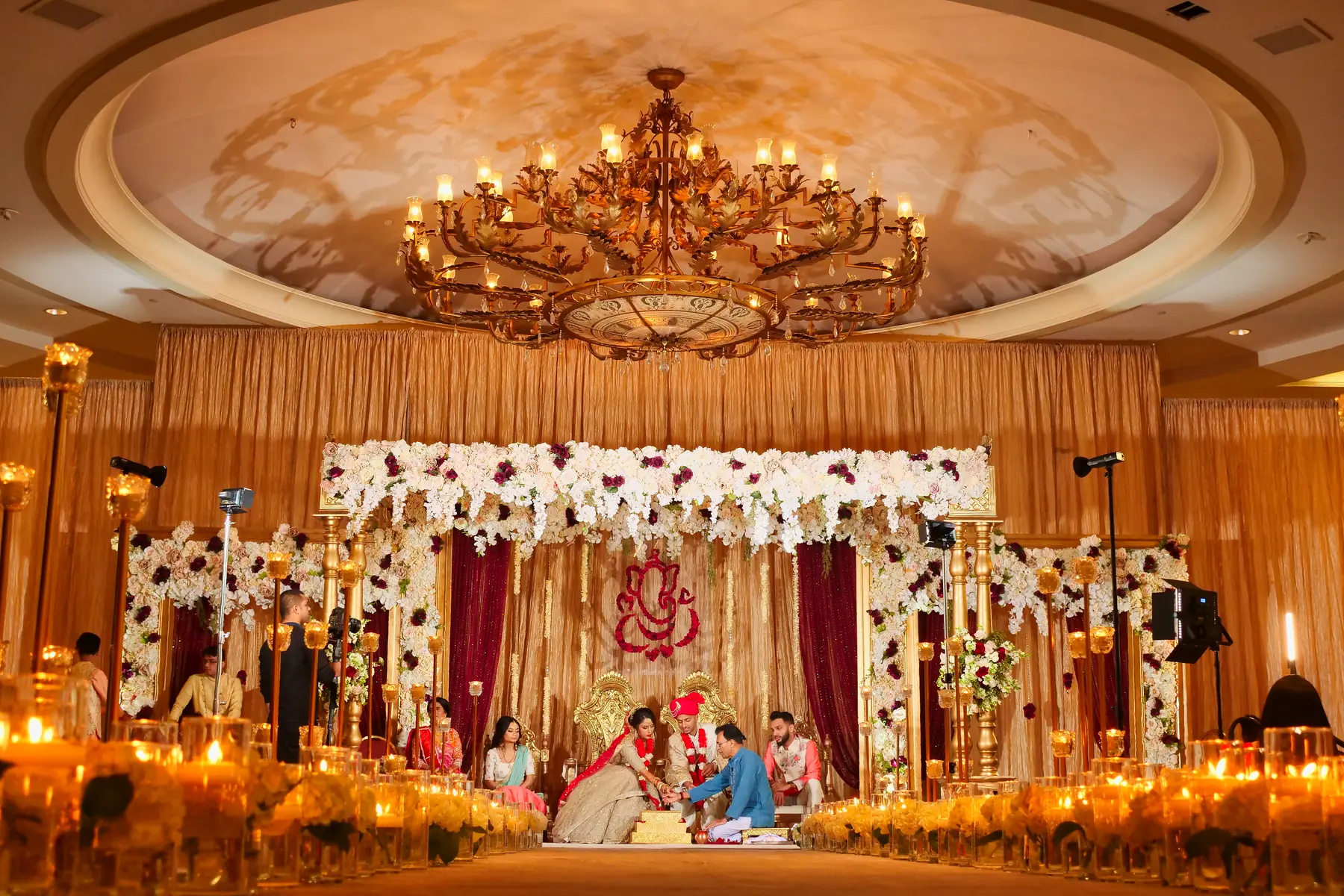
Many ceremonies begin at the mandap with a prayer to Ganesh, who removes obstacles, so that the wedding proceeds without difficulty. The groom and often the families take part, guided by the priest. It is a quiet, focused start, and a good moment for photographs of the groom’s parents beside him.
Jaimala or varmala
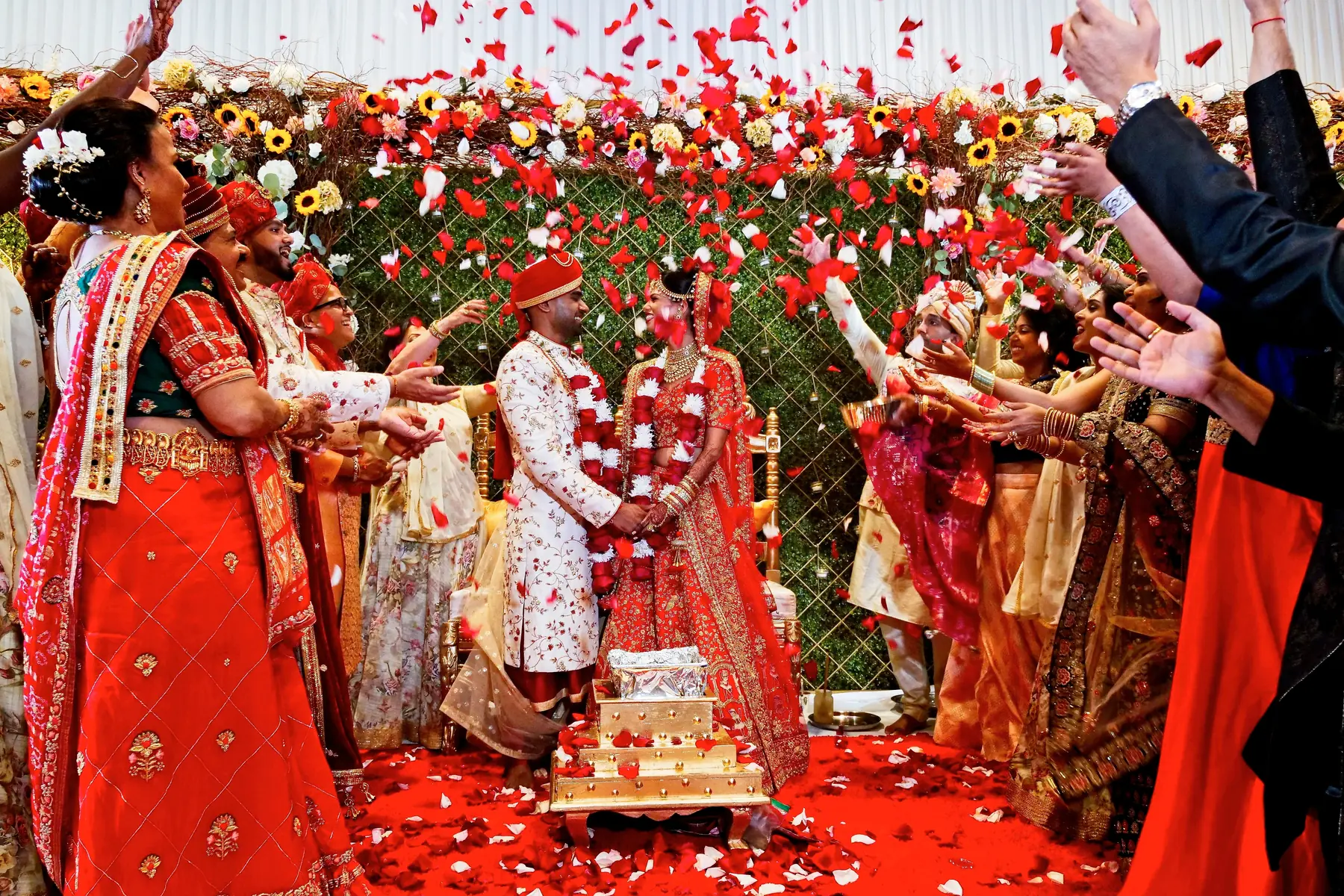
The bride arrives, often escorted by her brothers or, in Gujarati weddings, by her maternal uncle, and the couple exchange garlands of flowers as a sign that they accept each other. Friends on each side sometimes lift the bride or groom to make the exchange harder, which makes it one of the most photographed and most laughed-about moments of the day. It also lasts only seconds.
Madhuparka
The bride’s parents welcome the groom at the mandap as an honored guest. In many families they offer him madhuparka, a mixture of honey, yogurt and ghee, and may wash his feet. It is a gesture of respect from the family he is joining.
Kanyadaan
The bride’s parents place her hand in the groom’s, giving their daughter in marriage. For many families this is the most emotional moment of the ceremony. Watch the bride’s father and mother here; their faces often tell the story better than the hands.
Hastmelap and panigrahan
Closely linked to the kanyadaan, the hastmelap, as Gujarati families call it, or panigrahan is the joining of the couple’s hands. The groom takes the bride’s hand as a promise to stand by her for life.
Granthi bandhan
The end of the groom’s scarf is tied to the bride’s sari or dupatta, often by a female relative or the priest. The knot symbolizes a union meant to last, and it stays tied through the pheras.
Vivaah homa
The sacred fire, Agni, is lit at the center of the mandap. Agni is the witness to the marriage, and the couple make offerings into the fire as the priest chants. In many families the bride’s brother pours puffed rice into the couple’s hands for an offering, a small ritual that is easy to miss.
Mangal pheras
The couple walk around the sacred fire, each circle accompanied by a vow. Many North Indian families take seven pheras. In many Gujarati weddings there are four, representing dharma, artha, kama and moksha: duty, prosperity, love and spiritual liberation. Who leads each circle varies by family. The pheras are the heart of the ceremony, and they move slowly enough to photograph from several angles.
Saptapadi
The seven steps. With each step the couple make a promise, traditionally for nourishment, strength, prosperity, happiness, children and family, the seasons of life, and lifelong friendship. In some families the bride touches seven small mounds of rice or betel nuts with her toe, one for each vow. In some traditions the saptapadi and the pheras are combined into one ritual.
Sindoor and mangalsutra
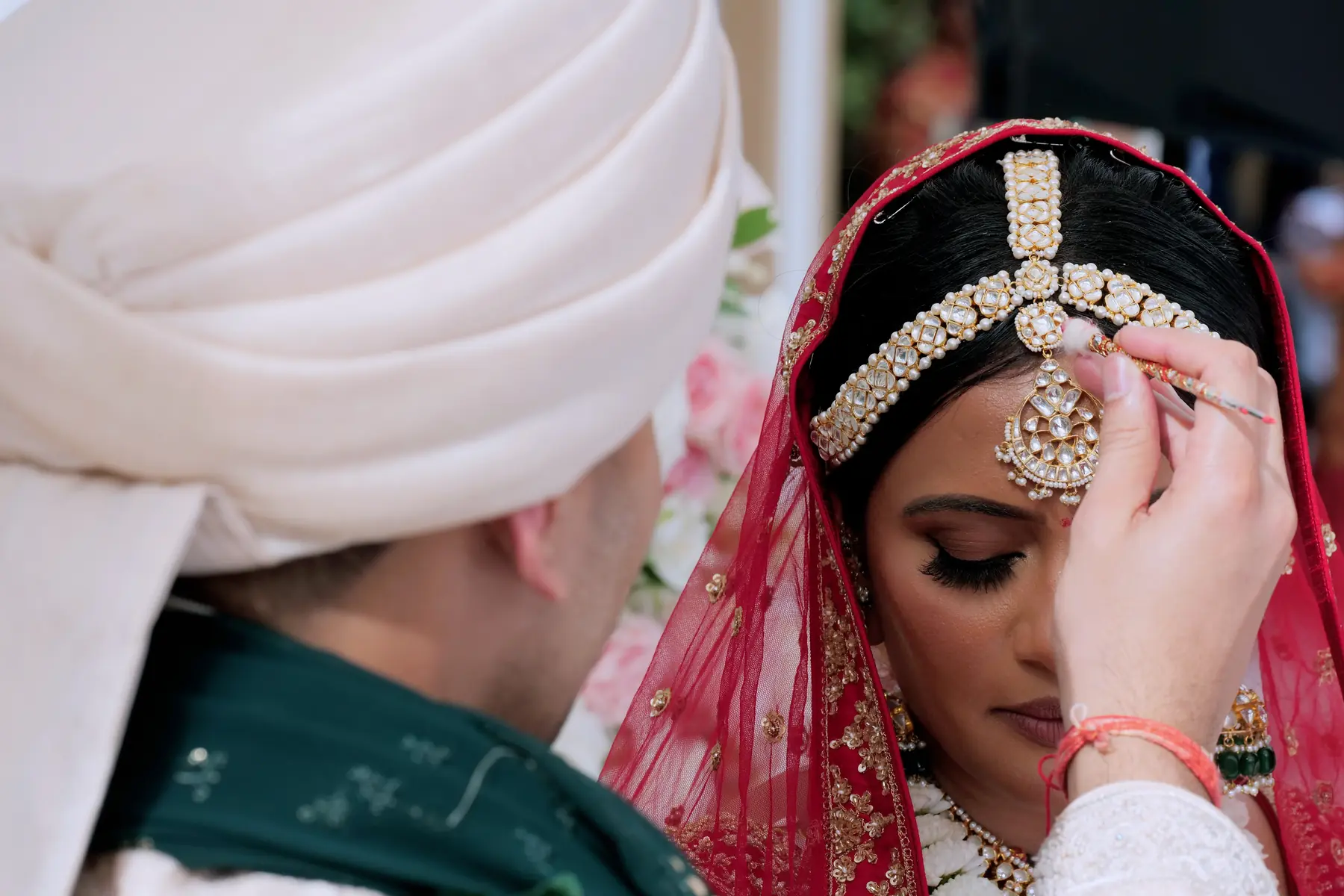
The groom applies sindoor, red vermilion, to the parting of the bride’s hair and ties the mangalsutra, a sacred necklace, around her neck. For many families the marriage is now complete. Both moments are brief and close, so the photographer needs to be in position before they begin.
Joota chupai
While the groom is at the mandap, the bride’s sisters and cousins hide his shoes and bargain for a gift before they return them. It is pure fun, and it gives guests a lively moment near the end of a long ceremony.
Ashirvad
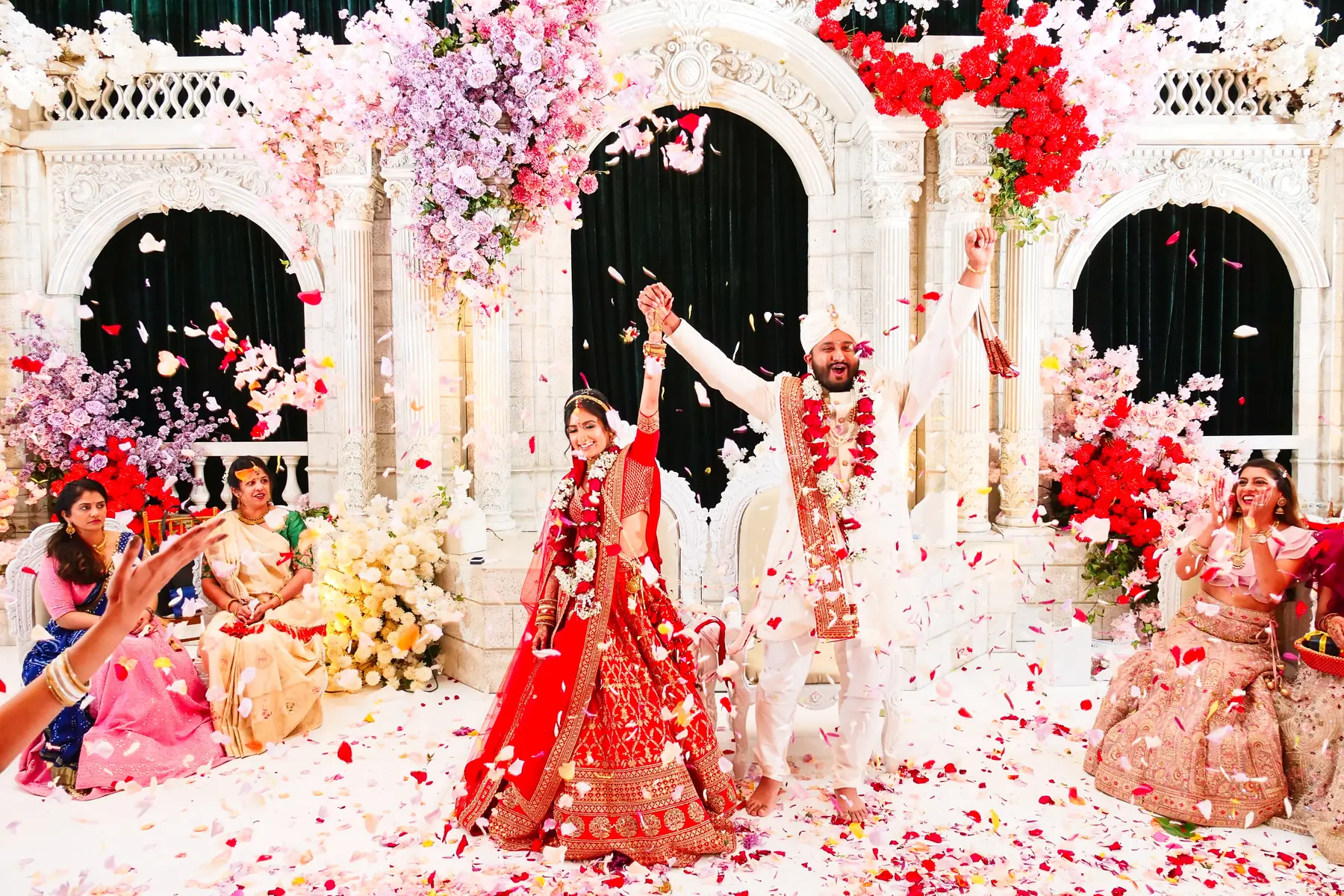
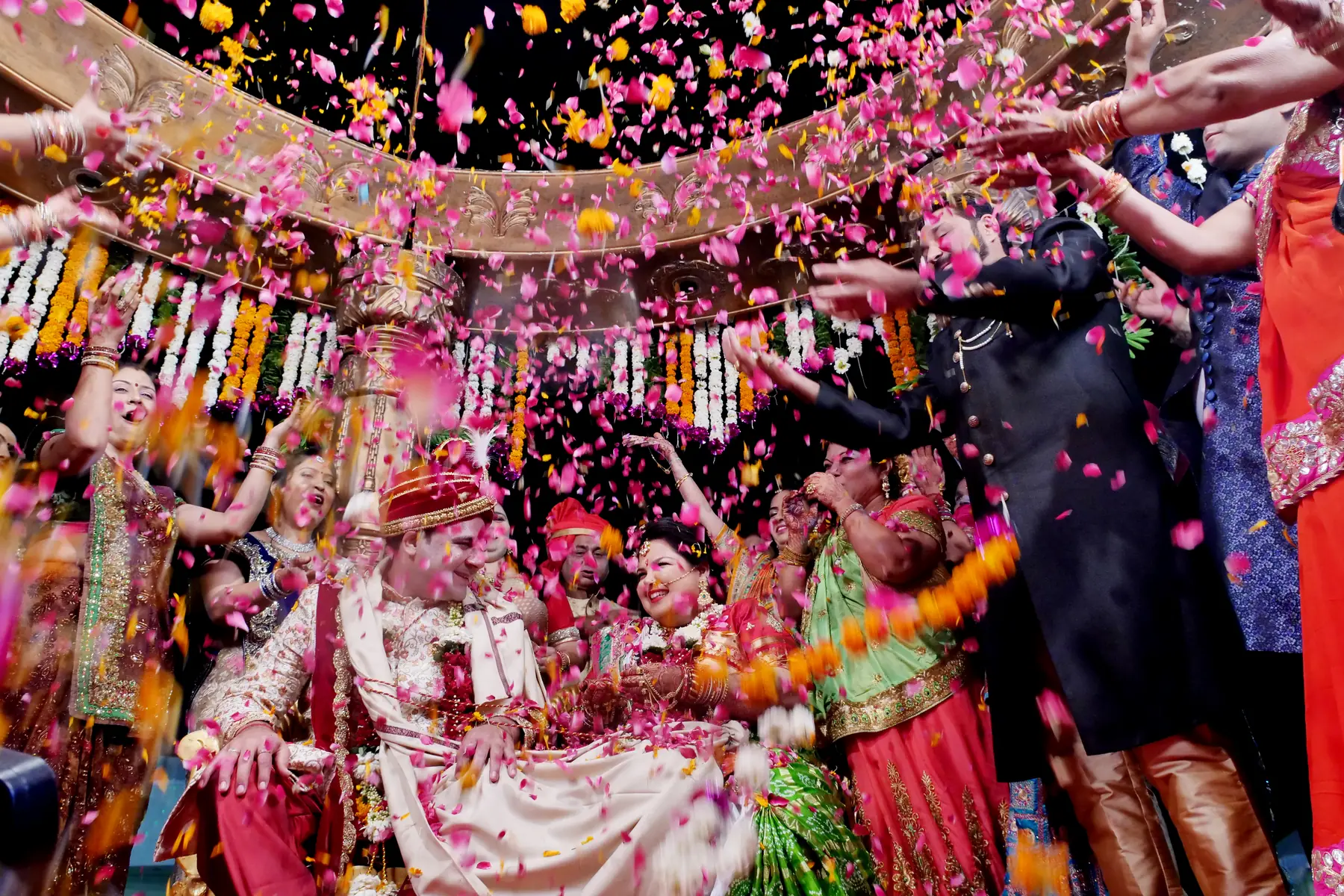
The couple touch the feet of their elders and receive blessings, while guests shower them with flower petals or rice. It is the moment many guests have been waiting for, and it makes some of the happiest family photographs of the day.
Vidaai
The vidaai is the bride’s farewell to her family as she leaves for her new home. In many North Indian families she throws a handful of rice over her shoulder toward her parents, a thank-you for everything they have given her. It is often tearful, and at many US weddings it takes place at the end of the reception rather than straight after the ceremony.
How do regional ceremonies differ?
The steps above follow a common North Indian and Gujarati pattern. South Indian weddings center on the muhurtham, when the groom ties the thali or mangalsutra at the auspicious moment, and Telugu weddings include the jeelakarra bellam and the talambralu, a joyful shower of rice. Read more on our South Indian and Gujarati pages, and if your families come from different backgrounds, see our fusion weddings page.
Which moments last only seconds?
The jaimala, the hand placed in the groom’s at the kanyadaan, the sindoor, the mangalsutra and the first petals of the ashirvad are all over in moments. Choose photographers who know the order and stand in the right place before each one begins. See Hindu wedding photography and our Indian wedding shot list.