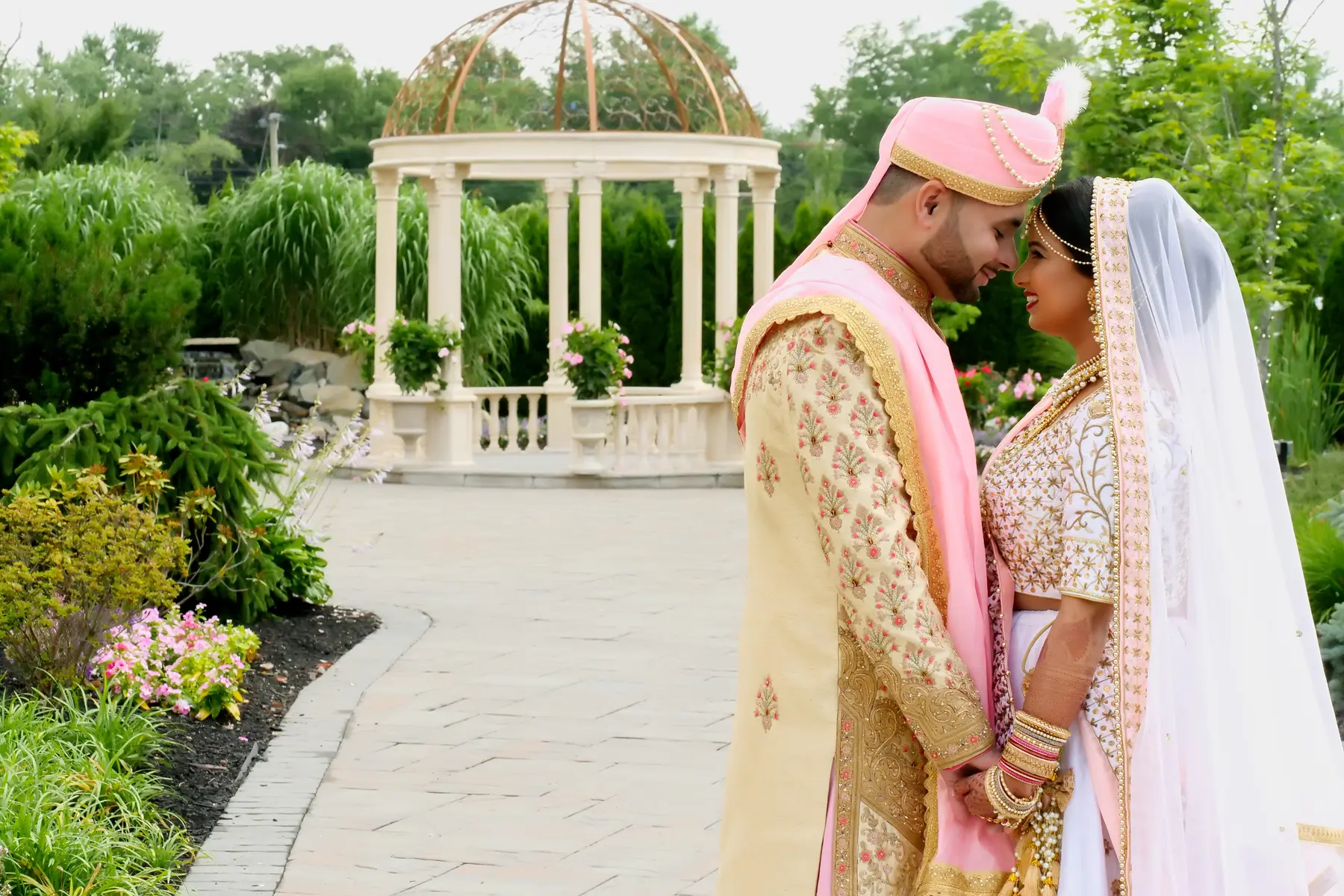
Two ceremonies, one plan
Many fusion weddings we photograph have two ceremonies in a single day: a Hindu ceremony beneath a mandap in the morning, then a white-gown ceremony on the lawn in the evening, with a change of clothes, a change of light and a reception at the end. That only works when the day is planned carefully. We build the timeline with you so portraits for both looks fit, and nobody is rushed between ceremonies.
How do you plan a two-ceremony wedding day?
The questions we work through with every fusion couple:
- Which ceremony comes first? Many couples hold the Hindu or Sikh ceremony in the morning, when muhurats and gurdwara ceremonies are often set, and the Western ceremony later, when the evening light suits a white gown.
- How long is the gap? A full change of outfit, hair and jewelry takes real time, and more if the ceremonies are in different places. We plan the gap before anything else.
- Where do portraits fit? We plan couple portraits in both looks, often one set before the first ceremony and one in the last light of the day.
- Who needs to be where? Family members may have roles in both ceremonies; a shared timeline keeps them from being needed in two places at once.
- What do guests need to know? A short printed program explaining each ritual helps half the room follow the other half’s traditions.
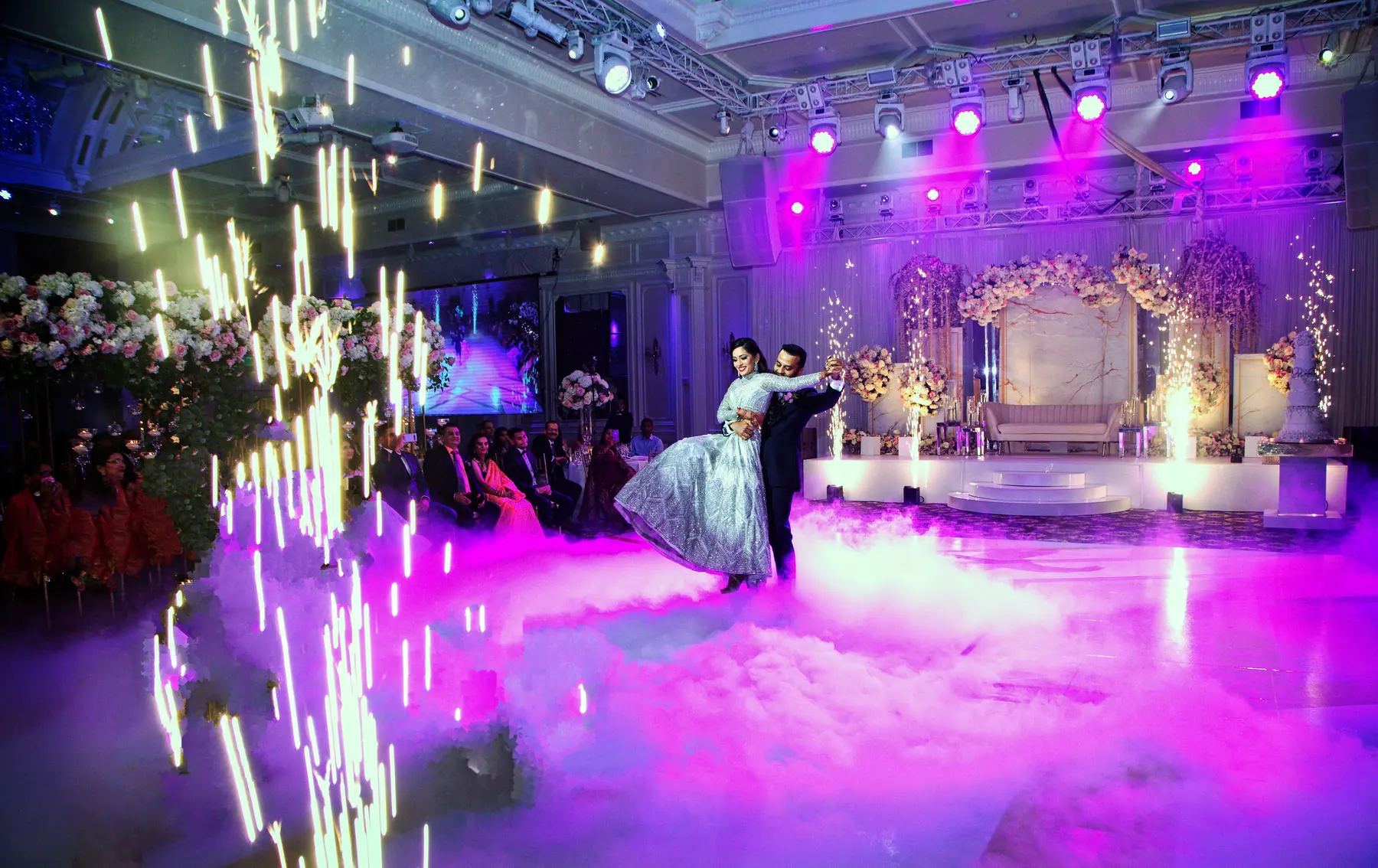
Fusion weddings we have filmed
Our YouTube channel holds several:
- Kajal and Wesley: an Indian and Chinese wedding at Crystal Plaza. Watch the film.
- Nicki and Gaby: a Persian and Punjabi wedding at The Merion.
- Soumya and Andres: a Kannada and Christian wedding at The Marigold.
- Palak and Jason: a wedding film at The Palace at Somerset Park.
 Nicki & GabyPersian and Punjabi wedding teaser, The Merion · Watch on YouTube
Traditions that meet at a fusion wedding
Every combination is different. Among the traditions couples bring together:
- A Hindu varmala and pheras with Western vows and a ring exchange.
- A Sikh Anand Karaj in the morning and a church or civil ceremony later.
- A Chinese tea ceremony honoring parents and elders, alongside Indian rituals.
- Persian and Punjabi celebrations across one weekend.
- A Kannada ceremony and a Christian ceremony, as in Soumya and Andres’s wedding.
Explaining the traditions to everyone
At a fusion wedding, half the guests may be seeing a varmala or a tea ceremony for the first time. We photograph the rituals so they make sense to both families when they look back, and the film can carry the meaning too: the music, the vows, the laughter on both sides.
One team plans both, so nobody blocks anyone’s frame and the photographs and the film come from the same story.
Two families, one set of portraits
A fusion wedding may be the first time two extended families spend a whole day together. We plan family portraits for each side and for both together, ordered so elders go first, and ask a relative from each family to help gather names. The photograph of both families together, after both ceremonies, is often the one parents frame.
Music, vows and the wedding film
For the film, music carries a lot of the meaning. Some couples pair a classical Indian piece with a Western song, or let the vows from one ceremony play over footage of the other. We talk through those choices before the wedding, so the film sounds like both families.
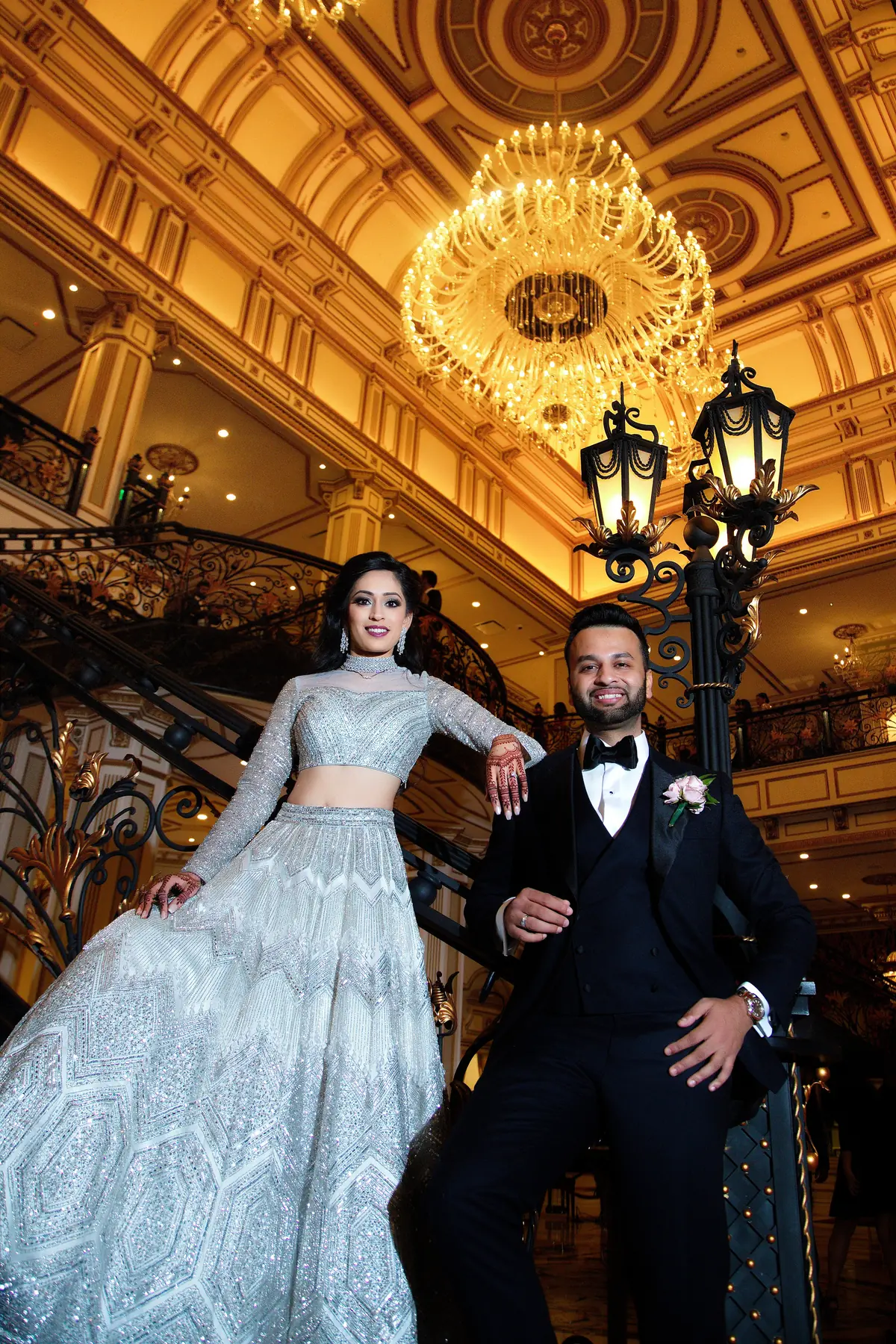
Outfit changes, light and the reception
Fusion weddings often mean three or four looks in a day: a lehenga or sari, a white gown, a reception outfit. We plan where each change happens, keep the timing realistic and make sure each look gets its own portraits in good light. At the reception the music, the speeches and the dance floor tend to mix both cultures, and the photographs and the film can show that mix clearly.
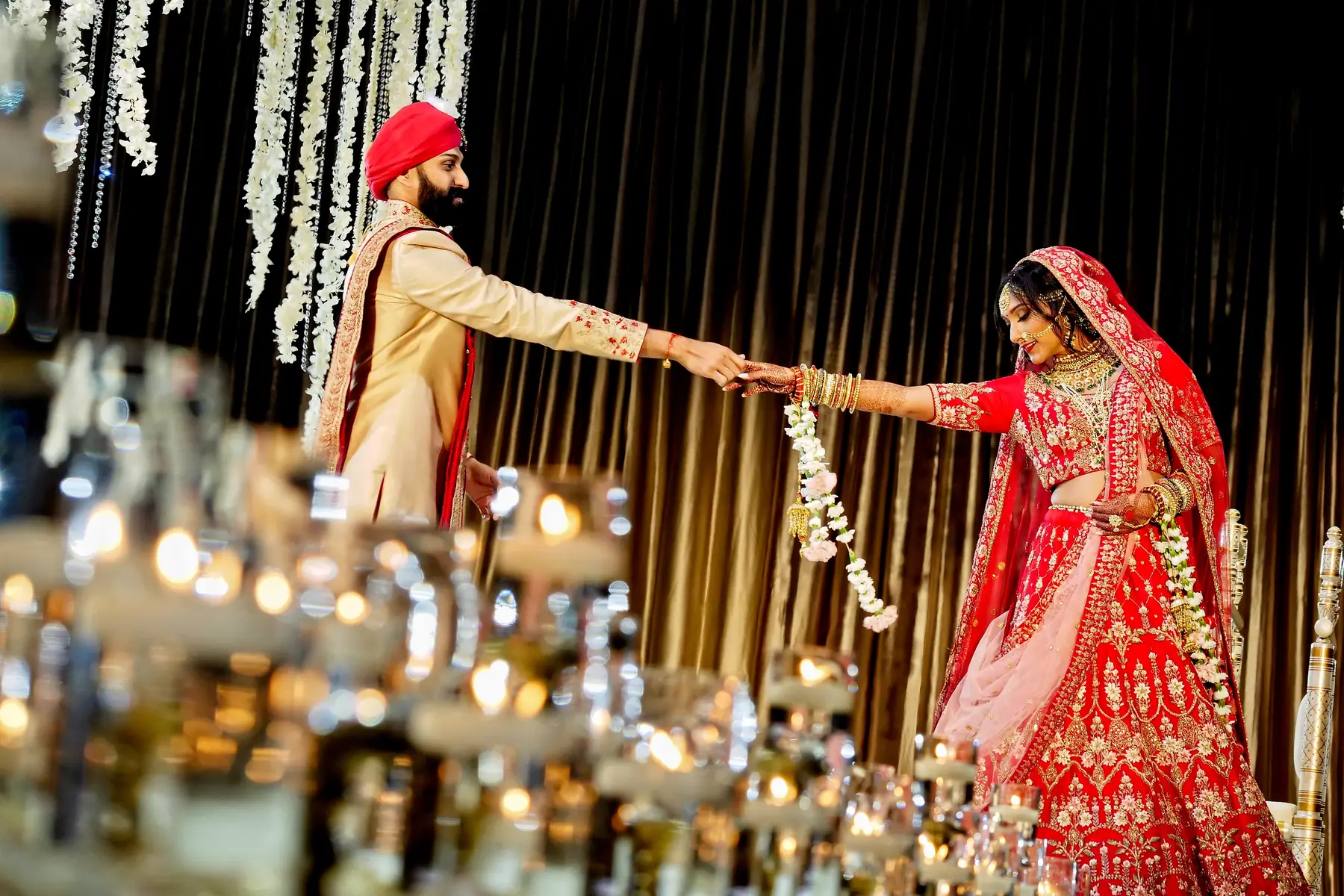
Planning a fusion wedding
Start with the order of both ceremonies, the outfit changes and the travel between spaces. Read should you do a first look? and our photography timeline guide, then check your date.