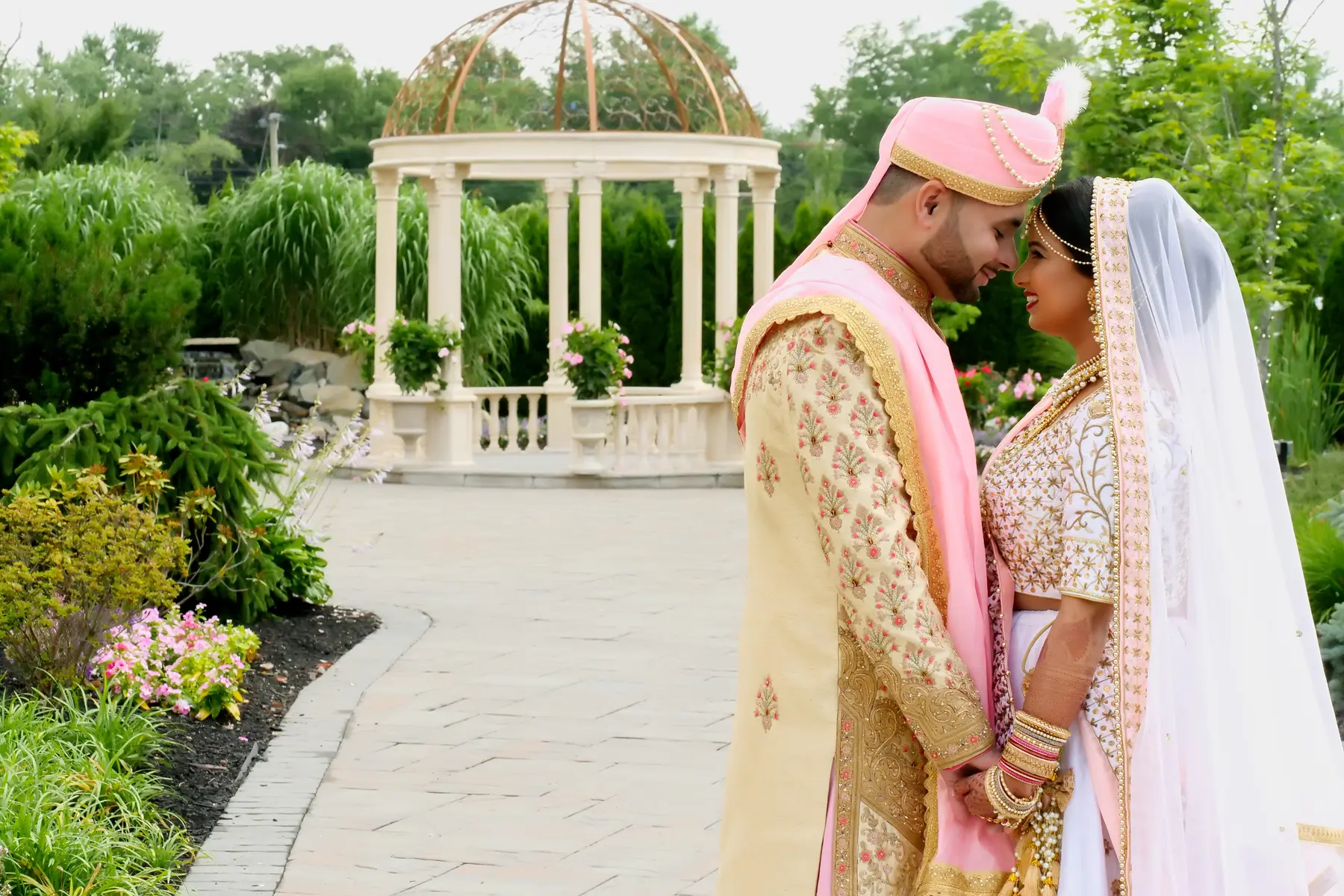
A Gujarati wedding, understood from the inside
When the masis gather for the pithi, when the mama carries the bride to the mandap, when the whole family breaks into garba at midnight, it helps when your photographers already know what is about to happen and can talk to everyone in Gujarati. Chirali and Amish speak Gujarati, Hindi and English, so your grandparents can tell them which photograph matters most.
Gujarati weddings also run on family timing. The maharaj sets the muhurat, the mama has a role at almost every stage, and the jokes during the ponkhvu and the chero pakaryo are half the fun. Knowing those moments are coming is the difference between a photograph of a crowd and a photograph of a grandmother laughing.
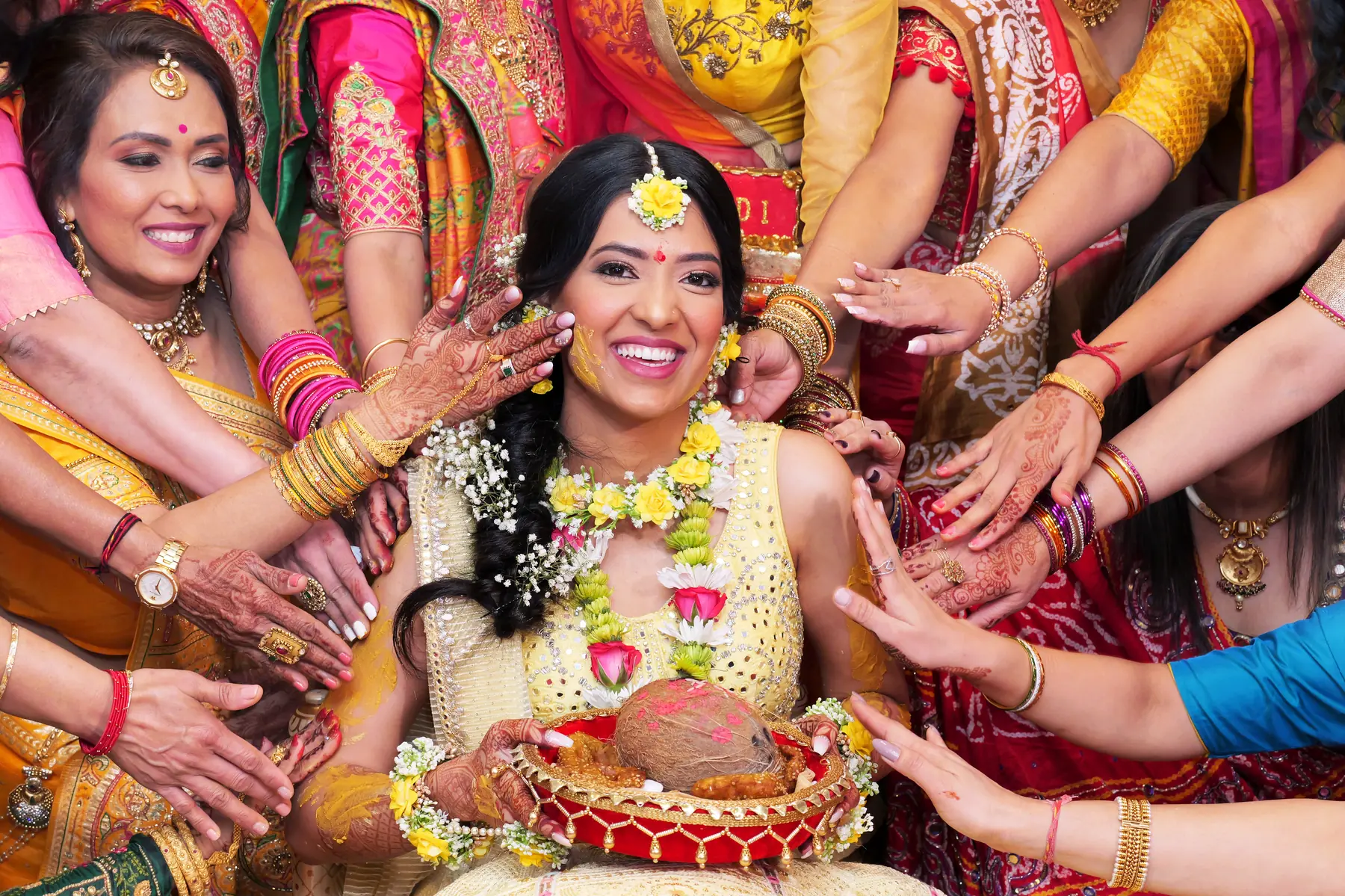
What are the rituals at a Gujarati wedding?
Every family has its own order, so we confirm it with you and your maharaj before the day. A Gujarati wedding often includes:
Before the wedding day
- Kankotri lekhan: writing the first invitation to Ganesh. We filmed one in Boston for Meet and Bhavya.
- Mandvo muhurat and griha shanti: the prayers that open the wedding at home.
- Pithi: the turmeric ceremony, loud and laughing.
- Mameru: the bride’s maternal uncle and his family arrive with gifts, traditionally including the panetar sari she wears to the mandap.
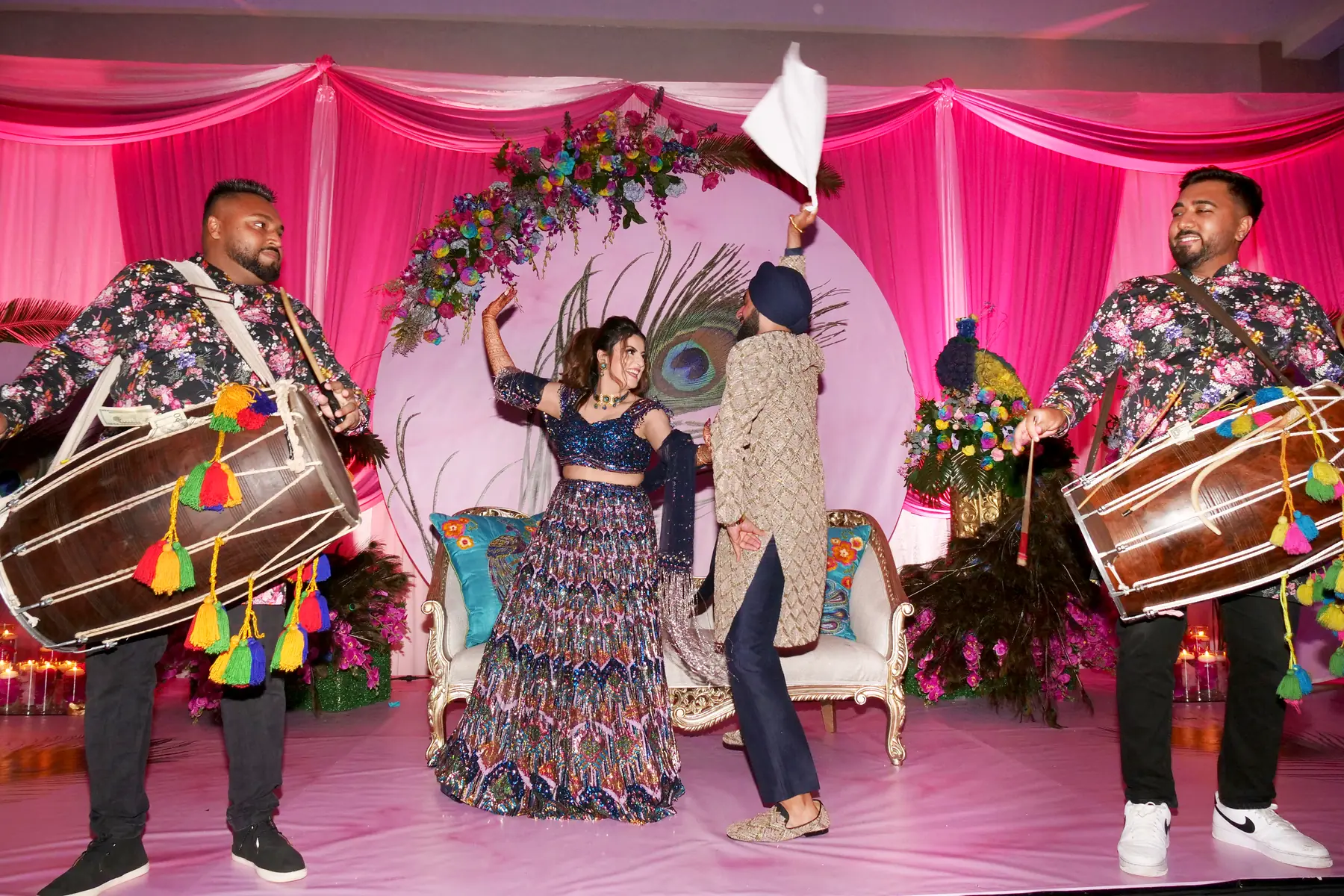
- Garba and raas: the night the whole family dances, with dandiya sticks for the raas.
On the wedding day
- Jaan and ponkhvu: the groom’s procession arrives and the bride’s mother welcomes him, playfully trying to catch his nose.
- Madhuparka: the groom’s welcome at the mandap.
- Antarpat and varmala: the bride is brought to the mandap, often by her mama; a cloth held between the couple is lowered for the garland exchange.
- Kanyadaan and hast melap: the bride’s parents give her hand and the couple’s hands are joined.
- Mangal fera and saptapadi: the couple walk around the sacred fire, four times in many Gujarati ceremonies, then take the seven steps.
- Chero pakaryo: the groom catches his mother-in-law’s sari and does not let go until he receives a gift.
- Kansar and vidaai: the couple feed each other kansar, a sweet, then the bride says goodbye to her family.
- Griha pravesh and aeki beki: the bride’s welcome to her new home, and the ring-finding game in a bowl of milky water.
How do you photograph a garba night?
Garba is fast, crowded and lit for dancing, not for photographs. We plan for low light and movement, find the high angle that shows the circles, and step into the dance for the close, joyful frames. It helps to tell us:
- When the couple will join the circle, and when any family performances or the aarti will happen.
- Whether a live band or a DJ is playing, so we can plan for the stage lighting.
- Which elders should be photographed dancing; those are often the most loved photographs of the night.
- Whether dandiya sticks will be used for the raas, so we can work close without getting in the way of the pairs.
If you are filming too, the garba often becomes the most replayed part of the wedding film.
The panetar and the gharchoru
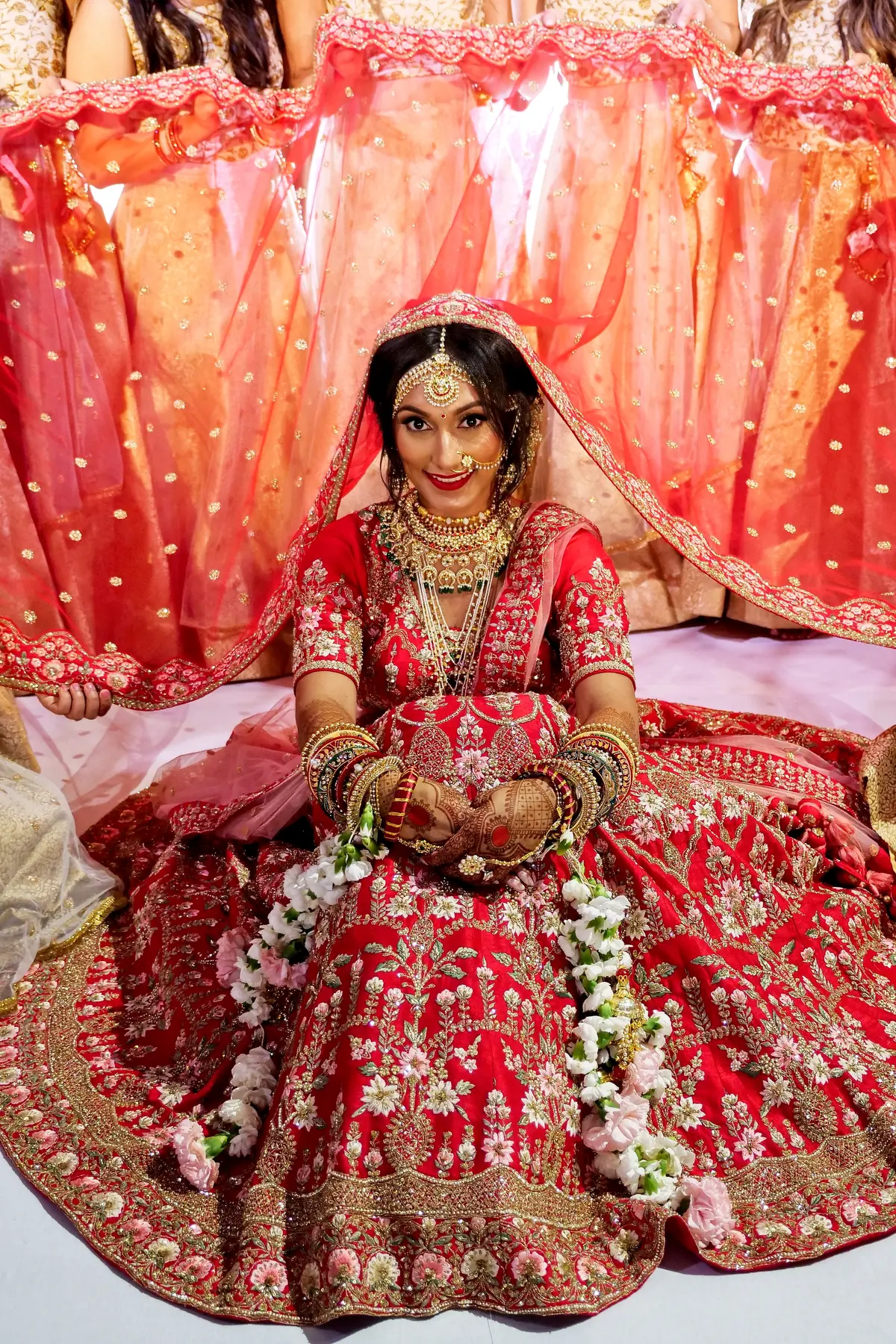
A Gujarati bride often wears two saris that both carry meaning: the panetar, white and red, from her mama, and the gharchoru, from the groom’s family. We plan portraits so each is photographed in good light and in full, from the border to the pallu, along with the jewelry and the chuda.
In Gujarati, Hindi or English
On the day, speaking the family’s language means the maharaj can tell us what comes next, grandparents can ask for the photograph they want, and family portraits move quickly because everyone understands the instructions. It helps with the playful moments too: when the teasing during the ponkhvu is in Gujarati, knowing the punchline is how you catch the laugh. We photograph Gujarati weddings across the US and in Gujarat; see our Vadodara page.
Families invite us back for another sibling, another chapter and now another generation.
Planning the whole wedding weekend
Most Gujarati weddings are three or four days. We plan photography and film across every function so nothing is rushed. Read our photography timeline guide and our Haldi and pithi tips, or see Hindu wedding photography.