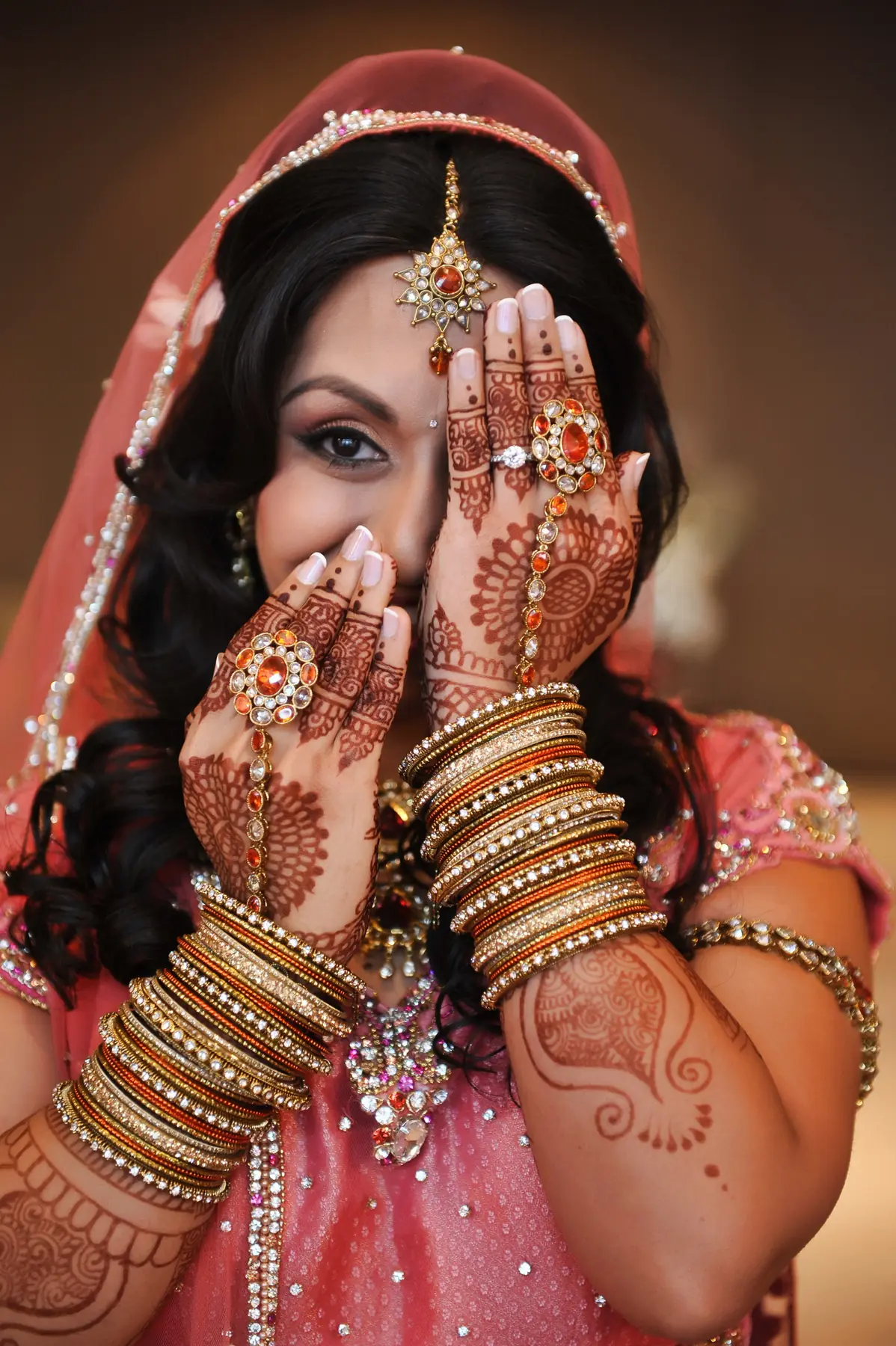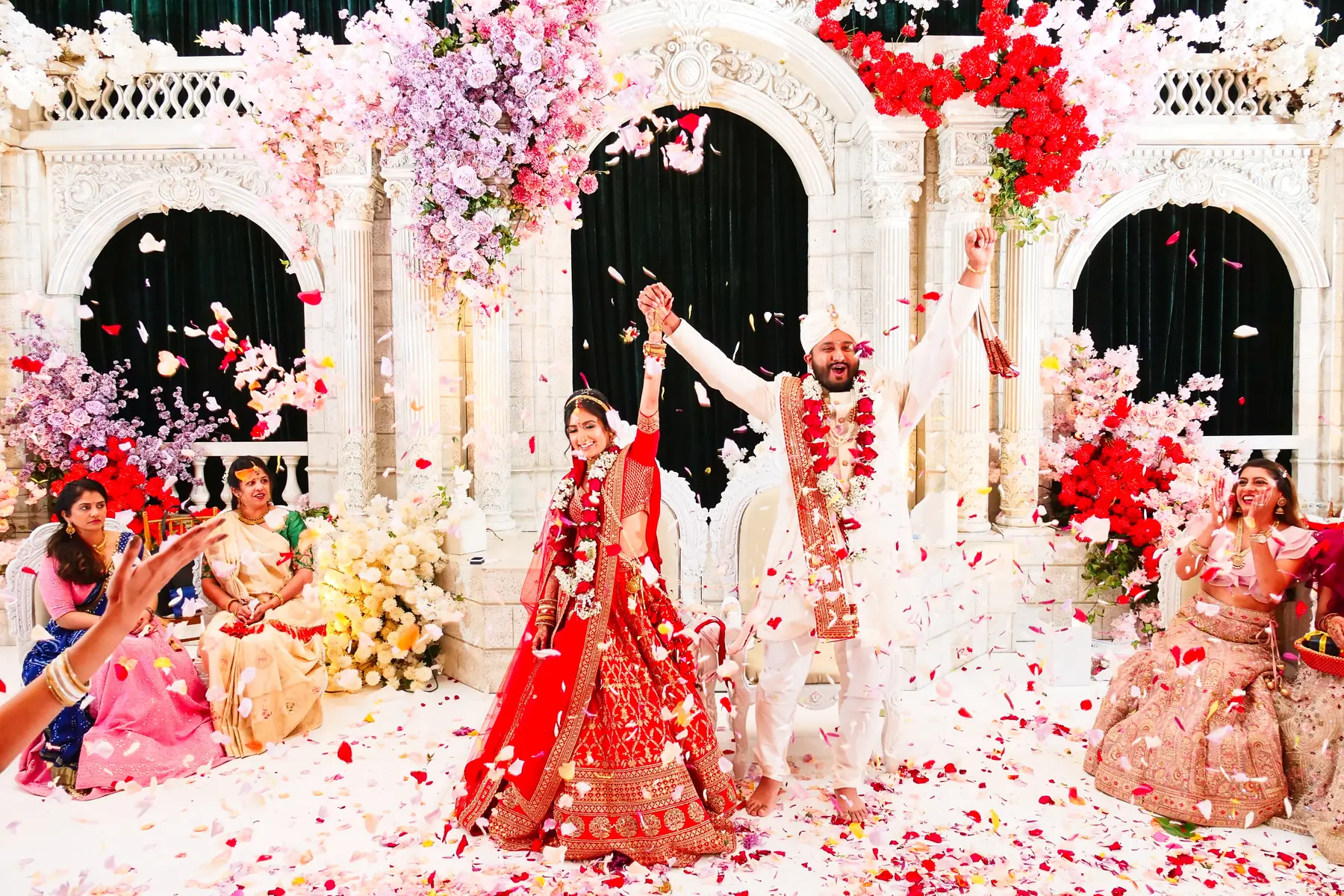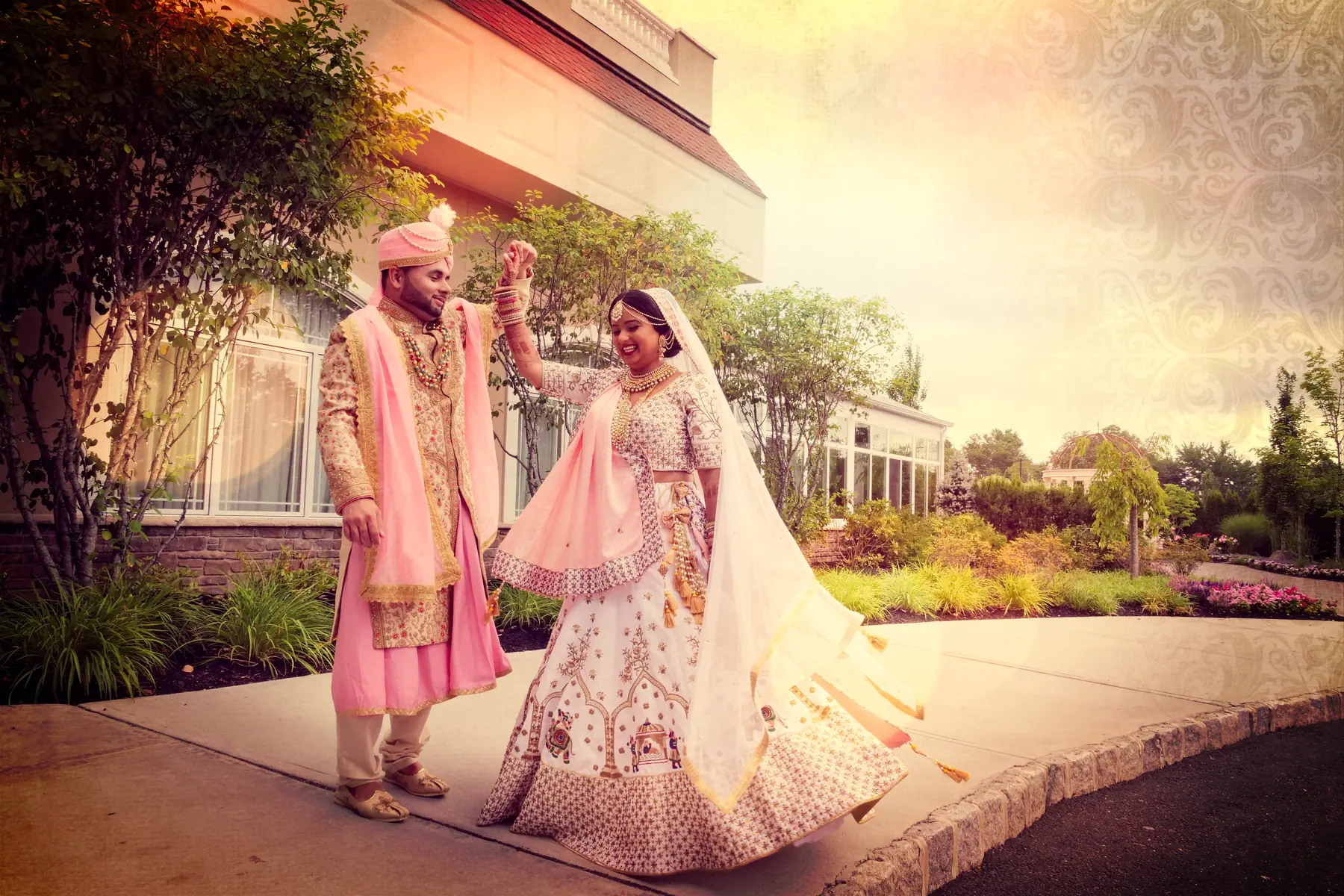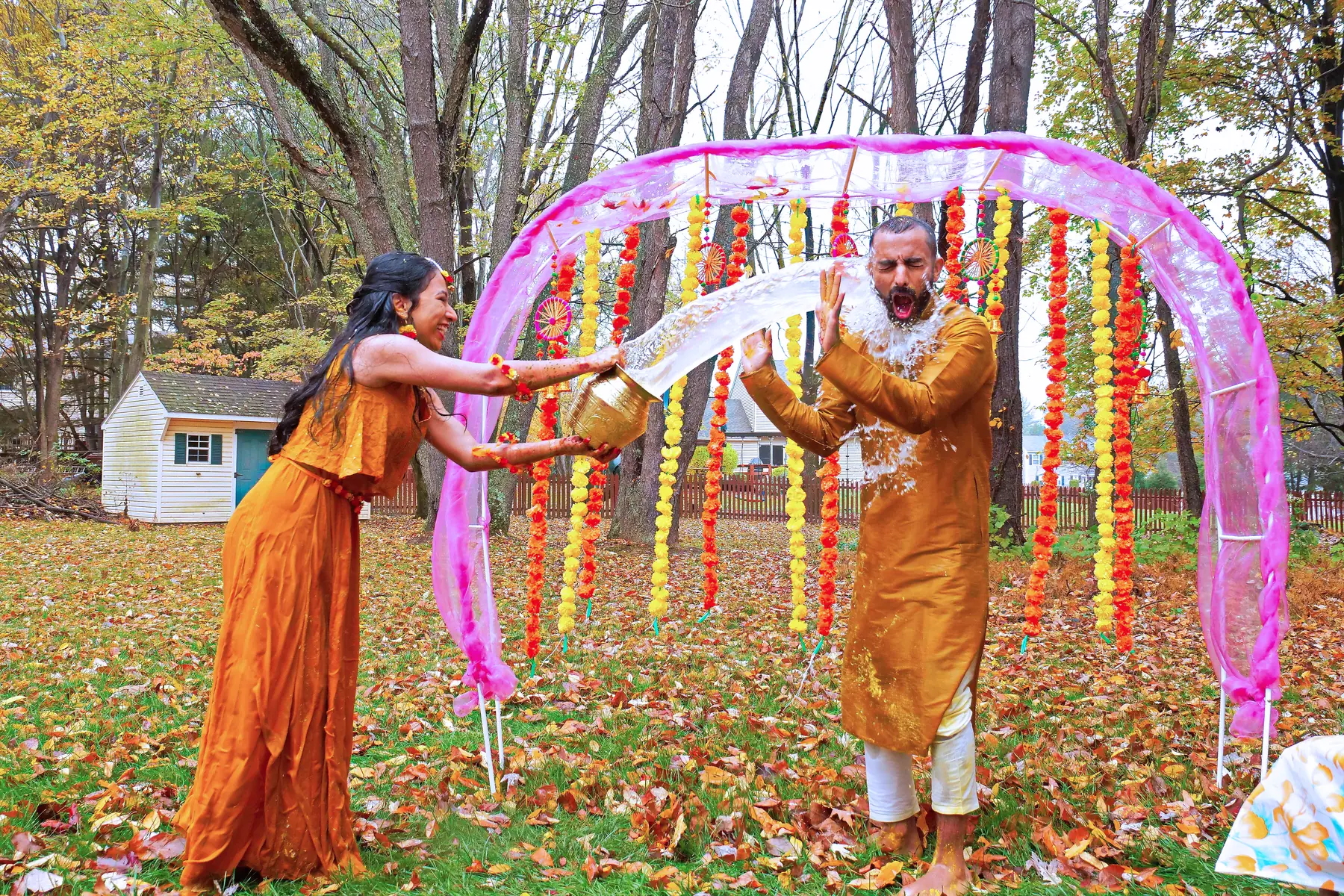
The haldi, also called the pithi in Gujarati families and the vatna or maiyan in Punjabi families, is one of the most joyful events of an Indian wedding. Family members apply turmeric paste to bless the couple, and the formal part usually turns into a playful free-for-all. It is also one of the most photogenic events of the week, if it is planned with the camera in mind. These are the ten things we suggest to every couple.
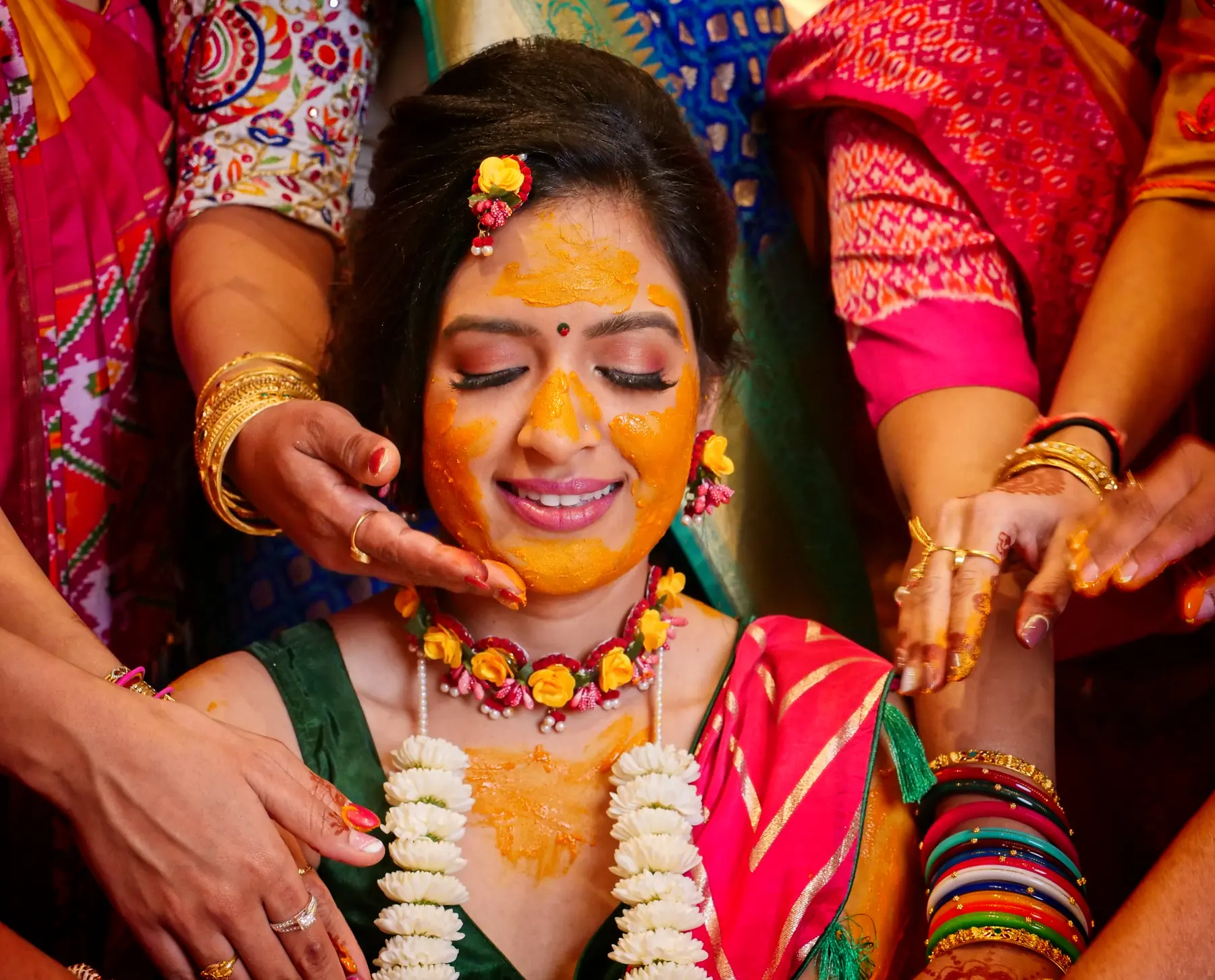
What happens at a haldi ceremony?
A paste of turmeric, often mixed with sandalwood, rosewater or chickpea flour, is applied to the face, arms and feet of the bride or groom by close relatives, one after another. Many families hold separate haldis for the bride and the groom, sometimes on the same morning. Songs are sung, elders give blessings, and by the end most of the family is yellow.
1. Choose soft daylight
Haldi photographs look best in soft daylight, which makes yellow look warm and skin look natural. Mid-morning or late afternoon outdoors is ideal. Indoors, choose a room with large windows and switch off overhead lights that add a green or orange tint. Avoid harsh midday sun if you can, which creates hard shadows under the eyes and makes everyone squint.
2. Go outside if you can
Gardens, terraces, poolsides and backyards work beautifully and give guests room to move. Our Florida couples often hold the haldi by the pool, and it frequently ends in the water. In the Northeast, a backyard haldi works from late spring to early fall; in winter, a sunroom or a hotel suite with big windows is a good substitute.
3. Take clean portraits first
Before the turmeric starts, take ten to fifteen minutes for portraits of the bride or groom alone, then with parents and siblings. Once the haldi begins, those clean outfits and faces are gone for the day.
4. Wear something you will not mind ruining
Yellow, white, cream and pastel outfits photograph beautifully against turmeric. Assume they will stain. Ask the family to follow a loose color palette too, so the group photographs feel connected rather than busy. Leave heavy jewelry for later; fresh flower jewelry is lighter and looks lovely in close-ups.
5. Keep the decor simple
Marigold strings, a low seat or a decorated chowki, a few brass or copper bowls and some banana leaves. The color of the haldi itself is the decoration, and a simple backdrop keeps the photographs about faces, not props.
6. Plan who applies it, and in what order
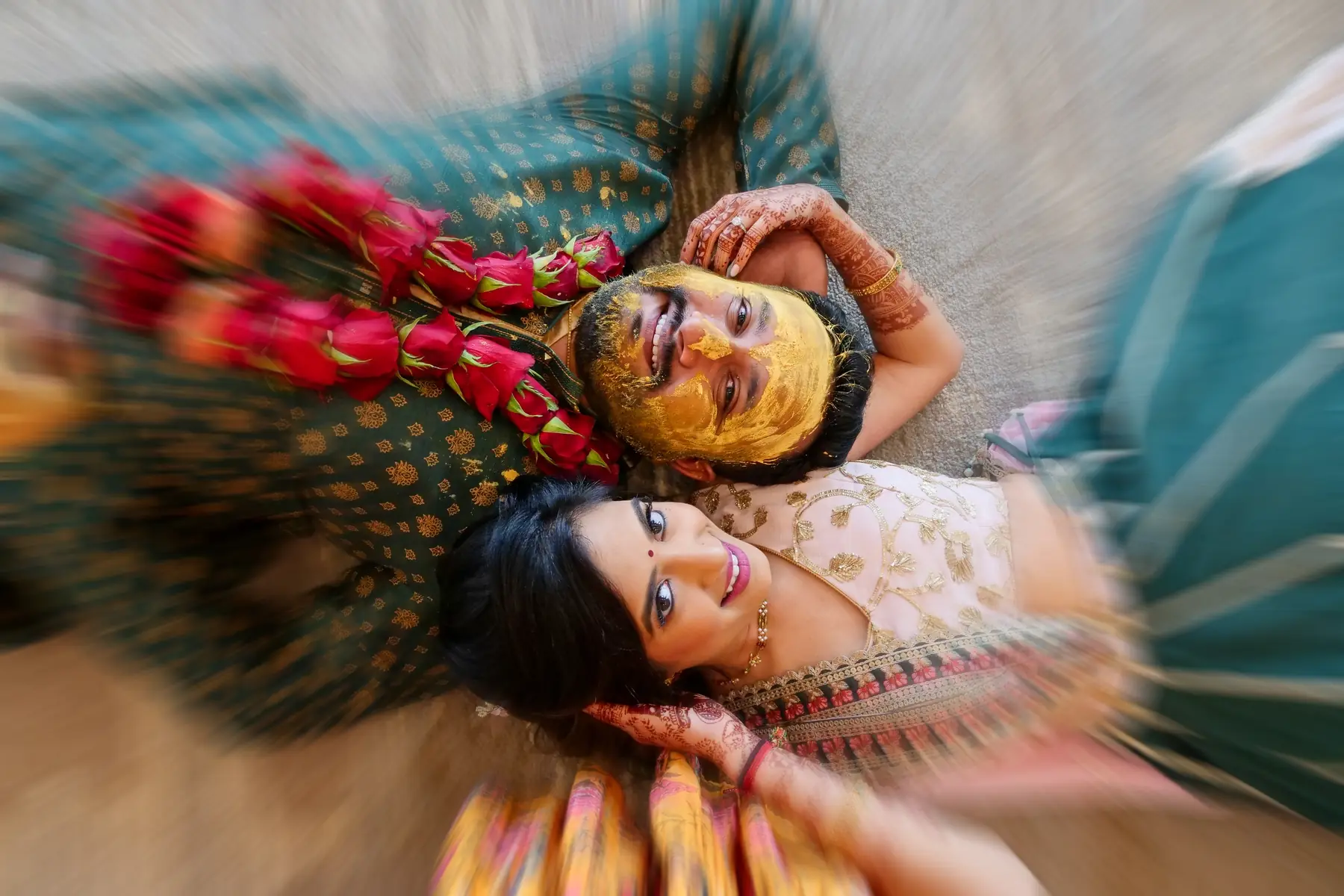
Elders usually go first. A loose order, shared with one relative who can call people forward, keeps it moving and makes sure every aunt, grandmother and cousin gets a photograph with you. The expressions on both sides are the photographs, so leave room around the seat for the photographer to work.
7. Let it get playful
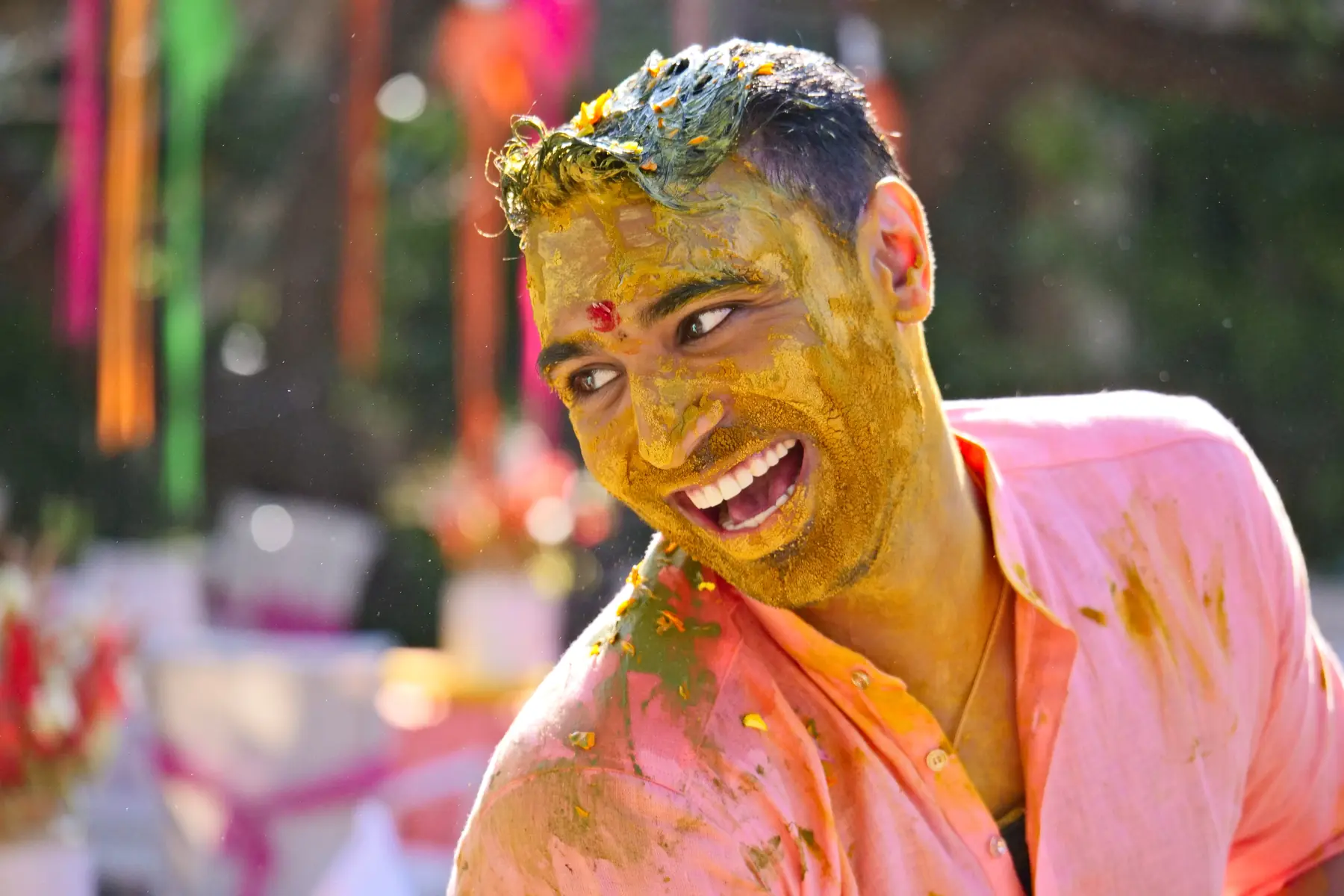
The best haldi photographs come when the formal part ends and the cousins take over. Water guns, buckets and the pool are all common. Let it happen, and warn anyone wearing clothes they care about.
8. Protect the floor, the furniture and the gear
Cover anything that cannot be stained with sheets or tarps, and keep towels and wet wipes nearby. Turmeric marks grout, marble and upholstery quickly. Tell your photographer if the playful part will involve water, so cameras can be protected.
9. Have the dhol or music ready
A dhol player or a good playlist changes the energy, and the photographs show it. Plan the music to start when the formal part ends, so the dancing begins on cue.
10. Plan the timing of your next event
Turmeric takes time to wash off, and it can tint skin for a day. Leave at least three to four hours before the mehndi or the next event, and longer if the bride needs her hair washed and styled again.
What does a typical haldi timeline look like?
- Clean portraits (15 minutes): the couple alone, then with parents and siblings.
- Puja or blessings (15 to 30 minutes): if your family begins with a small prayer.
- Haldi application (45 to 60 minutes): elders first, then relatives and friends.
- Playful haldi (20 to 30 minutes): music, dancing and the mess.
- Group photographs (10 minutes): cousins and friends, while everyone is still yellow.
Plan two to three hours of coverage in total. You can see how this fits into the rest of the week in our photography timeline guide.
What should we bring to the haldi?
- Haldi paste, made fresh that morning, and extra bowls
- Towels, wet wipes and old sheets
- A change of clothes for the couple and close family
- Flower jewelry or simple accessories
- Waterproof pouches for phones
- Water and snacks for everyone
What if the weather does not cooperate?
Have an indoor plan for any outdoor haldi, especially in Florida summers, when afternoon storms are common, and in the Northeast in early spring or late fall. A covered patio, a garage cleared and dressed with marigolds, or a large room with the furniture moved out all work. Overcast skies are not a problem; they give the softest light of all.
Who should be in the haldi photographs?
Make sure the people applying the haldi are photographed with you, not only their hands. Grandparents, parents, siblings and the aunts who sing the songs matter most. If a relative cannot travel, a video call held up during the blessings makes a touching photograph too.
What about the groom’s haldi?
The groom’s haldi is often louder and messier, with friends and cousins in charge. If both haldis happen on the same morning in different places, tell your photographer early so coverage can be planned for both, or schedule them back to back.
More on the pre-wedding events
See Sangeet, Mehndi and Haldi photography, our Gujarati wedding photography page for the pithi, and our Mehndi night photo tips. Planning a haldi this season? Check your date.