The mehndi is slower and more intimate than most wedding events: hours of henna being applied while friends and family sing, talk and dance around the bride. It is the event where details matter most, from the pattern on her palms to the bangles that go on afterward, and where a little planning makes a large difference to the photographs.
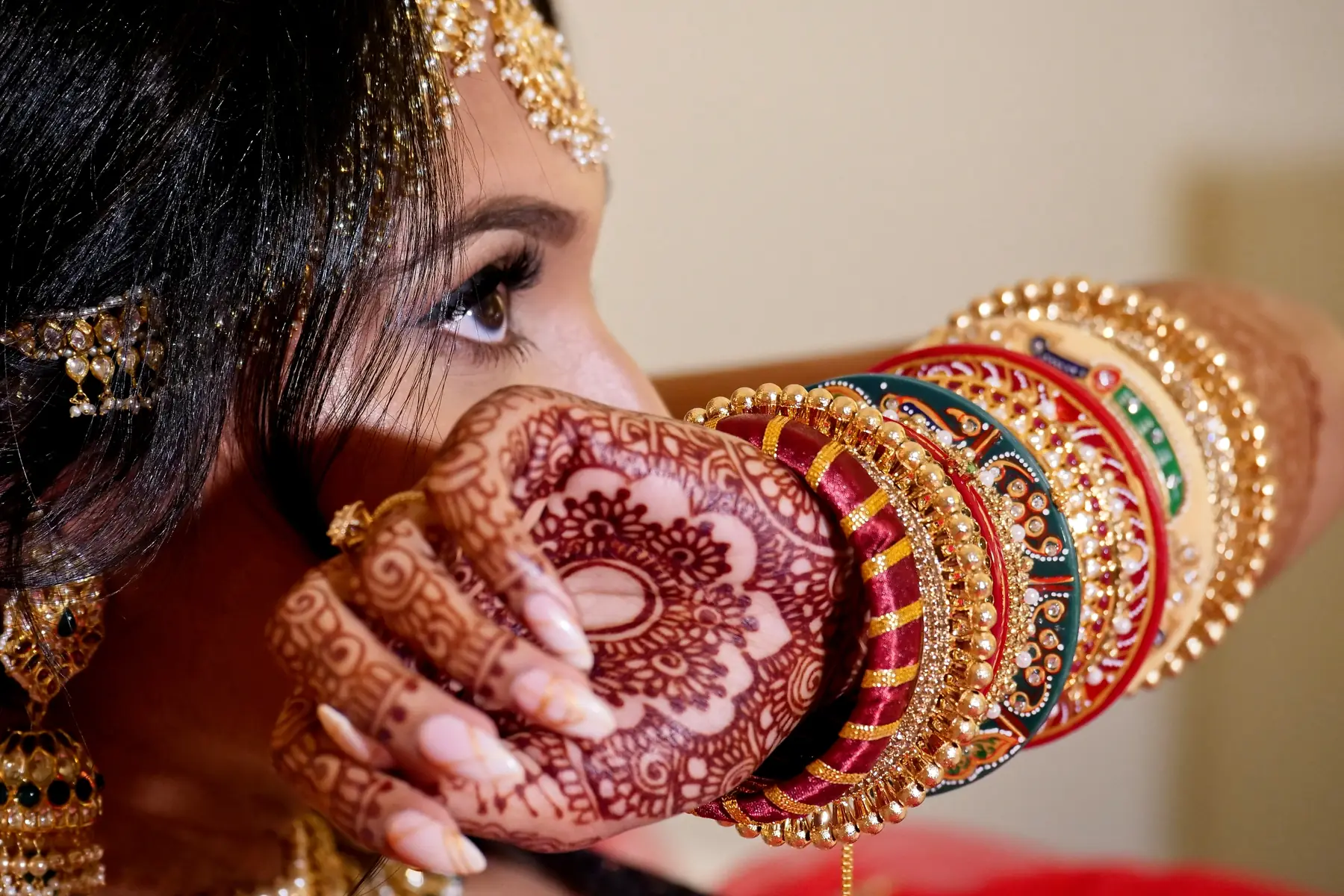
What happens at a mehndi night?
Henna artists apply intricate designs to the bride’s hands and feet, often reaching past the wrists toward the elbows and up the ankles. Female relatives and guests usually have smaller designs applied at the same time. Depending on the family, the evening includes songs, a dholki, games and dancing. In many families the groom has a small mehndi of his own, sometimes on the same evening.
How long does bridal mehndi take?
A full bridal design typically takes four to six hours, sometimes longer for very detailed work, and then needs time to dry. That shapes everything else about the evening, so ask your mehndi artist for an estimate before you set the schedule.
Where should the bride sit at her mehndi?
The bride will sit for hours, so her seat is the most important decision of the night.
- Near soft light: next to a large window during the day, or under warm, even lighting at night. Dark corners and colored party lights make the design hard to see in photographs.
- Slightly raised: a low stage or platform lets guests see her and keeps her in every wide photograph.
- Comfortable: cushions, a backrest and space for the artist to work on both sides.
- Facing the room: so she is part of the party, not tucked into a corner.
Keep the background simple
A floral backdrop, a draped wall or a swing behind the bride’s seat makes every photograph cleaner. Avoid clutter behind her: bags, drink tables, speakers and exit signs. If you set up guest mehndi stations, place them to the side so they do not crowd her frame.
How should a mehndi be lit at night?
Ask your decorator for warm, even light over the bride’s seat rather than spotlights or colored uplighting. String lights, lanterns and candles look lovely in the background, but the bride’s hands need clear, soft light to show the design. Avoid strong purple, blue or green party lights near her; they change the color of the henna in every photograph.
Photograph the design twice
Fresh mehndi is dark green and textured; once the paste comes off, the stain deepens from orange to rich brown over the next day or two. A photograph during the event, and a detail shot on the wedding morning with jewelry and the outfit, tell the whole story. Ask your photographer to plan for both.
Find the hidden details
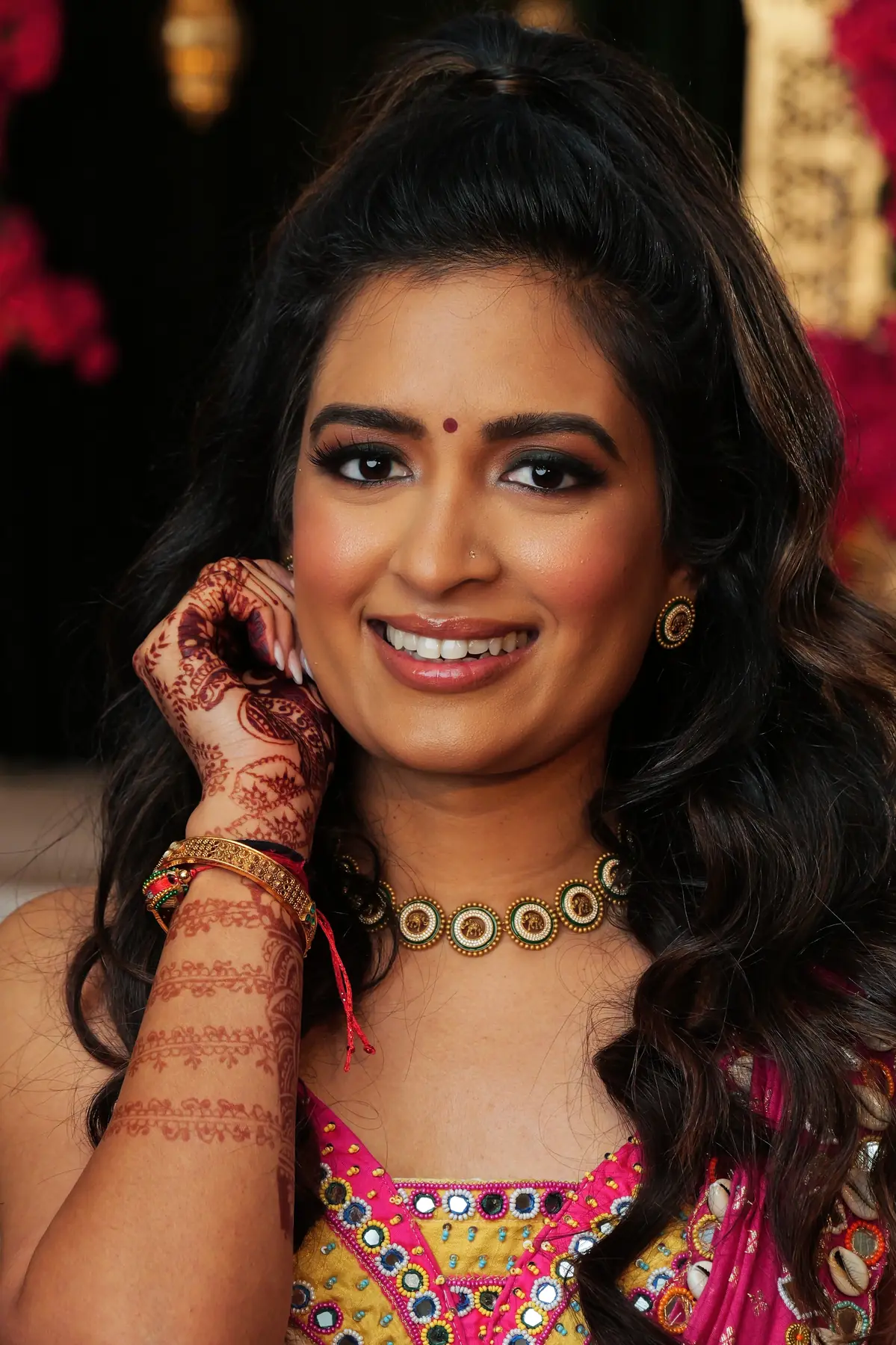
Many brides hide the groom’s name or initials in the design, and the search for them makes a lovely moment, often at the wedding itself. Tell your photographer where they are, and whether there are other personal motifs worth a close-up: a portrait of the couple, the wedding date or a family symbol.
When should the dancing start?
The bride cannot dance while her mehndi dries. Schedule performances and the dance floor for after her hands and feet are done, so she can join in, or plan the evening so the dancing happens around her while she sits. Some brides finish most of the design earlier in the day and keep the evening for the party.
What should the bride wear to her mehndi?
Greens, pinks, yellows and florals are traditional and photograph beautifully against henna. Choose sleeves that are short or easy to roll past the elbow, and a skirt or lehenga that can be lifted clear of the feet. Lightweight fabrics are kinder over a long evening, and flower jewelry works well because it is easy to remove while the artist works.
Which details photograph well at a mehndi?
- The mehndi cones, trays and the artist’s hands at work
- Bangles, kaleere or the chooda laid out before they are worn
- Flower jewelry, garlands and the bride’s dupatta
- Hands of the bride with her mother, sisters or grandmother
- The decor in daylight, before guests arrive
Should the groom have mehndi photographs too?
Yes, even if his mehndi is small. A dot on the palm, his initials or a simple design, applied with his family around him, gives the album a matching moment from his side. If his mehndi happens at a different home or hotel, plan time for the photographer to travel, or schedule it before the bride’s begins.
Portraits with the finished hands
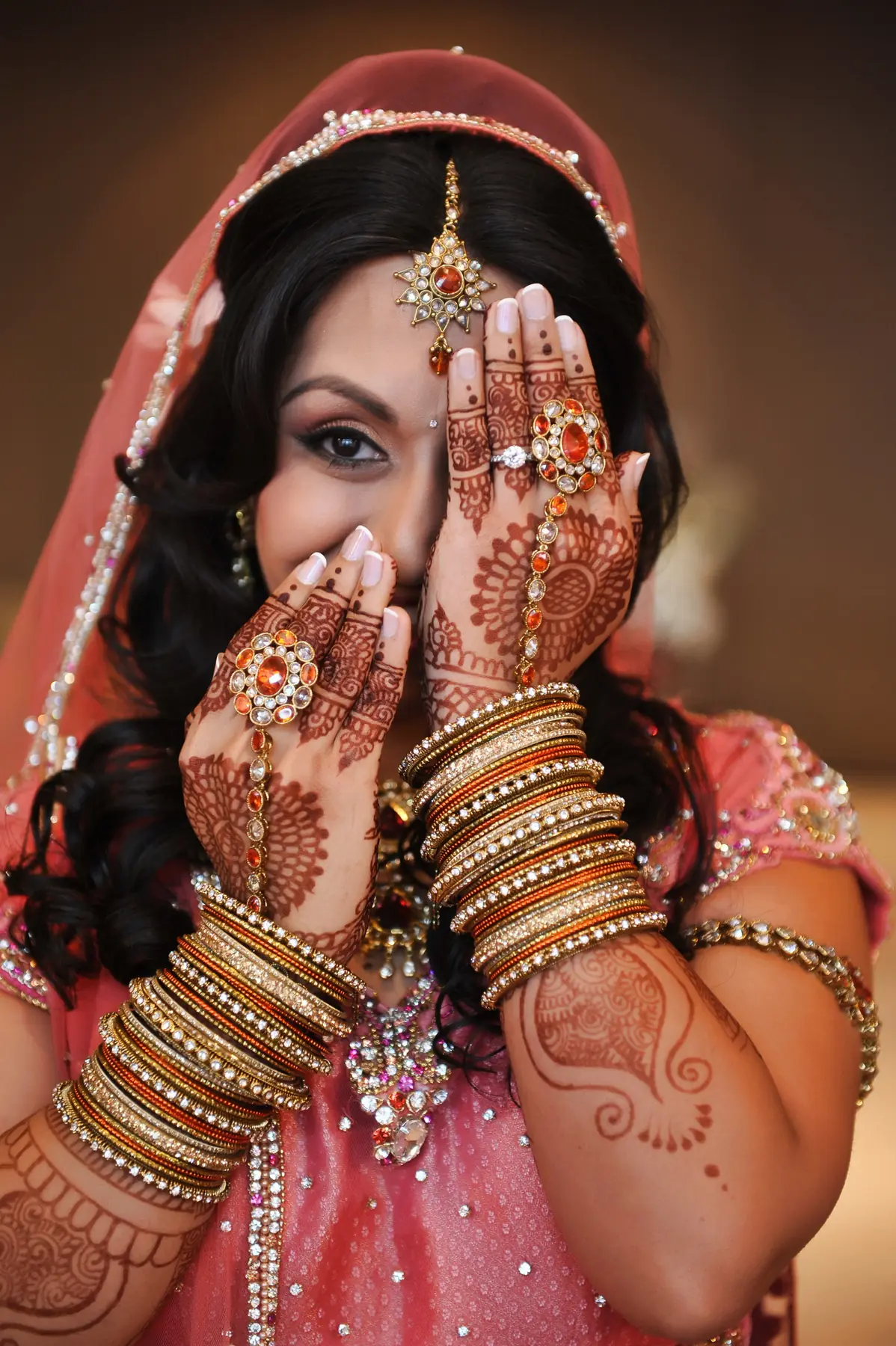
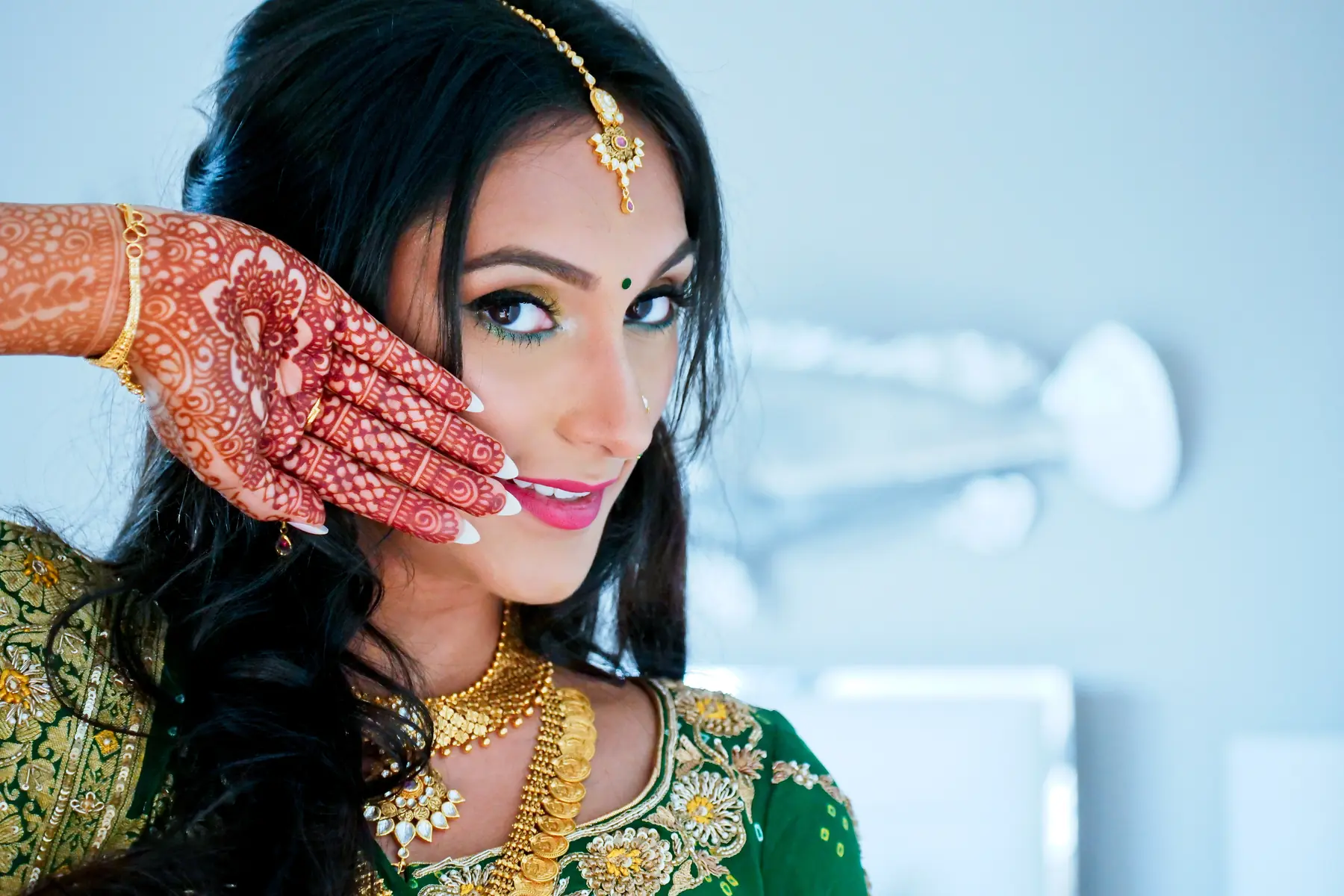
A few portraits with the finished mehndi, bangles and rings framed near the face are some of the most shared photographs from any wedding. Plan five to ten minutes once the paste is off, ideally in soft light. Hands framing the face, palms open toward the camera and hands resting on the lehenga all work well.
What does a typical mehndi night timeline look like?
- Afternoon: the bride’s mehndi begins, with close family nearby.
- Early evening: guests arrive, guest mehndi stations open, snacks and music begin.
- Evening: songs, the dholki, performances and games while the bride’s design is finished.
- Later: the bride’s mehndi dries, she joins the dancing and the evening becomes a party.
Plan three to four hours of photography and film coverage for the evening, plus a short detail session the next day if you want the darkened color. You can see where this fits in the week in our photography timeline guide.
What should we tell our photographer before the mehndi?
- When the bride’s mehndi starts and roughly when it will finish
- Where the hidden initials or motifs are
- Which performances or songs are planned, and in what order
- Family members who must be photographed with the bride
- Whether the groom’s mehndi is happening at the same time somewhere else
More ideas
See Haldi ceremony tips, Sangeet, Mehndi and Haldi photography and our Indian wedding shot list. Planning a mehndi night? Check your date.