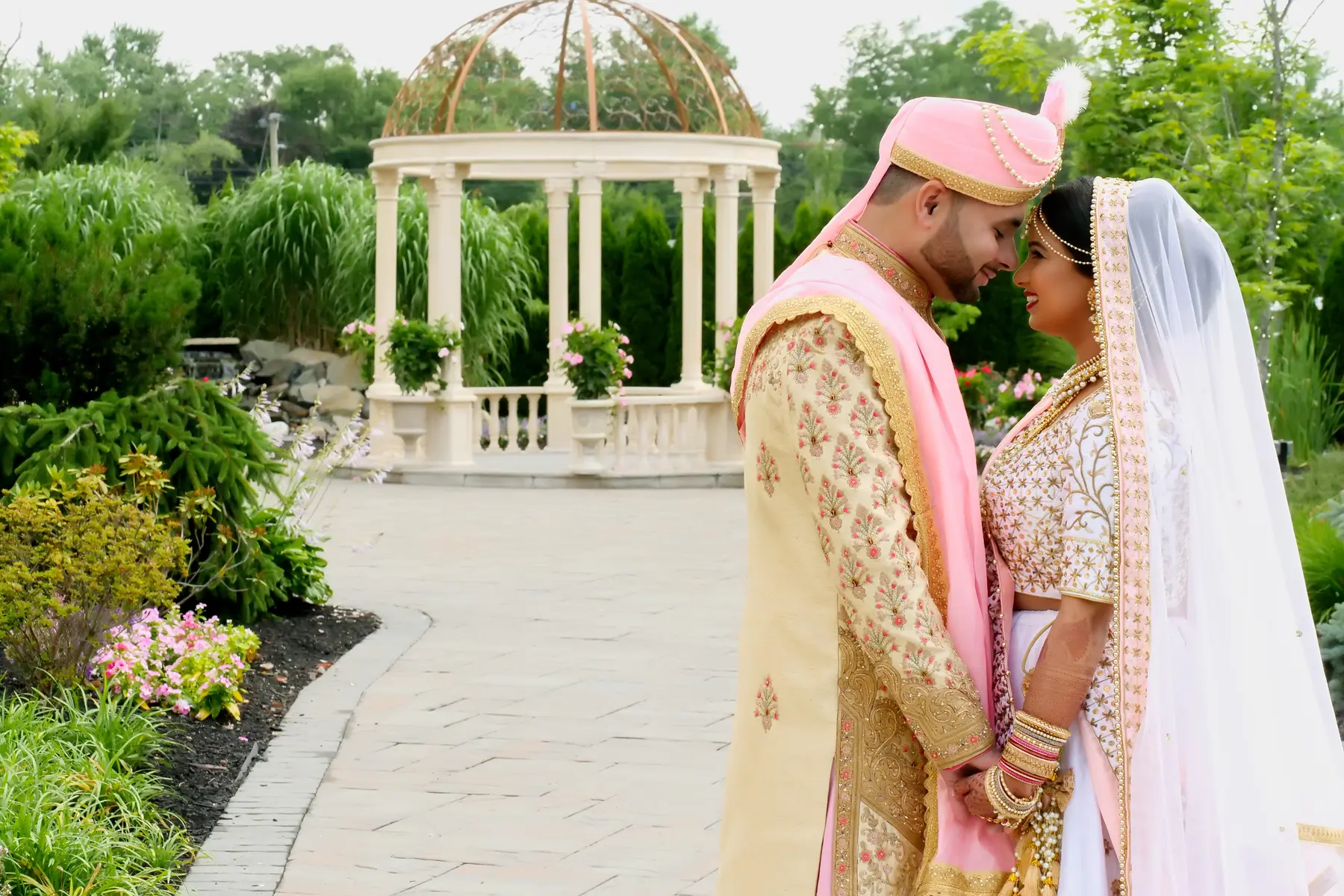
What makes Hindu wedding photography different?
A Hindu wedding ceremony is not one moment; it is a sequence of rituals that each carry meaning for the family, and several of them happen in seconds. The garland exchange can be over before a guest lifts a phone. The sindoor is applied once. The first phera begins the instant the priest calls it. A photographer who does not know the order is always a beat late.
We have stood beside the mandap for 25 years. We know when the groom’s shoes disappear, when the bride’s brothers step forward with the puffed rice, and when the families need to be framed together because this is the photograph the grandparents will ask for first.
What happens at a Hindu wedding ceremony, in order?
Every family and every region does it a little differently, so we ask your pandit and your parents about the order before the day. A North Indian Hindu ceremony we photograph often follows this sequence:
- Baraat and milni: the groom’s arrival with dhol and dancing, and the two families greeting each other at the entrance.
- Ganesh puja: the opening prayer, asking for the day to pass without obstacles.
- Varmala or jaimala: the garland exchange, usually with each side lifting the bride or groom out of reach.
- Kanyadaan: the bride’s parents placing her hand in the groom’s; often the most emotional photograph of the day.
- Granthi bandhan: the knot that ties the couple’s garments together.
- Mangal pheras: the circles around the sacred fire, each with its own vow.
- Saptapadi: the seven steps the couple take together.
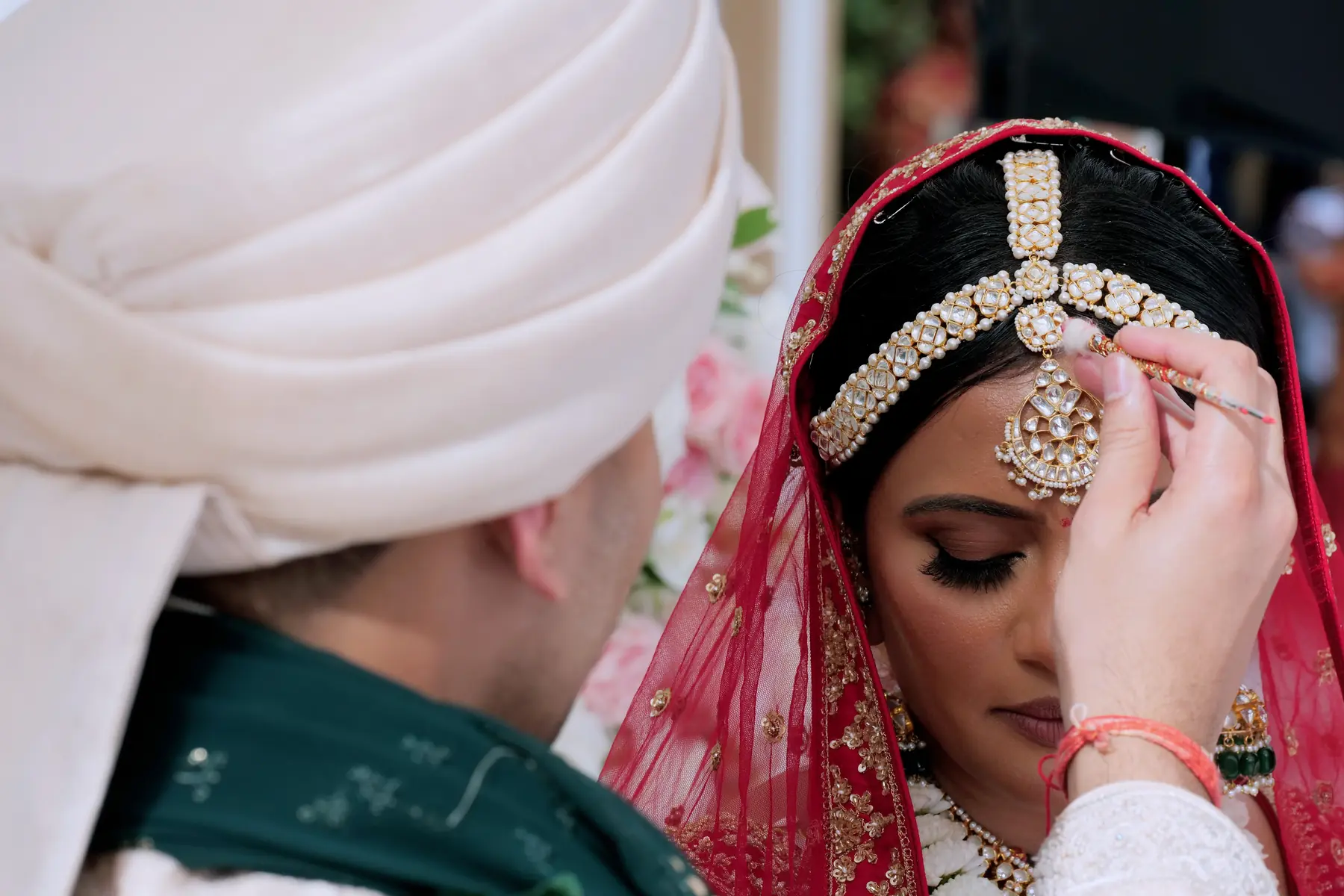
- Sindoor and mangalsutra: the groom applies sindoor to the parting of the bride’s hair and ties the mangalsutra, and the marriage is sealed.
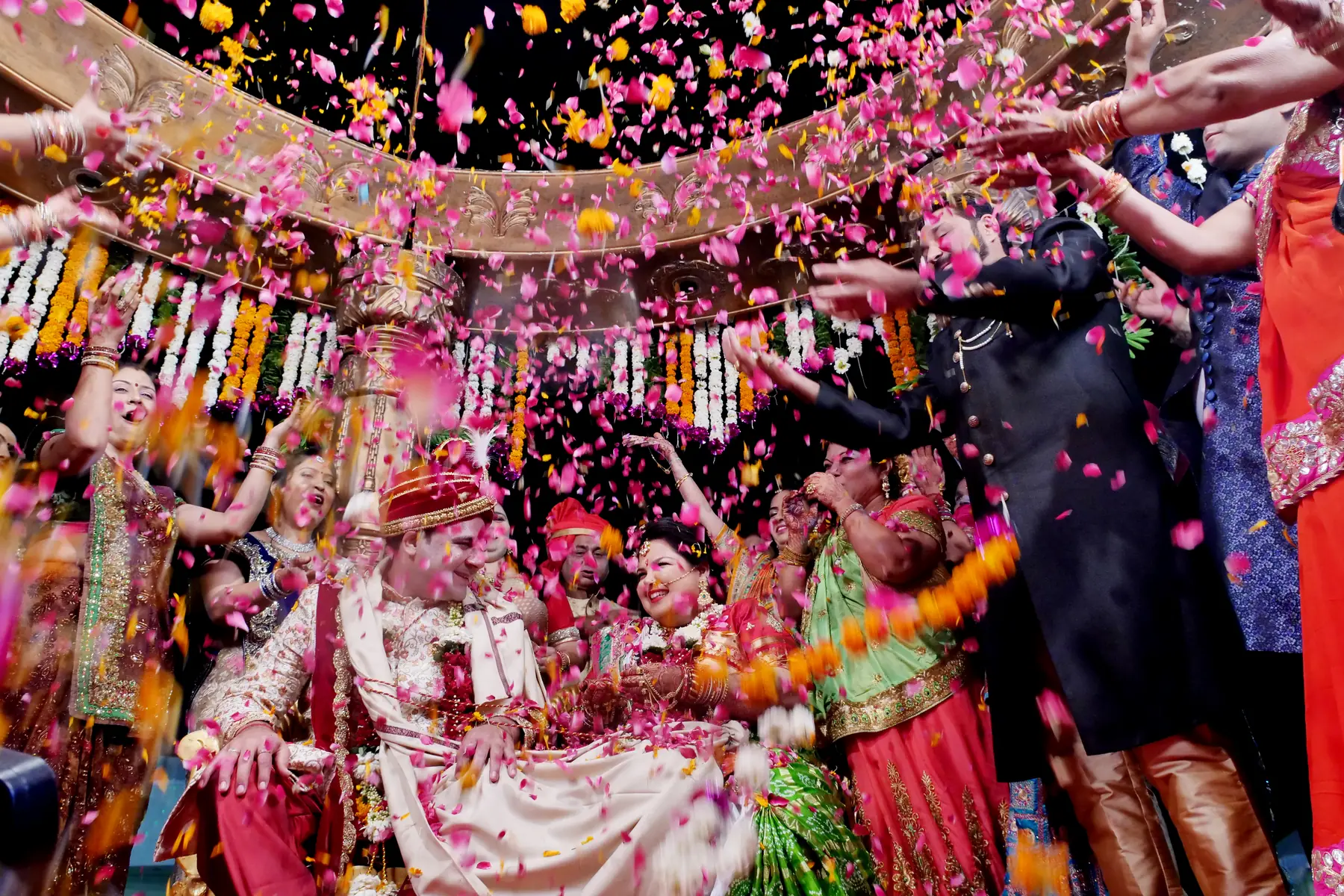
- Aashirwad: the elders’ blessings, with rice and petals thrown over the couple.
- Joota chupai and vidaai: the laughter of the shoe-stealing and the tears of the farewell.
For the meaning behind each ritual, read the Hindu wedding ceremony, explained.

How long does a Hindu wedding ceremony take to photograph?
The ceremony itself often runs between one and two hours, depending on the pandit and how many rituals the family includes. Coverage around it is longer: the baraat before, the family portraits after and the vidaai at the end. We usually suggest taking family photographs right after the ceremony, while everyone is still dressed and gathered at the mandap, and keeping a short list of the groupings your parents care about most. Our photography timeline guide walks through a full wedding day.
Where we stand around the mandap
We stay out of the priest’s way and out of the guests’ sightline. One of us holds the wide view of the mandap and the families while the other works close on hands, faces and the fire. During the pheras we move with the couple rather than ahead of them, so the photographs show both the circle and the people watching it. When the ceremony is filmed too, photographers and cinematographers are planned as one team, so nobody blocks anyone’s frame.
Hindu ceremonies happen in ballrooms, on estate lawns, beneath beach mandaps in Florida and inside temples. We plan the light for each: candlelit night ceremonies, bright midday sun on an outdoor mandap and the mixed light of a temple hall. Temples set their own rules about where photographers may stand, and we confirm them in advance; temples we know include BAPS Swaminarayan Akshardham in Robbinsville, New Jersey.

We learn names, relationships and sensitivities before we ever arrive.
What to tell your family before the ceremony
A few small requests make a real difference to the photographs:
- Ask guests to keep phones down during the varmala and the pheras, so the aisle and the mandap stay clear.
- Tell us which relatives take part in which ritual, such as the brothers with the puffed rice.
- Share any sensitivities, such as a relative who should not be photographed or a recent loss in the family.
- Let the pandit know a photographer will be close to the mandap; we always introduce ourselves before the ceremony begins.
Coverage across the whole wedding
Most Hindu weddings we photograph are multi-day: Haldi, Mehndi and Sangeet before the ceremony, and a reception after it. We plan the whole weekend as one story, with photographs and a wedding film from the same team. See Sangeet, Mehndi and Haldi photography, Gujarati wedding photography and our wedding films.