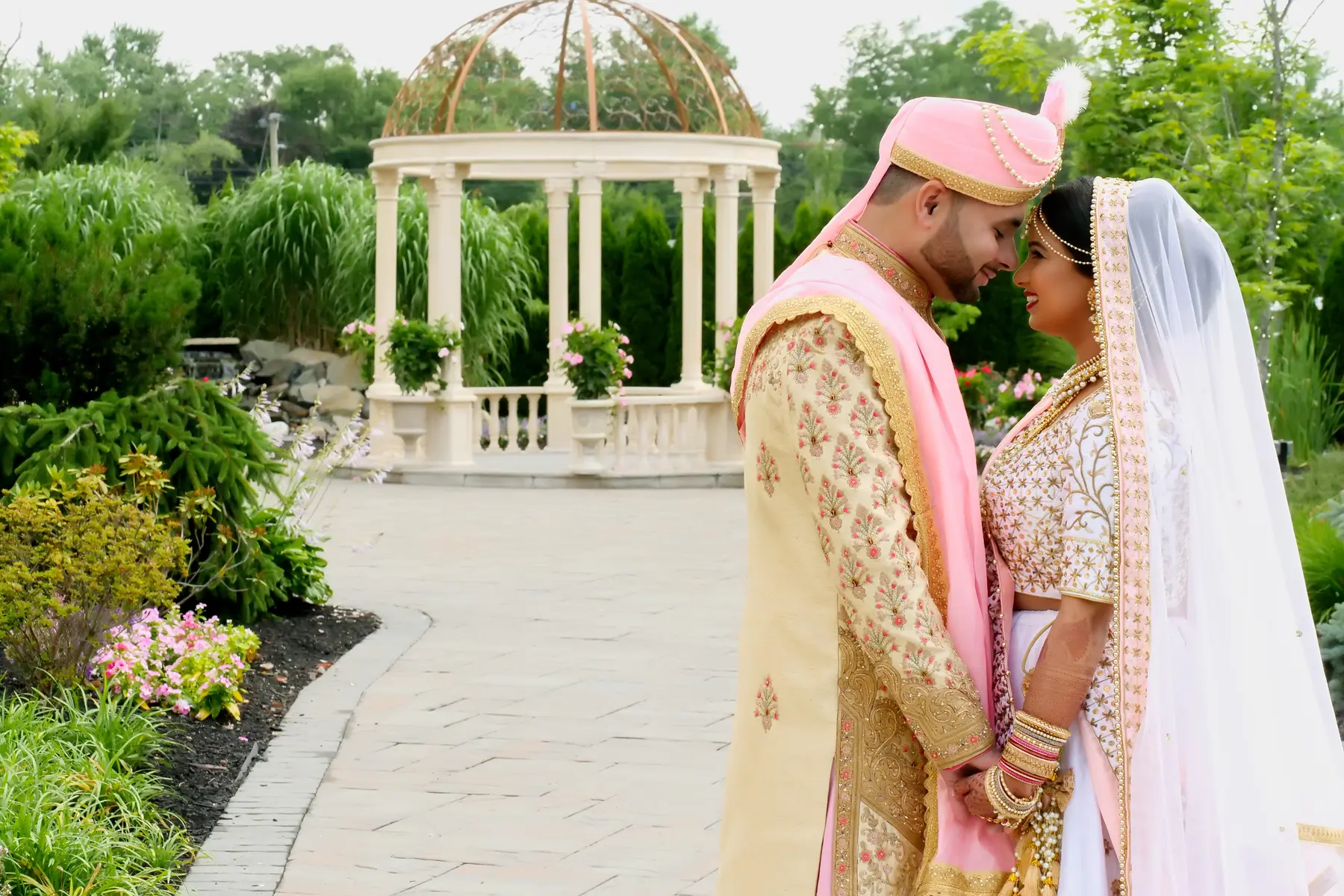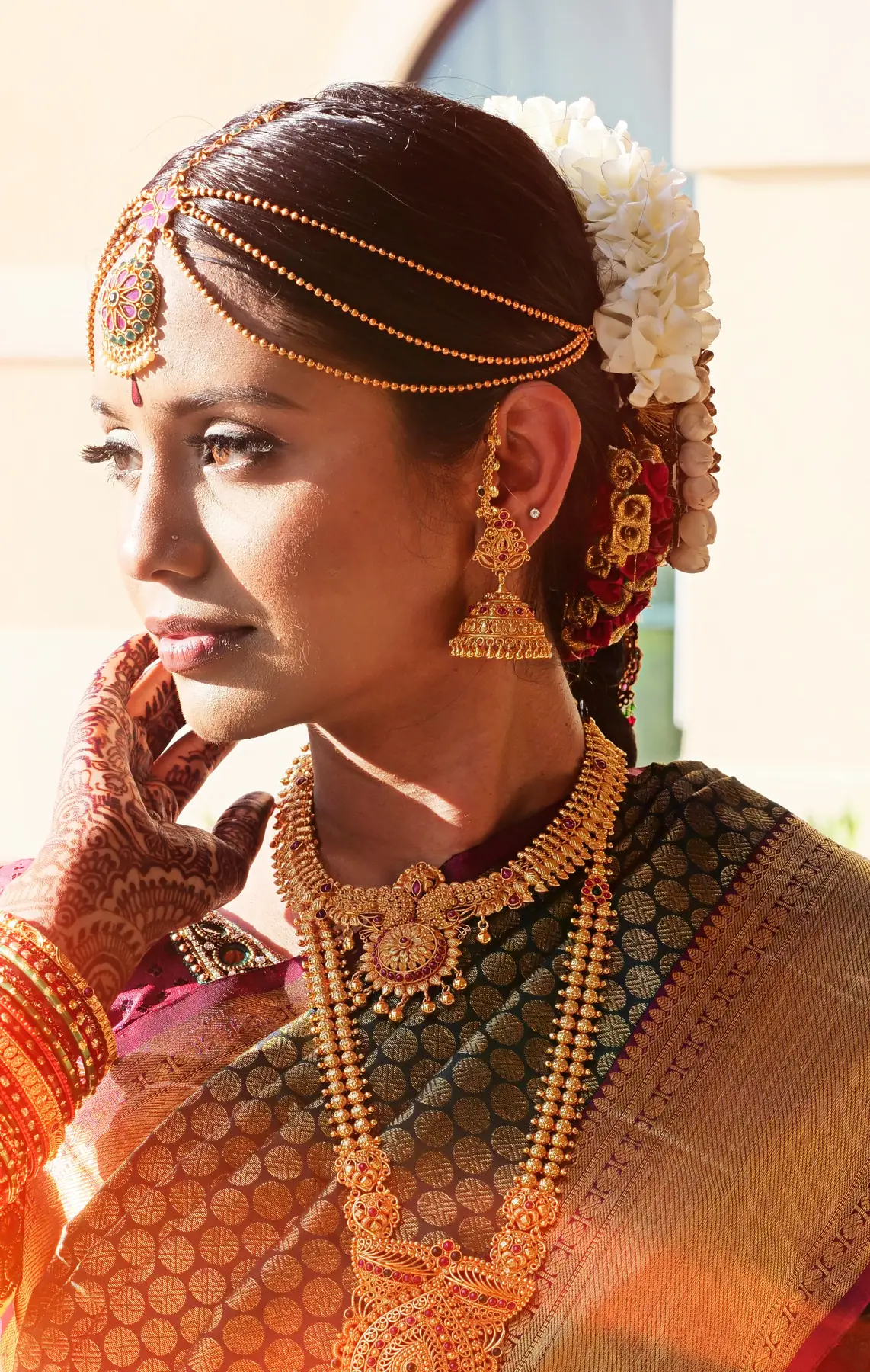
Built around the muhurtham
Many South Indian ceremonies are set to an auspicious time, sometimes early in the morning, and the most important moment, the tying of the thali or mangalsutra, happens at that exact minute. We plan the whole morning backwards from the muhurtham, so portraits, family groups and getting-ready coverage never compete with it.
The muhurtham is set by the priest and the family, and it does not move for traffic or a late hair appointment. Getting-ready coverage starts early, and couple portraits are usually planned for after the ceremony, once the most important minute has passed. Our photography timeline guide shows how a morning ceremony shapes the rest of the day.
What happens at a South Indian wedding ceremony?
Traditions differ between Tamil, Telugu, Kannada and Malayali families, and between communities within them. We confirm the order with your priest and family. Ceremonies we photograph often include:
- Kashi yatra: the groom’s playful pretend departure for a life of study, until the bride’s father persuades him to stay.
- Maalai maatral: the garland exchange, with the couple lifted high by their uncles.
- Oonjal: the couple on the swing, while the women of the family sing and circle colored rice balls around them.
- Kanyadaanam: the bride’s parents giving her hand, in many families with the bride seated on her father’s lap.
- Mangalya dharanam: the thali tied at the muhurtham with three knots, while the nadaswaram and drums play.
- Saptapadi: the seven steps together around the sacred fire.
- Ammi midithal and metti: the bride’s foot placed on a grinding stone, and the toe rings slipped on by the groom.
Telugu, Kannada and Malayali customs
Telugu weddings often keep a cloth screen between bride and groom until the muhurtham, when each places jeelakarra bellam, a paste of cumin and jaggery, on the other’s head; later comes talambralu, the playful shower of rice. Kannada weddings share the kashi yatre and add rituals such as the dhare, water poured over the couple’s joined hands. Malayali Hindu ceremonies are often short, sometimes only minutes, so every camera position is set before the thali is tied.
How long does a South Indian wedding take to photograph?
A Tamil or Telugu ceremony can run a few hours, with rituals for the bride and groom starting early in the morning, while a Malayali ceremony may be over in minutes. Either way, the most photographed moment is fixed to the minute. We tell families where we will stand for the thali tying, ask the priest which side of the fire we may work from, and keep one camera wide so the whole family is in the frame when the knot is tied.
Temples, halls and fusion celebrations
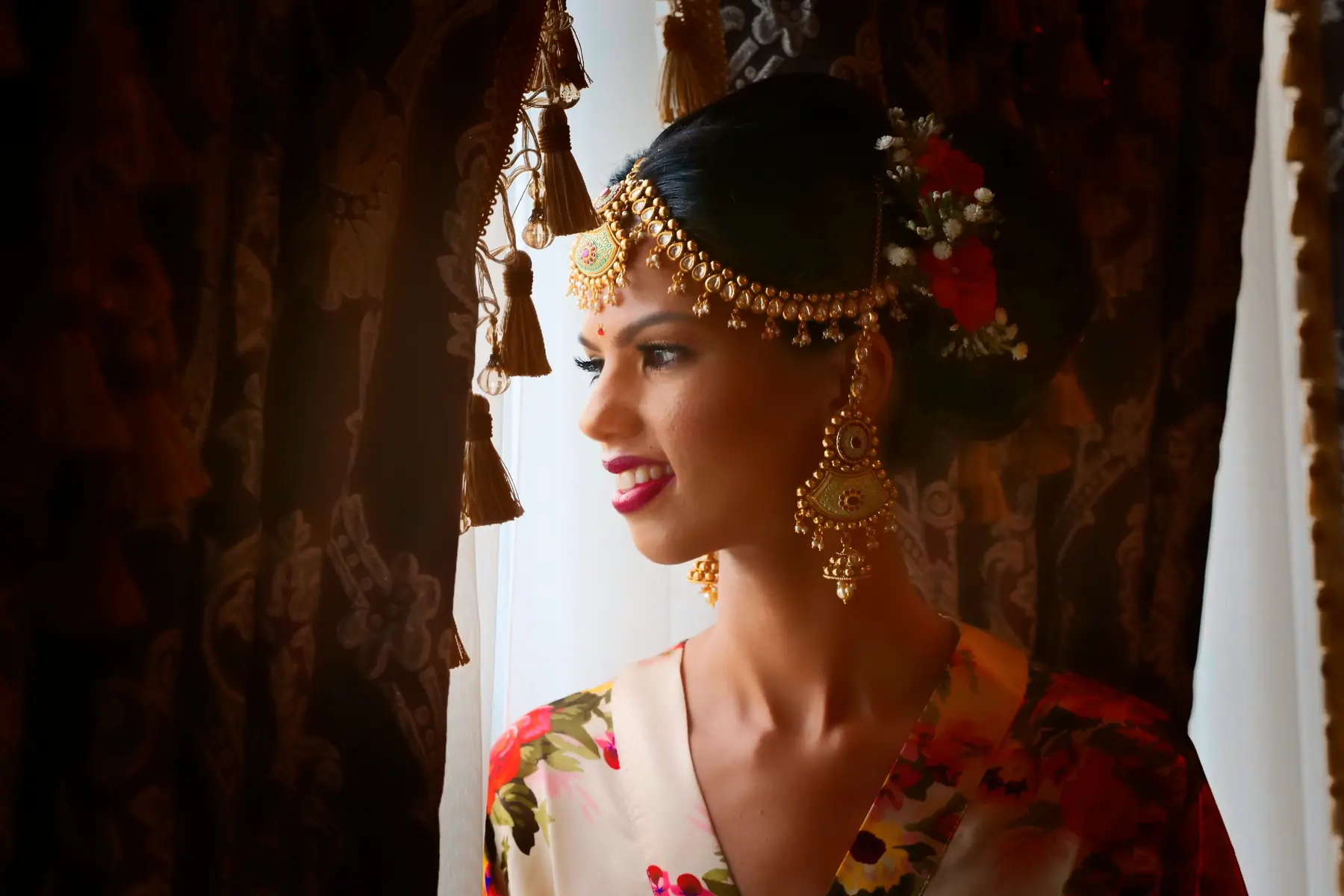
South Indian weddings in New Jersey often take place in a temple or in a banquet hall decorated as one. Among the venues we know is the Sri Venkateswara Temple in Bridgewater. Temples have their own rules about where photographers may stand and when flash is allowed; we confirm them in advance and follow them exactly. Temple halls are often lit by a mix of daylight, overhead lights and oil lamps, so we plan for that mixed light and keep skin tones and silk true in the edit.
 Soumya & AndresKannada and Christian fusion wedding at The Marigold, New Jersey · Watch on YouTube
Silk, gold and jasmine
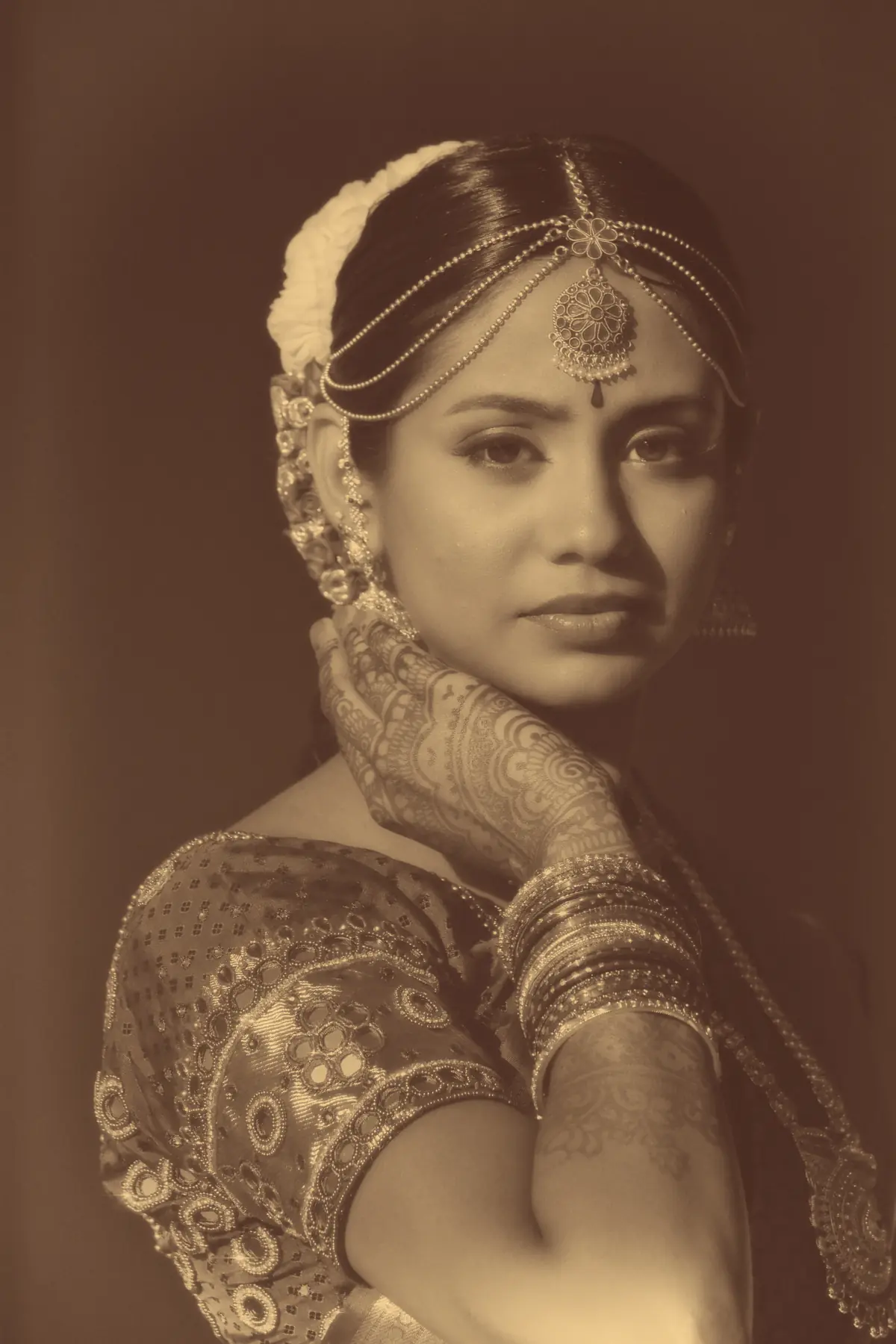
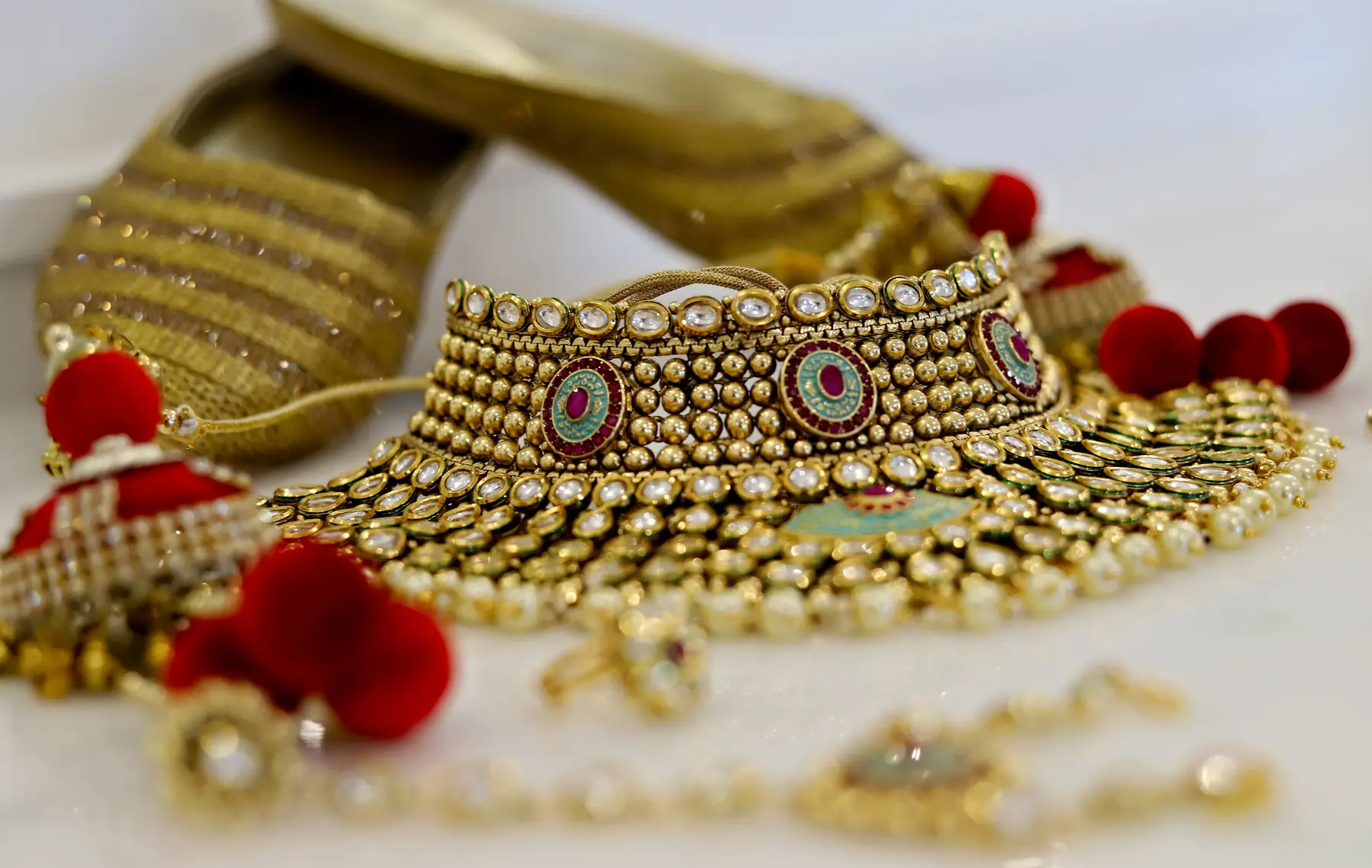
The colors of a South Indian wedding are rich: deep Kanjivaram silks, temple jewelry and fresh jasmine. We edit to keep those colors true to life, so the sari looks in the album exactly as it did on the day. Many brides change from the wedding sari into a second silk for the reception, so we plan portraits in both.
What to tell your photographer before a South Indian wedding
- The muhurtham time, and how early the first rituals begin.
- Which uncles will lift the couple during the maalai maatral, and who sits with the bride for the kanyadaanam.
- Whether the temple allows photographers on the stage or only on the floor.
- Whether you want the kashi yatra and the oonjal covered in full, since both can run longer than families expect.
- The reception plan, so portraits are taken while the light and the jasmine are fresh.
See more in our portfolio, our Indian wedding shot list or our wedding films.