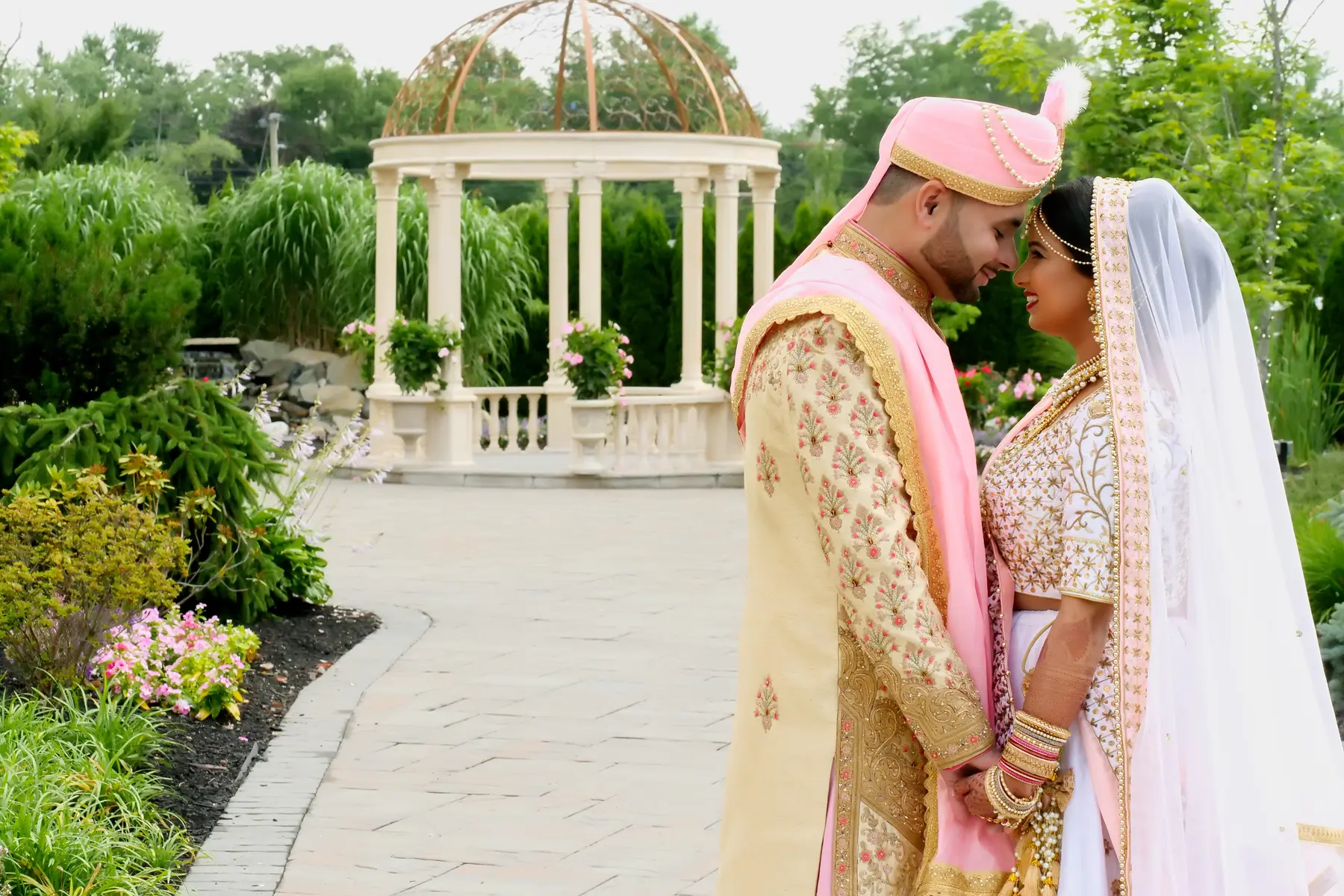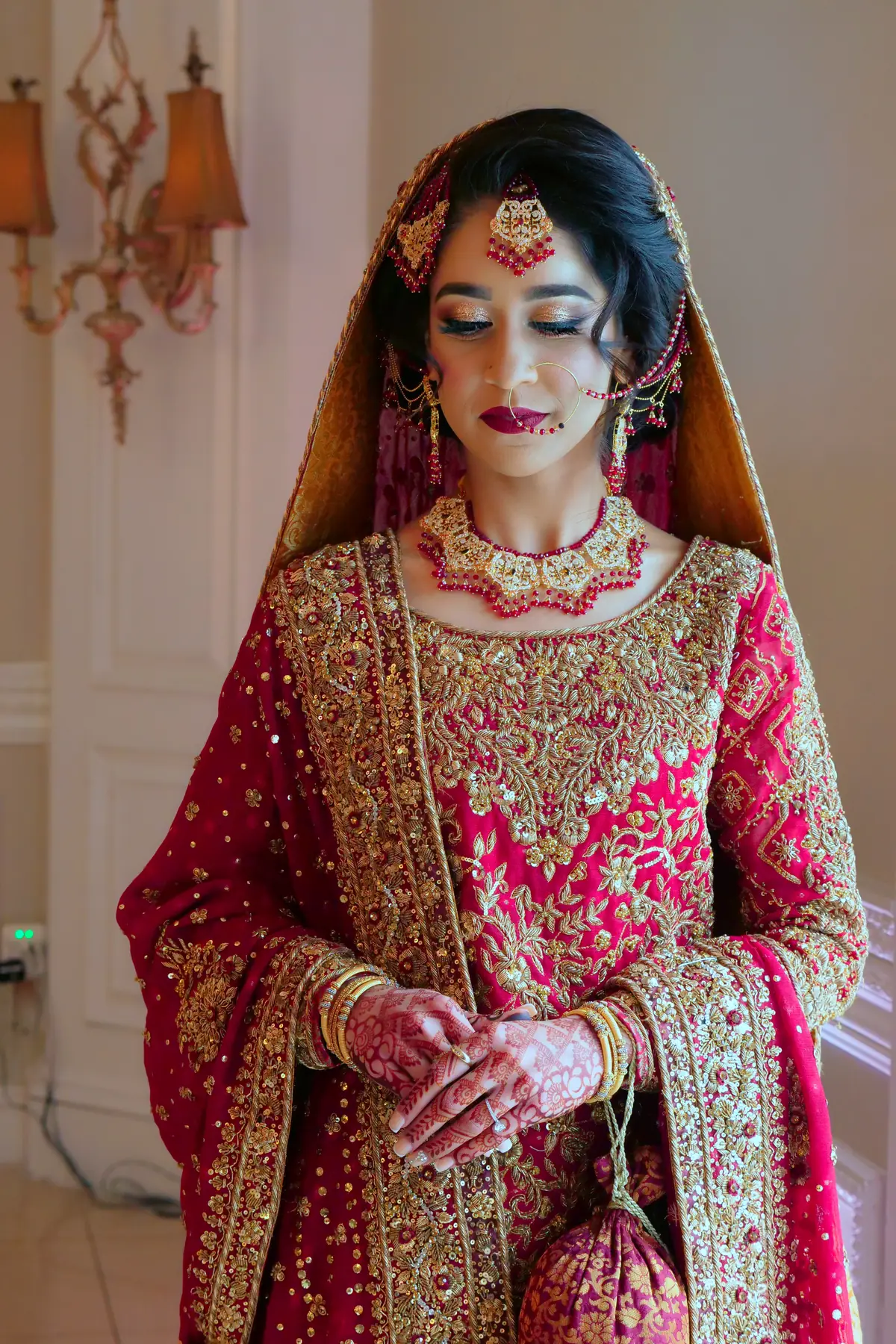
We start with your family’s wishes
Every Muslim family has its own expectations about photography. Some events may be women only. Some relatives may prefer not to be photographed or posted online. Some nikah ceremonies take place at a mosque with its own rules. Before the wedding we talk through all of this, so on the day we already know where to point the camera and where not to.
The questions we ask every family:
- Which events are mixed and which are for women only, and whether women-only events should be photographed at all.
- Whether any relatives prefer not to be photographed, or not to appear online.
- Whether the nikah is at a mosque, at home or at the venue, and what the imam allows.
- Whether the bride and groom will sit together or apart during the nikah.
The events we photograph
- Dholki: the singing nights at home, with the dholak and family songs.
- Mayun or ubtan: turmeric paste applied to the bride by the women of the family.
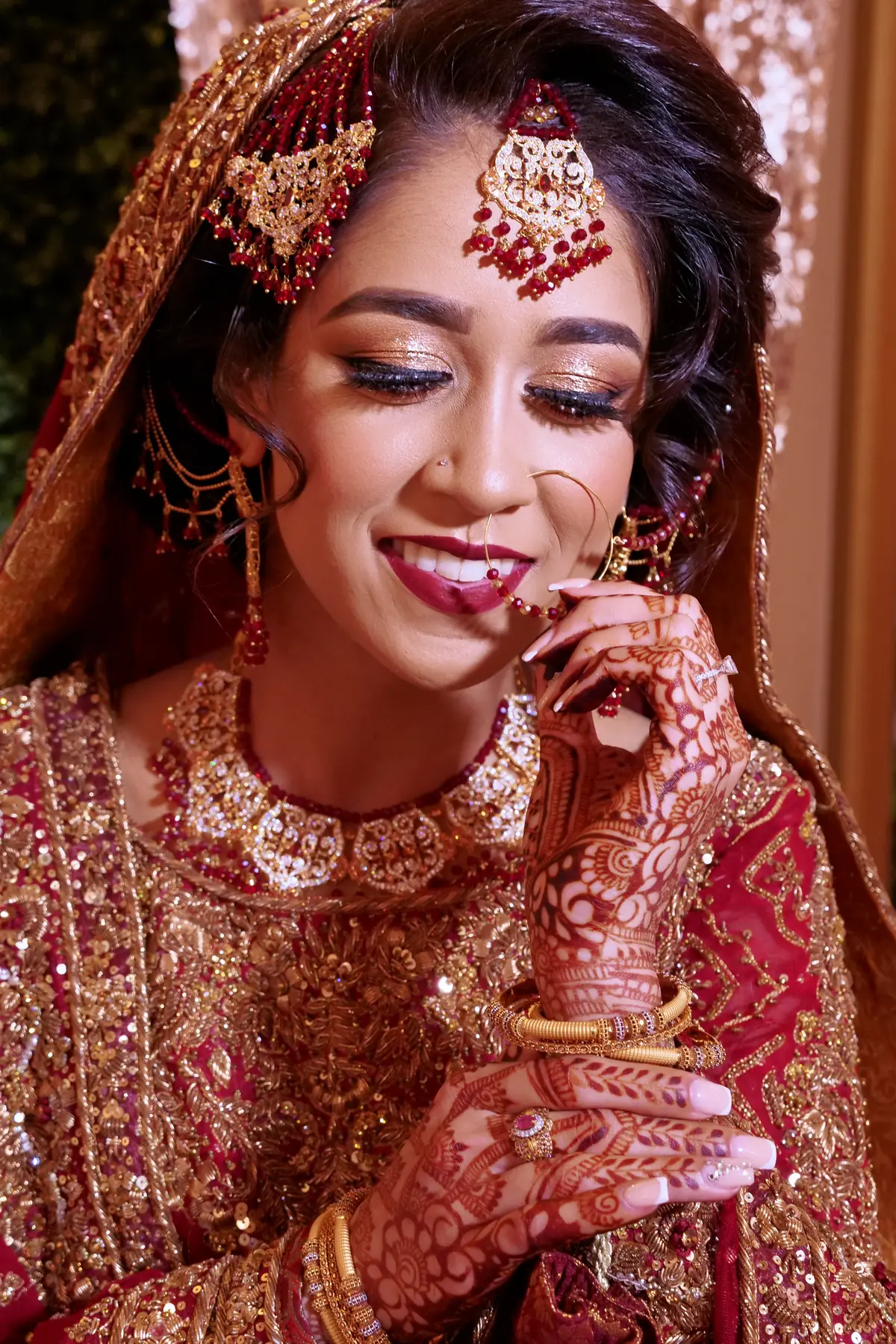
- Mehndi: color, music and the bride’s hands being decorated.
- Baraat: the groom’s arrival with his family.
- Nikah: the ijab-o-qubool, the signing of the nikahnama and the dua, photographed quietly.
- Arsi mushaf: in some families, the couple see each other in a mirror, with the Quran placed between them.
- Rukhsati: the bride’s farewell, often with the Quran held above her head as she leaves.
- Walima: the reception hosted by the groom’s family.
What happens during the nikah?
The nikah is short and sacred. The mehr, the gift from the groom to the bride, is agreed and recorded. The officiant asks for consent, and the bride and groom each accept, in many South Asian families three times. The nikahnama is signed by the couple and their witnesses, and a khutbah and dua close the ceremony. In many families the bride and groom are seated separately for this, sometimes in different rooms, with the officiant and witnesses moving between them.
How we photograph a nikah respectfully
We keep our distance, avoid flash and stay out of the imam’s and the families’ way. If the bride and groom are in separate rooms, we plan in advance how each room is covered, so neither side is missed. The photographs that matter most are often the small ones: the bride hearing the question, the pen on the nikahnama, the parents’ faces afterwards, the first time the couple sit together as husband and wife.
Mosque etiquette we follow
- Shoes off in the prayer hall, and modest dress, with head coverings where the mosque asks for them.
- No photography during prayer, and none at all in spaces the imam asks us to leave alone.
- Quiet movement and no flash during the nikah.
We guide when you need confidence, disappear when the moment needs privacy.
Mehndi and walima, full of life
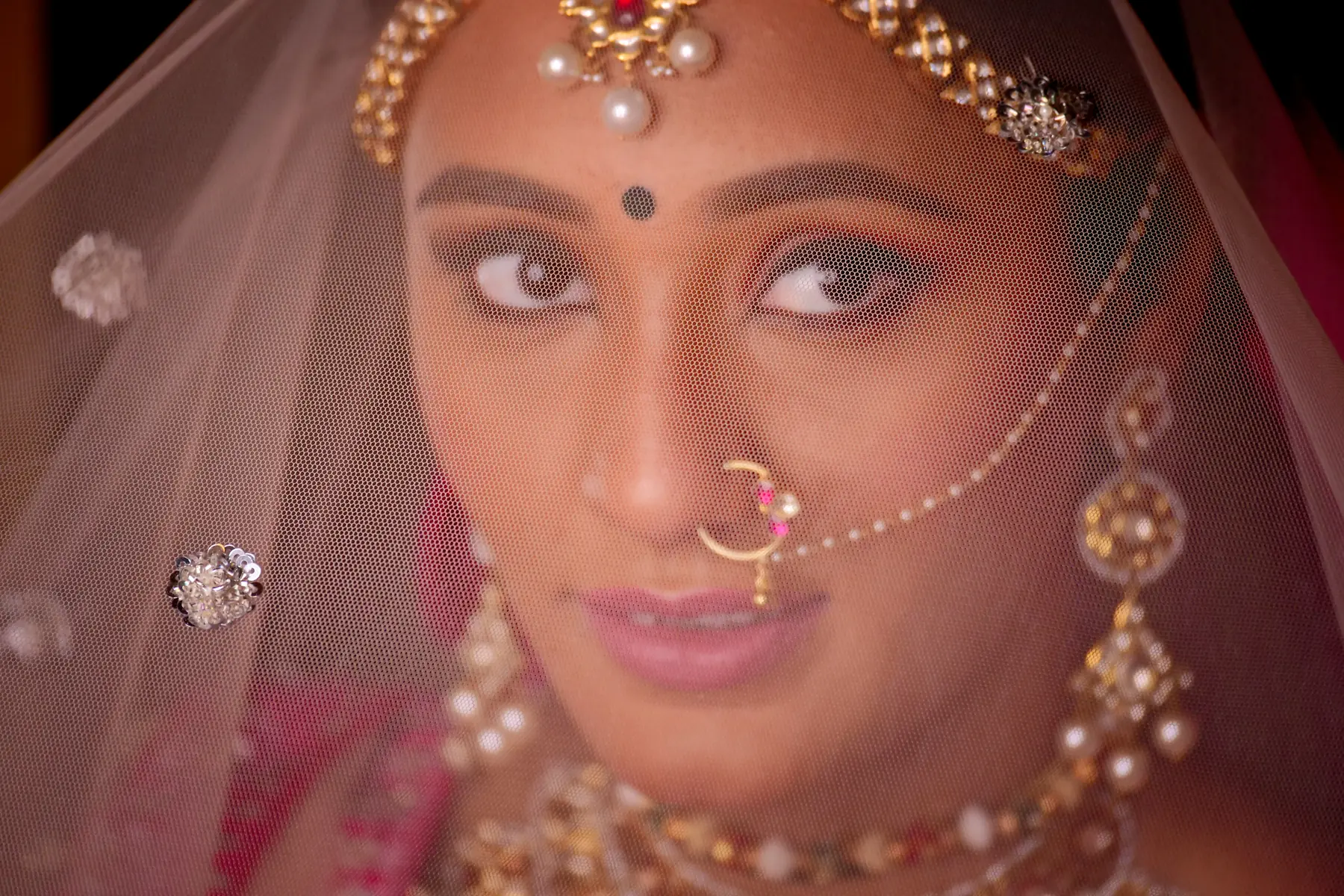
The mehndi and walima are the opposite: full of music, color and family. Mehndi nights often include dances prepared by cousins and friends, while the walima is usually a more formal reception with the couple on stage and a long line of family photographs. We plan for both registers, gentle and unobtrusive for the nikah, energetic and close for the celebrations. Read our mehndi night photo tips.
Family photographs at the walima
The stage photographs at a walima can take a long time when every branch of both families comes up. We suggest a short list of the groupings that matter most, ordered so elders go first, and a family member from each side who knows everyone’s names. That keeps the line moving and lets the couple get back to their guests. We also plan a few quiet portraits of the couple away from the stage, often the only calm minutes they have all evening.
Planning a Muslim wedding timeline
Many Muslim weddings run over several days, and the nikah is sometimes held separately from the baraat or the walima. We plan photography and wedding films for each event as one story, so the album holds the whole wedding. Our photography timeline guide and our list of questions to ask your photographer are good places to start, and you can read reviews from our couples.